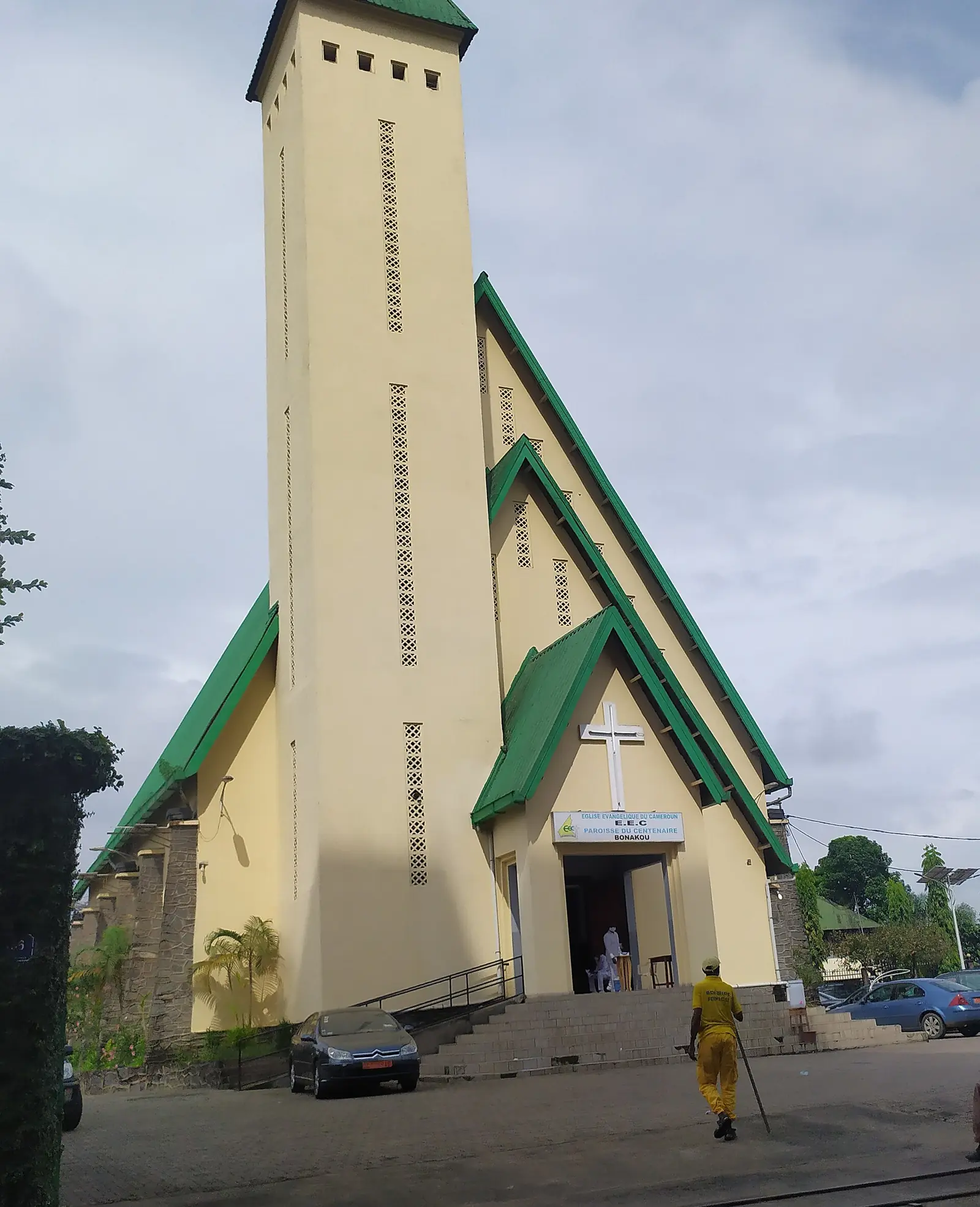
What it is
History
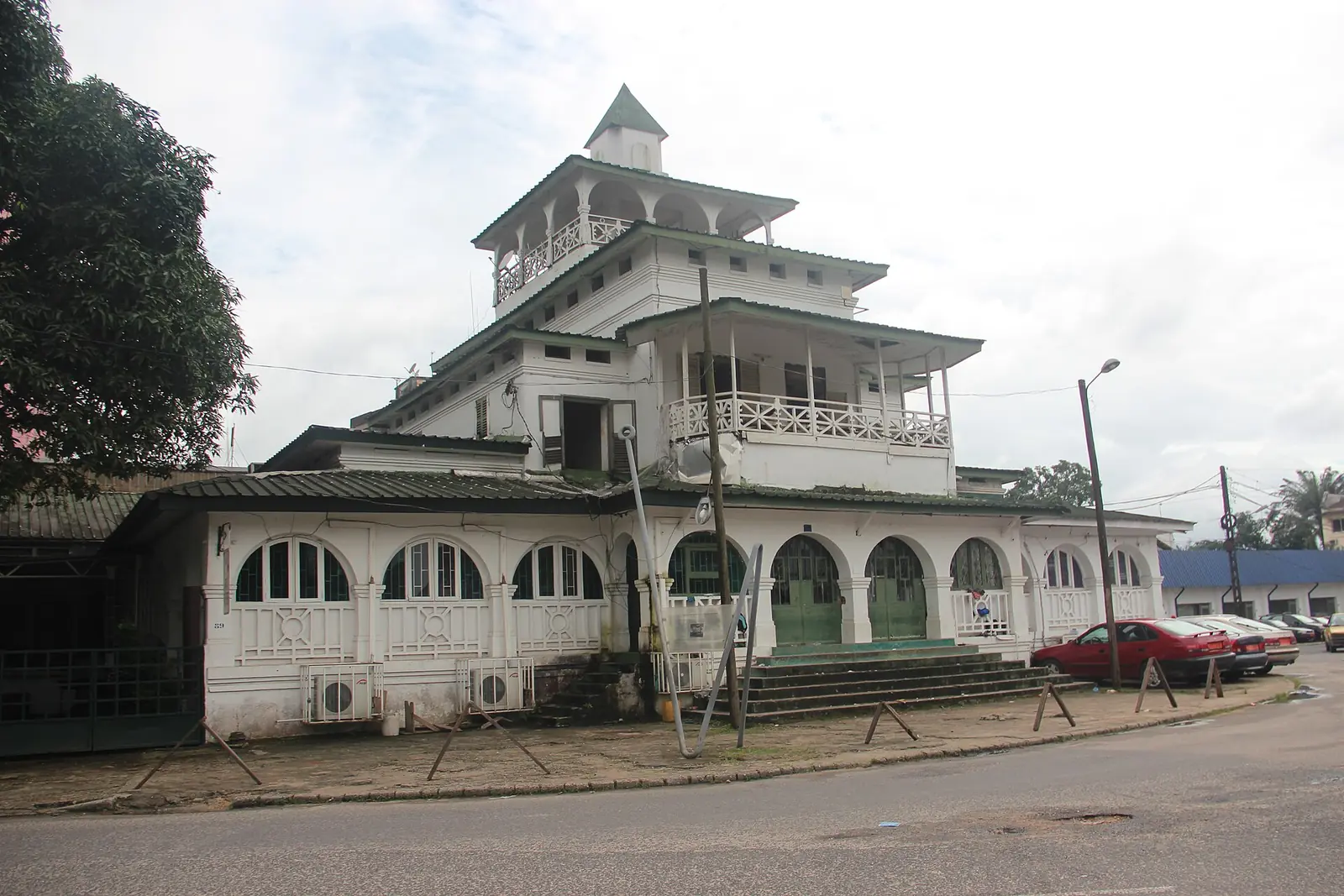
It was built in 1947 to mark a hundred years since Bethel, the 'House of God', which the Baptist missionary Alfred Saker built in 1847 at Cameroons Town, the old name of Douala; this is Douala's first Christian church, according to doual'art and French Wikipedia. The city timeline instead gives 1849 for the first Baptist church.1,2,4
Doual'art traces Christianity in Cameroon to 1843 and the Baptist Missionary Society of London, whose first missionaries, Joseph Merrick and later Jackson Fuller, were Jamaicans, sons of freed slaves, based on the island of Fernando Po. Saker was the first European allowed to settle on land, in 1845, on ground given by King Akwa; French Wikipedia dates this to 16 June 1845 and places it where the temple now stands. There he built the first Bethel and the country's first school.2,3
In 1849 Saker baptised the first Cameroonian, Bekima Bile, a boy from Bonapriso, in the Wouri. He founded Victoria, today's Limbe, in 1858, ordained the first Cameroonian pastor, Georges Nkwé, in 1866, and published a Duala translation of the Bible in 1872. He left Cameroon in 1876 and died in 1880.2
Visiting
The temple is in Akwa, not far from the cathedral. In October 2015, Le Jour reported a service in the Duala language at 9:00, followed by one in French at 10:30; these times may have changed, so check with the parish. The sources we read do not describe the building's architecture. Doual'art included the temple in its Arches de la mémoire, signs on the history of the city's landmarks.2,5
Map
What visitors say
We summarise accounts published elsewhere and link to the original. These aren't reviews collected by this site, and we don't show a rating.
We haven't yet found a published visitor account for this place.
Check before you go
Our sources can't yet confirm these points:
- Current service times: the only dated times found are from October 2015
- Whether visitors can go inside outside services
- A description of the building, its architect and builders
- The year of the first Bethel church: 1847 per doual'art and French Wikipedia, 1849 per the city timeline
- The street address
Also nearby
Sources for this page
Information checked on 18 November 2026. It may have changed since.
- Temple du centenaire, Wikipedia (French) (5 July 2024)
- Temple du Centenaire (Arches de la mémoire, Douala ville d'art et d'histoire; archived copy of 2015-02-08), doual'art (undated)
- Douala, Wikipedia (French) (2 November 2026)
- Timeline of Douala, Wikipedia (English) (29 August 2026)
- L'Église évangélique du Cameroun au bord du gouffre (Josiane Kouagheu, Le Jour), Le Jour, republished by Camer.be (28 October 2015)
- Douala, Wikipedia (English) (11 November 2026)
Enquire about Centenary Temple
Visit Centenary Temple
Plan your trip to Centenary Temple in the Littoral Region. Send us an enquiry about guided tours, accommodation and transport, and we'll reply by email.
Send an enquiryLittoral Region
Capital: Douala
Cameroon's economic centre, around the port city of Douala and the Wouri Estuary, with Sawa and Bassa heritage, the Ngondo festival and the Sanaga River at Edéa.
More places in the Littoral Region
Douala Maritime Museum
A ship-shaped museum in Douala's Bonanjo district on Cameroon's coast, ports and ships, with a recreated ship's bridge and a navigation simulator.
La Pagode (Palace of King Bell)
The former palace of the Bell kings in Bonanjo, Douala, built in 1905 and still owned by the Bell family. It was home to Rudolf Duala Manga Bell, hanged by the German authorities in 1914.
Ekom-Nkam Waterfalls
A waterfall of about 80 m on the Nkam river near Melong, set in forest and used as a filming location for Greystoke (1984). A second fall runs beside it in the rainy season.
Wouri Estuary
The tidal estuary where the Wouri, Mungo and Dibamba meet the Atlantic at Douala, lined with mangroves and fishing villages, and the source of Cameroon's name.