- Inside
- Not confirmed as open to visitors5
What it is
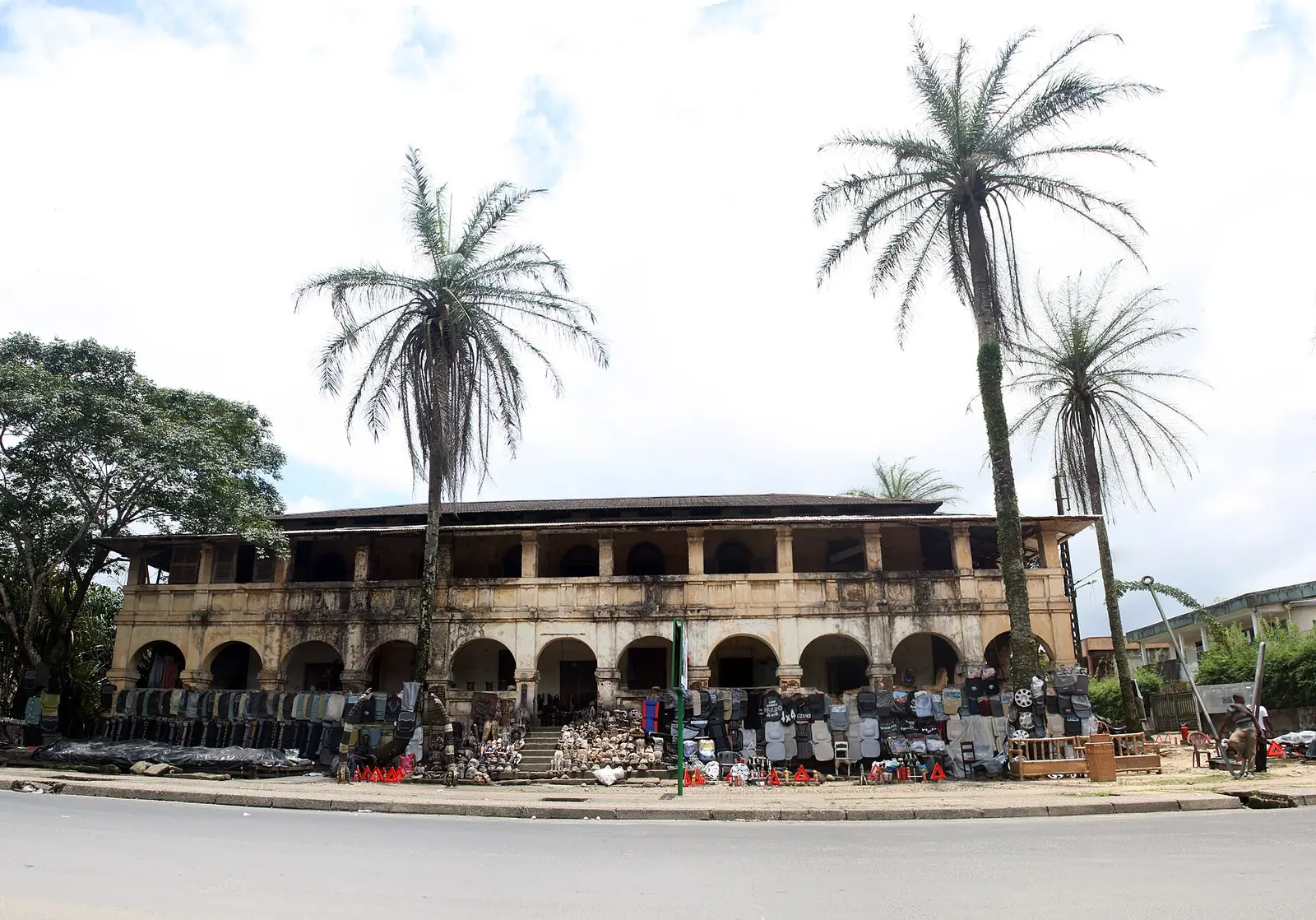
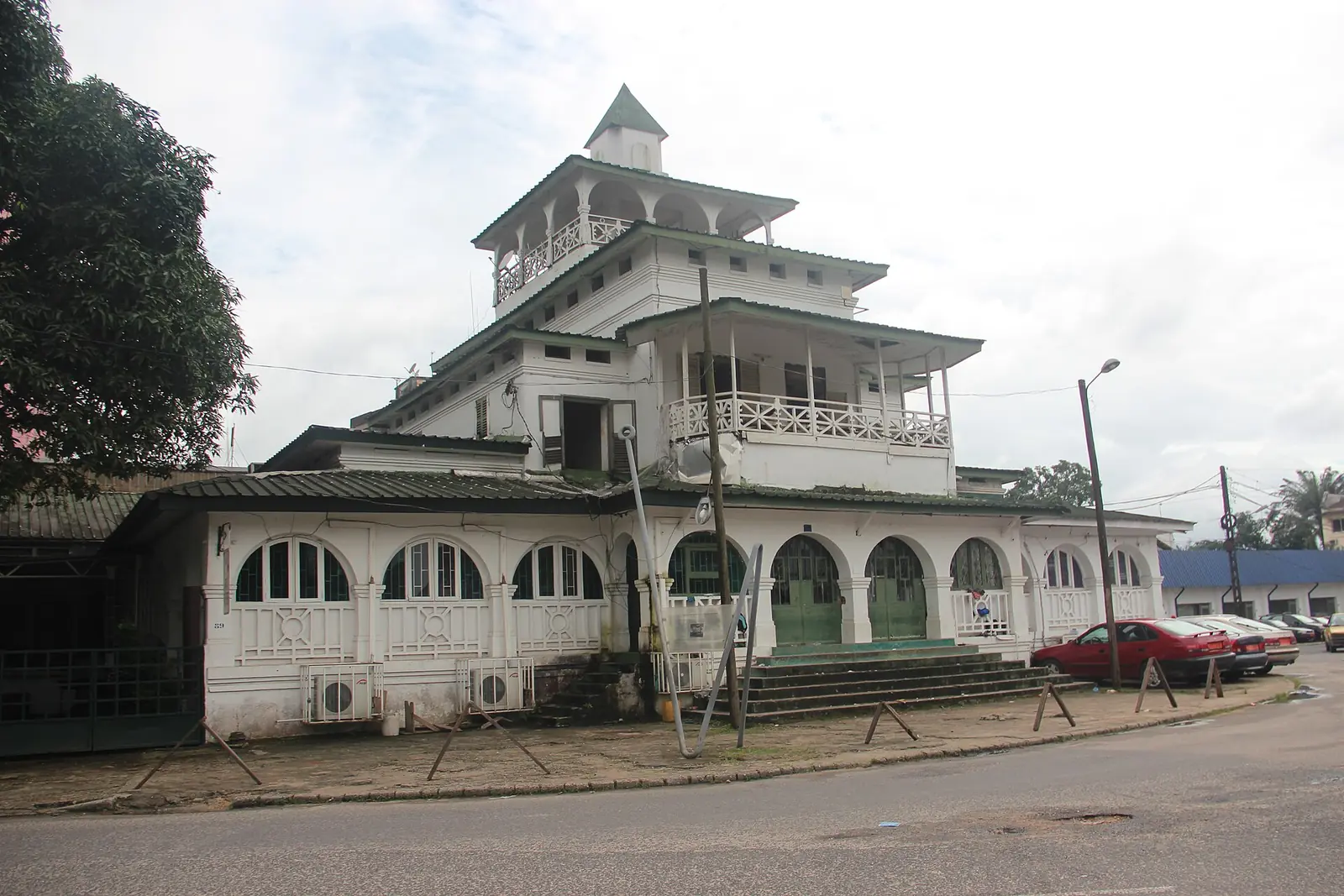
Doual'art describes a house of noble proportions, typical of German colonial architecture with a classical influence, built from 1904 to 1910, at the end of the German 'pacification' campaigns and just before the town's first planning schemes. French Wikipedia notes its rectangular plan, terracotta bricks that help keep it cool, and a wide metal roof that lets air circulate and shelters it from the coast's storms. English Wikipedia gives 1904 to 1909 in places, and the city timeline 1910.1,2,3,7
History
It was built by David Mandessi Bell, a wealthy planter and steward to King Rudolf Duala Manga Bell, who lived there until his death in 1936; French Wikipedia gives 14 November 1936 and says he was buried behind the Bonanjo law courts. Doual'art presents him as one of the first Cameroonians whose income did not come only from fishing or trade: after the slave trade was banned in 1840 and their trading monopoly faded, the Duala turned to plantations in the Nkam, the Abo and the Mungo.1,4
His son Sam, born in the house in 1911 and died in 1978, carried on the plantations and lived there for part of his life. Jean Mandessi Bell, an adoptive brother of David according to French Wikipedia, co-founded the Union camerounaise in Paris in 1937–38 with Léopold Moumé Etia, and later joined the Jeucafra led by Paul Soppo Priso.1,4
The house today
French Wikivoyage, in an entry last updated in March 2018, described the villa as in ruins, with many souvenir sellers on site. French Wikipedia's Douala article rates its condition as poor and endangered and its use as unlawful occupation, and a photo caption on English Wikipedia mentions trading in front of it. French Wikipedia, citing Wikidata, lists it as a monument of Cameroon; we found no official listing decree.2,3,5,6
Visiting
Map
What visitors say
We summarise accounts published elsewhere and link to the original. These aren't reviews collected by this site, and we don't show a rating.
We haven't yet found a published visitor account for this place.
Check before you go
Our sources can't yet confirm these points:
- Its present condition and who occupies it
- Whether any part can be visited, and on what terms
- Any official heritage listing or restoration plan
- Its street address
- The completion year: 1909 or 1910
Also nearby
Sources for this page
Information checked on 18 November 2026. It may have changed since.
- Villa Mandessi Bell (Arches de la mémoire, Douala ville d'art et d'histoire; archived copy of 2015-02-08), doual'art (undated)
- Villa Mandessi Bell, Wikipedia (French) (26 June 2025)
- Villa Mandessi Bell, Wikipedia (English) (17 July 2026)
- David Mandessi Bell, Wikipedia (French) (2 July 2026)
- Douala, Wikivoyage (French) (8 March 2026)
- Douala, Wikipedia (French) (2 November 2026)
- Timeline of Douala, Wikipedia (English) (29 August 2026)
Enquire about Villa Mandessi Bell
Visit Villa Mandessi Bell
Plan your trip to Villa Mandessi Bell in the Littoral Region. Send us an enquiry about guided tours, accommodation and transport, and we'll reply by email.
Send an enquiryLittoral Region
Capital: Douala
Cameroon's economic centre, around the port city of Douala and the Wouri Estuary, with Sawa and Bassa heritage, the Ngondo festival and the Sanaga River at Edéa.
More places in the Littoral Region
Douala Maritime Museum
A ship-shaped museum in Douala's Bonanjo district on Cameroon's coast, ports and ships, with a recreated ship's bridge and a navigation simulator.
La Pagode (Palace of King Bell)
The former palace of the Bell kings in Bonanjo, Douala, built in 1905 and still owned by the Bell family. It was home to Rudolf Duala Manga Bell, hanged by the German authorities in 1914.
Ekom-Nkam Waterfalls
A waterfall of about 80 m on the Nkam river near Melong, set in forest and used as a filming location for Greystoke (1984). A second fall runs beside it in the rainy season.
Wouri Estuary
The tidal estuary where the Wouri, Mungo and Dibamba meet the Atlantic at Douala, lined with mangroves and fishing villages, and the source of Cameroon's name.