What it is
History
Catholic missions reached the coast under German rule. On 25 October 1890 the Pallottine prefect apostolic, Father Vieter, landed at Kamerunstadt, as Douala was then called, and the next day said the first Catholic mass in Cameroon in the Woermann trading post at Bonanjo. The Pallottines built the first Catholic church in 1898; it has since disappeared. They left with the Germans after 1914 and were replaced by French Spiritans in 1916.2,3
The Spiritans built the cathedral near the site of that first church. French Wikipedia says the first stone was laid on 6 August 1933, in the presence of bishops and a representative of the Littoral governor, and that it was consecrated on 22 March 1936 before seven bishops, with Mgr Mathurin Le Mailloux preaching. Most sources give 1936; English Wikipedia's Douala article instead lists it among buildings of 1925 to 1930.1,3,4,5,8
What to see
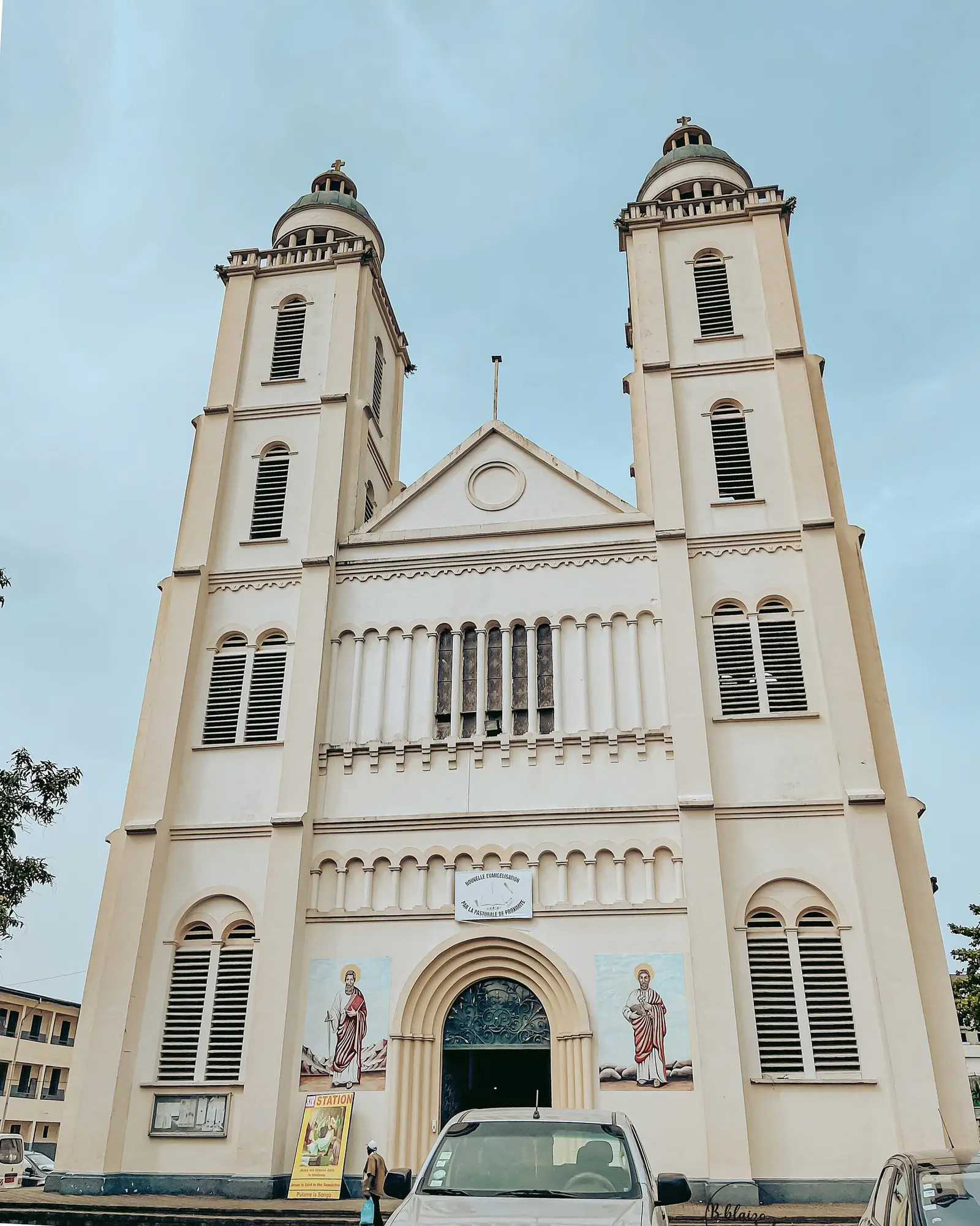
Doual'art describes a large building whose columns and domes give it a Byzantine air, with neo-Romanesque features, notably the porch, and twin bell towers framing the central front. French Wikipedia adds a long, spacious plan lit by stained-glass windows and a central dome, and says Cardinal Christian Wiyghan Tumi, Cameroon's first cardinal, is buried beneath the cathedral along with other senior churchmen.1,2,3
Its place in the city
Visiting
The cathedral is on rue Joss, at Bonadibong. English Wikivoyage, in a listing updated in August 2020, gives the phone number +237 6 90 90 50 08. We found no dated, published mass timetable, so ask the parish for service times; it is an active place of worship.6
Map
What visitors say
We summarise accounts published elsewhere and link to the original. These aren't reviews collected by this site, and we don't show a rating.
We haven't yet found a published visitor account for this place.
Check before you go
Our sources can't yet confirm these points:
- Current mass times, from the parish or the archdiocese
- Whether visitors can go inside outside service times
- Whether the phone number listed by Wikivoyage in 2020 still works
- The district: Wikivoyage places it at Bonadibong in Akwa, OpenStreetMap in Bali
- The exact construction dates: 1933–1936 in most sources, 1925–1930 in English Wikipedia's Douala article
Also nearby
Sources for this page
Information checked on 18 November 2026. It may have changed since.
- Cathédrale Saint-Pierre-et-Saint-Paul de Douala, Wikipedia (French) (22 October 2026)
- Cathedral of Saints Peter and Paul, Douala, Wikipedia (English) (30 July 2026)
- La Cathédrale Saint Pierre et Saint Paul (Arches de la mémoire, Douala ville d'art et d'histoire; archived copy of 2013-10-30), doual'art (undated)
- Douala, Wikipedia (English) (11 November 2026)
- Douala, Wikipedia (French) (2 November 2026)
- Douala, Wikivoyage (English) (24 October 2026)
- Fête de Pâques : pluie de bénédictions à Douala (Rita Diba), Cameroon Tribune (10 April 2023)
- Timeline of Douala, Wikipedia (English) (29 August 2026)
Enquire about Saints Peter and Paul Cathedral
Visit Saints Peter and Paul Cathedral
Plan your trip to Saints Peter and Paul Cathedral in the Littoral Region. Send us an enquiry about guided tours, accommodation and transport, and we'll reply by email.
Send an enquiryLittoral Region
Capital: Douala
Cameroon's economic centre, around the port city of Douala and the Wouri Estuary, with Sawa and Bassa heritage, the Ngondo festival and the Sanaga River at Edéa.
More places in the Littoral Region
Douala Maritime Museum
A ship-shaped museum in Douala's Bonanjo district on Cameroon's coast, ports and ships, with a recreated ship's bridge and a navigation simulator.
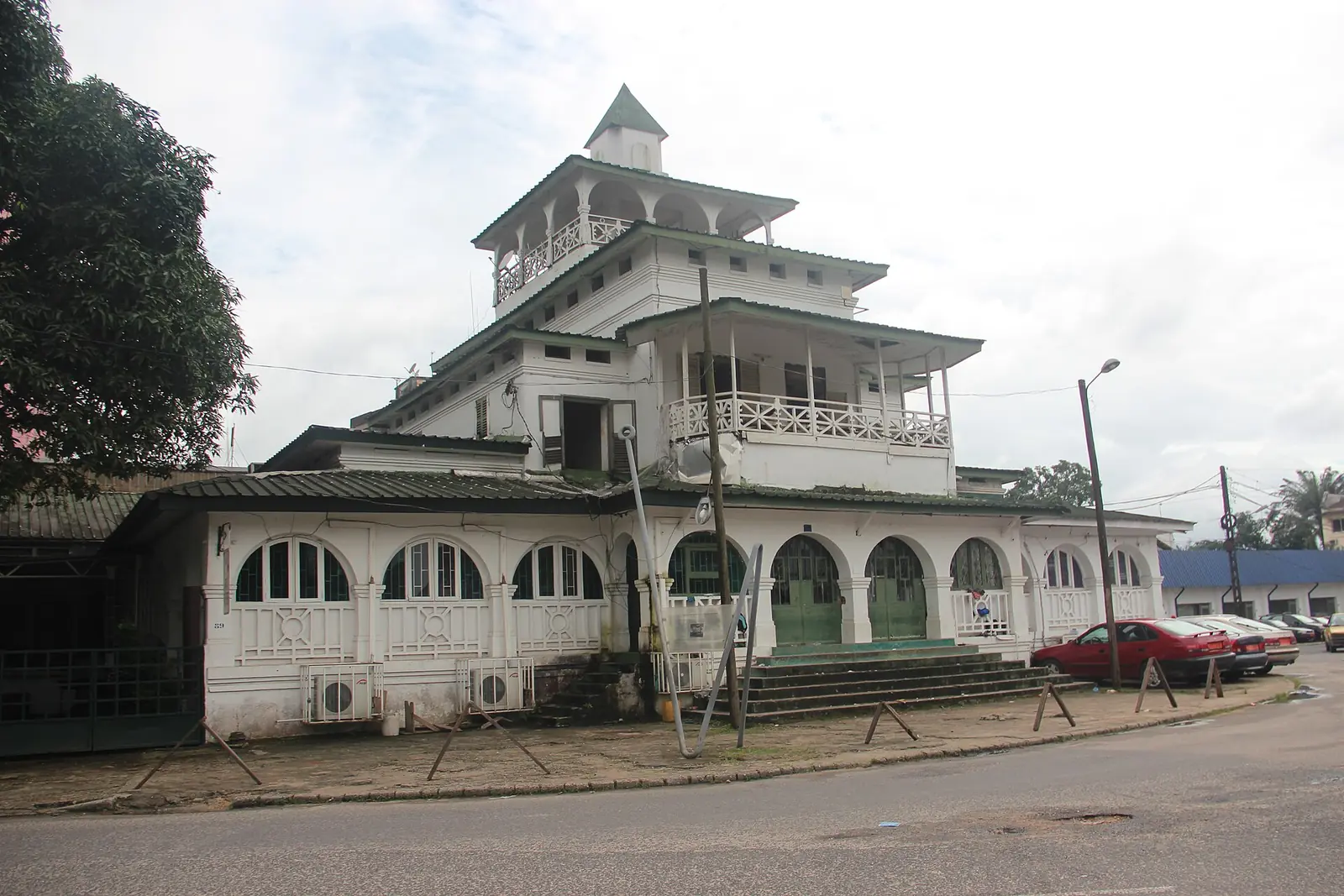
La Pagode (Palace of King Bell)
The former palace of the Bell kings in Bonanjo, Douala, built in 1905 and still owned by the Bell family. It was home to Rudolf Duala Manga Bell, hanged by the German authorities in 1914.
Ekom-Nkam Waterfalls
A waterfall of about 80 m on the Nkam river near Melong, set in forest and used as a filming location for Greystoke (1984). A second fall runs beside it in the rainy season.
Wouri Estuary
The tidal estuary where the Wouri, Mungo and Dibamba meet the Atlantic at Douala, lined with mangroves and fishing villages, and the source of Cameroon's name.