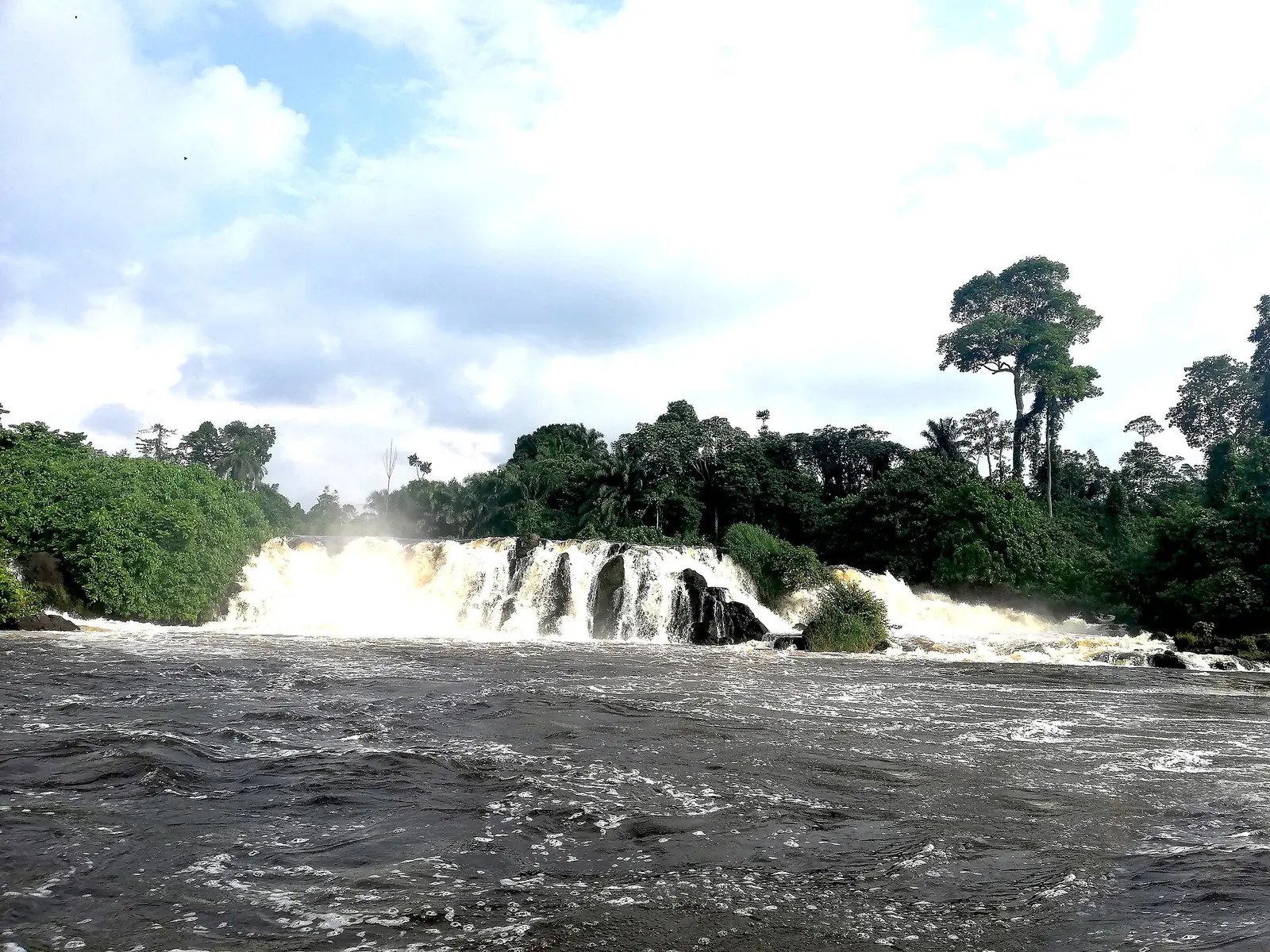
Rainforest and Atlantic coast, from the beaches of Kribi and the Lobé Falls to Campo Ma'an National Park and the cocoa country around Ebolowa.
Places to visit
- Area
- 47,191 km² (INS yearbook, 2022 edition)1
- Population
- 634,655 (2005 census); 900,072 (2021 projection)1
- Capital
- Ebolowa1
- Languages
- Beti dialects, Makaa-Njem languages, French2
Where it is and what it's like
The South runs along the Gulf of Guinea and borders Equatorial Guinea, Gabon and the Republic of the Congo, as well as the Littoral, Centre and East regions. The national statistics institute gives its area as 47,191 km²; other figures in circulation are 47,110 and 47,720 km². Its 2005 census population of 634,655 was projected at 900,072 for 2021.1,2,3
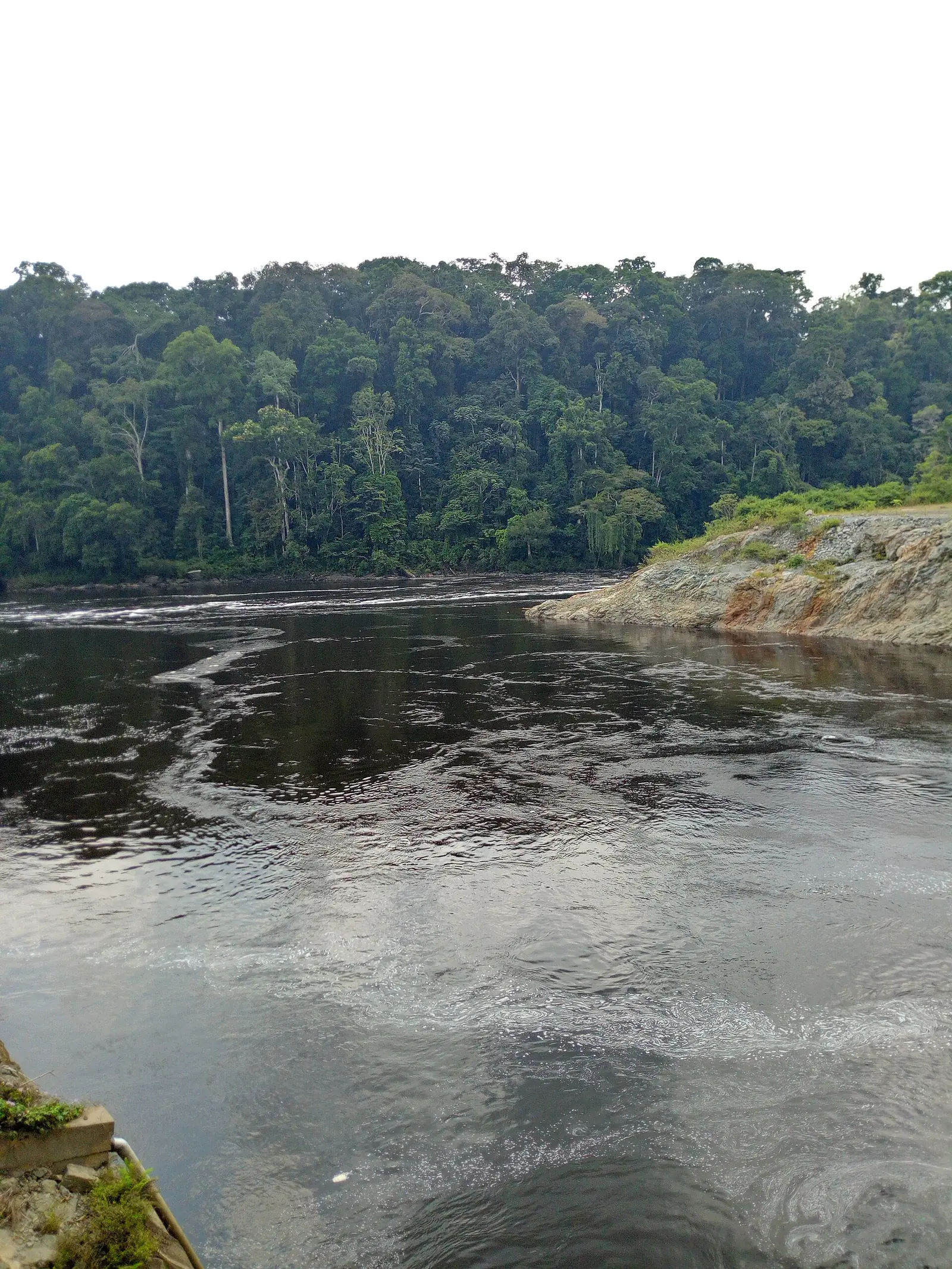
Inland lies the South Cameroon Plateau, with hills of about 650 to 900 m, and a 150 km coastal plain runs south of Kribi. The statistics yearbook puts the top altitude at 1,000 m, while another source gives about 1,400 m for the Ntem Massif near Ebolowa. The Lobé, Kienké and Ntem (460 km) flow to the Atlantic, and the Dja to the Congo basin. The region is almost entirely rainforest, apart from a little mangrove south of Campo.1,2
The yearbook describes heavy rains from March to June, lighter rains from September to November, a long dry season from November to February, and a short one in July and August. English Wikipedia's calendar differs, so treat these as approximate. Ebolowa averages about 1,687 mm of rain a year (1981 to 2010). Kribi averages about 2,870 mm, with September the wettest month and December the driest.1,2,4,5
Peoples and languages
Most residents belong to the groups known together as Beti-Pahuin, among them the Bulu, Fang, Ntumu, Mvae and Ewondo, and speak dialects of the Beti language. The Bulu are about a third of all Beti-Pahuin in Cameroon. The yearbook also lists the Batanga, Mabéa, Bassa, Yassa and Ngoumba in Océan. French is used in the more populated areas.1,2,10
The Bakola and Bagyelli, numbering about 5,000 according to a 2016 study of Océan, Mvila and Nyong-et-Kellé, have lived beside Bantu neighbours for centuries, in a relationship the study calls unequal and often in conflict. The Bakola live from Lolodorf to Bipindi, and the Bagyelli further south. The African Wildlife Foundation describes the Bagyeli around Campo Ma'an relying on the forest for food, medicine and ritual. The Baka are also named among the region's peoples.2,7,8
History
According to English Wikipedia, forest peoples were the first here, the Batanga settled the coast in the 18th century, and Beti-Pahuin groups arrived from the northeast in the 19th. Portuguese sailors reached the coast in 1472, and Germany annexed Cameroon in 1884, building plantations with forced labour.2
In 1899 the Bulu rose against German rule while colonial troops were away. They reached Kribi and destroyed its Catholic mission, and the region wasn't subdued until 1901. Martin-Paul Samba, a Bulu officer born near Ebolowa, later planned a rising of his own and was executed on 8 August 1914. France took control in 1916. The South became a separate province on 22 August 1983, when Centre-South was split, and a region under a decree of 12 November 2008.1,2,11,12,13
What the region is known for
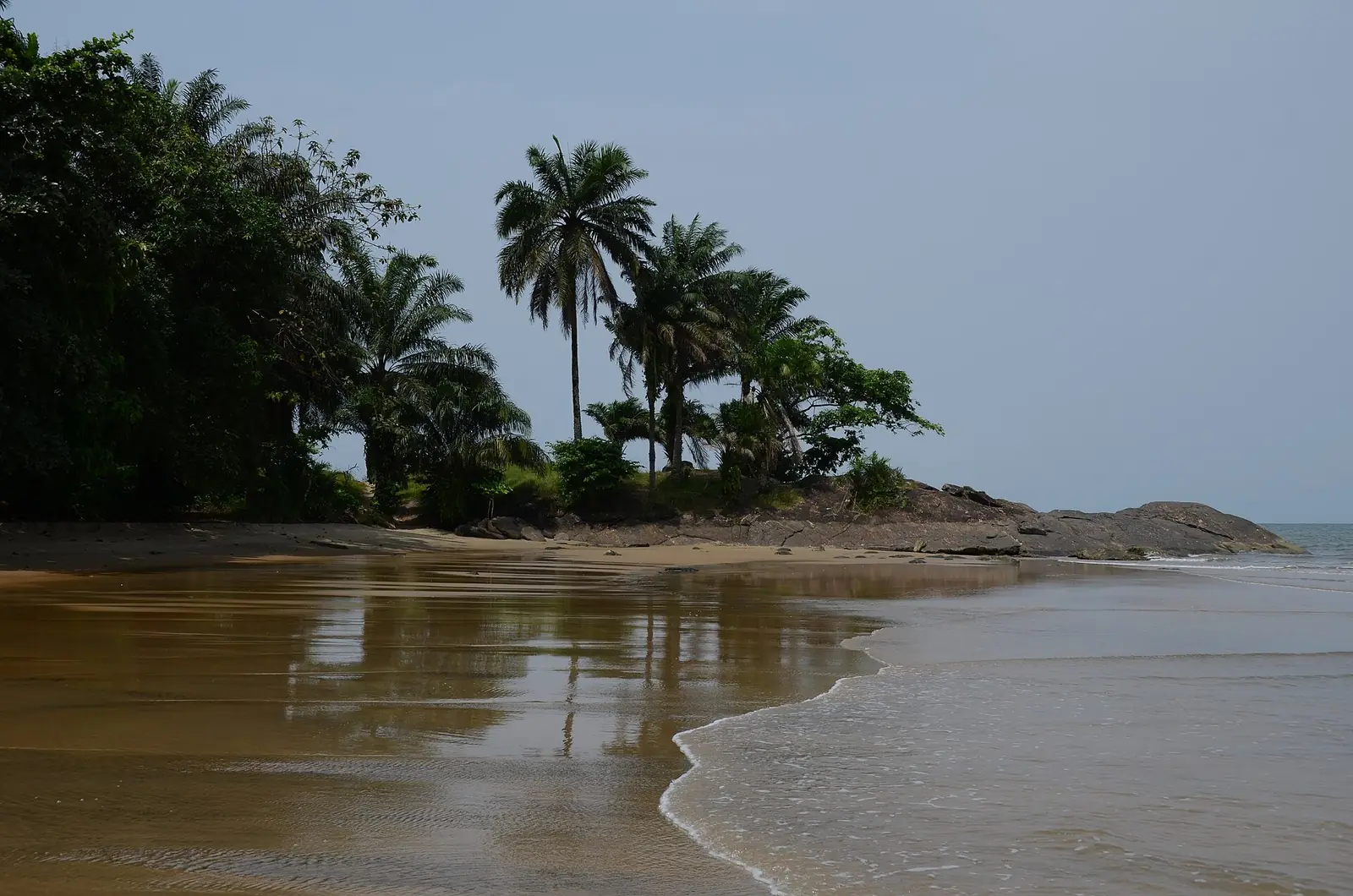
Kribi is the most popular beach destination, with long white-sand beaches, a German lighthouse of 1906 and, since March 2018, a deep-sea container terminal. Most of the region's hotels are in Océan department. The Lobé Falls, about 7 km south of town, empty directly into the Atlantic. Sources note a strong undertow on this coast, and a January 2024 study found high levels of parasite eggs and larvae in the water along Kribi's beaches.1,2,5,6,14
Further along the coast are Grand Batanga, a village south of Kribi, Londji, a fishing community in Kribi II district, and Ebodjé, where the community group Tube Awu protects sea turtle nests. Campo Ma'an National Park, set up in 2000 and covering about 2,640 to 2,680 km², has forest elephants, western lowland gorillas and central chimpanzees.2,6,9,15,16,17
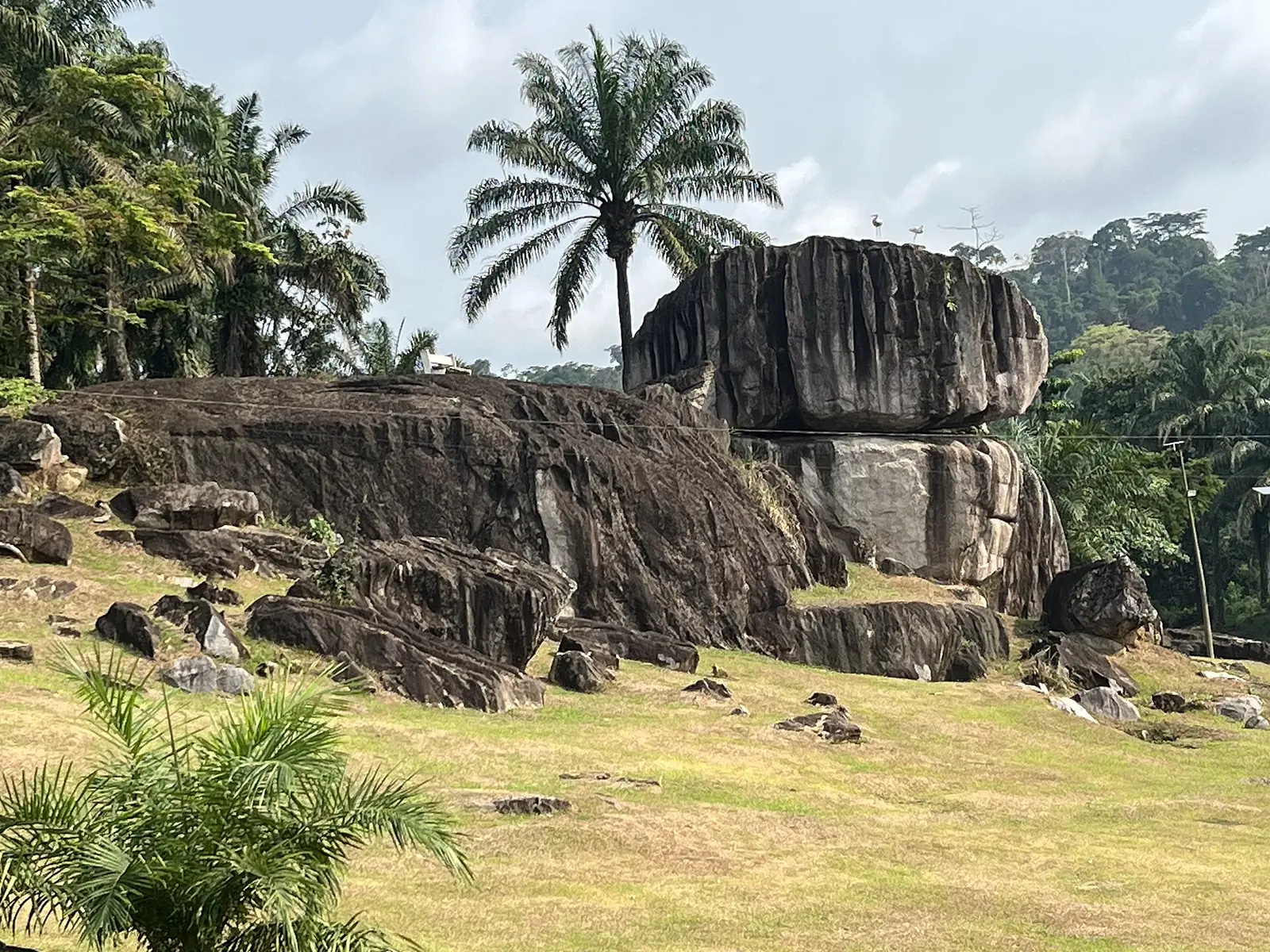
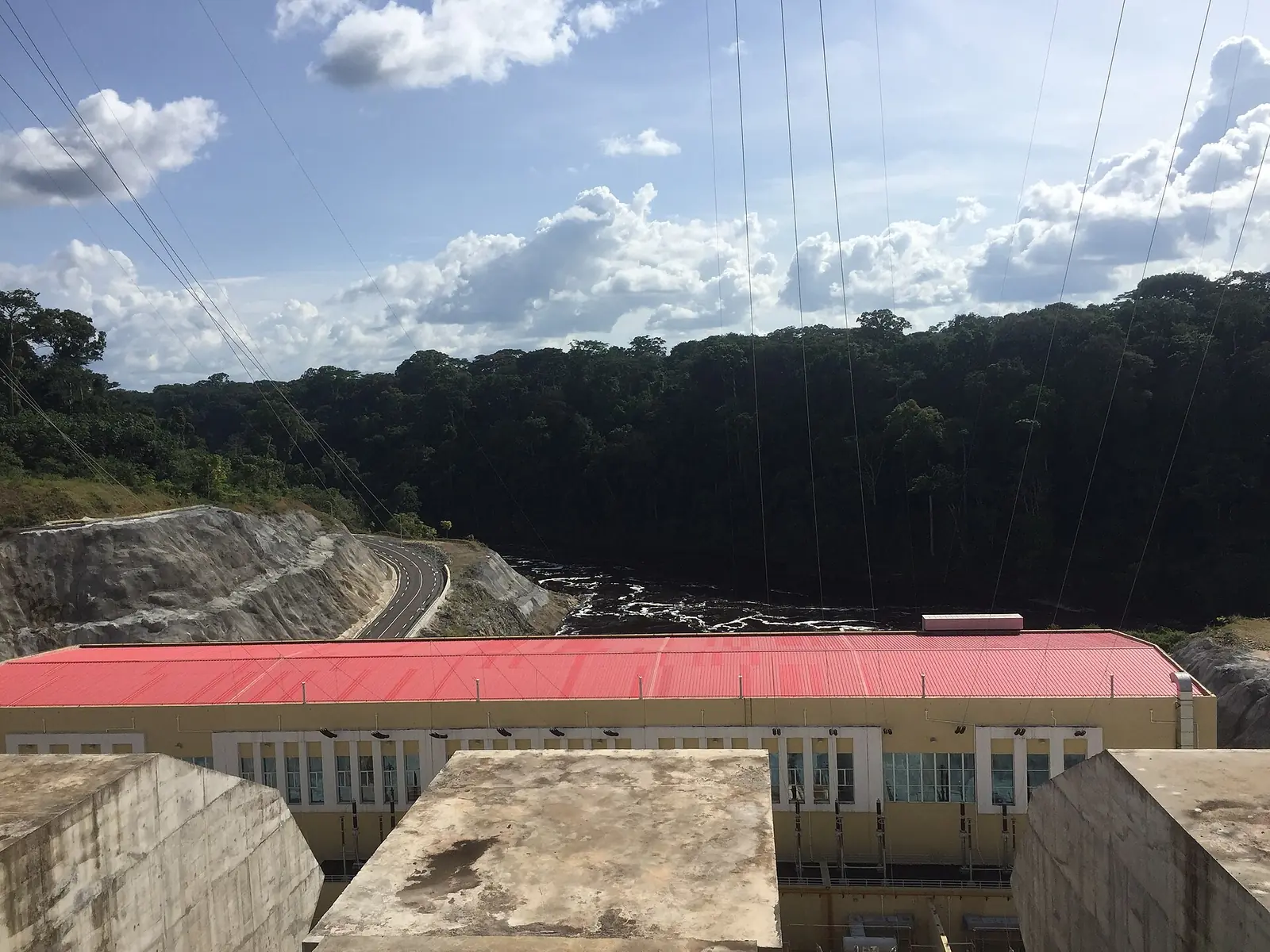
Inland, the 211 MW Memve'ele Hydroelectric Power Station stands on the Ntem, about 140 km by road southwest of Ebolowa. An undated article describes Nkolandom, about 18 km from Ebolowa, as having caves, an artificial lake and a museum of African art. About 80% of Ebolowa's people work in agriculture, with cocoa the main crop.4,18,19
Food, crafts and music
Plantains lead the farm crops, alongside cocoyams, maize, groundnuts and cassava. In Kribi, vendors will roast fish bought fresh from the fishermen. Traditional instruments include the balafon and the mvêt, and in 2025 Mvet was among the Cameroonian practices under study for UNESCO listing. We found no sourced festival dates.2,6,20
Getting there and around
Ebolowa is 168 km from Yaoundé on a paved road, and another road continues south through Ambam towards Equatorial Guinea and Gabon. Kribi is about 150 km by road from Douala, by way of Edéa and the N7. That 110 km stretch was past its normal lifespan in 2025, when a rebuilding tender was under way; we couldn't confirm whether work has begun. The 38.5 km Kribi-Lolabé motorway opened on 29 July 2022 to serve the port.2,4,5,21,22
A direct road from Ebolowa to Kribi through Akom II, announced in 2011 and given as 160 to 179 km, secured a new loan in May 2026. Other roads are mostly dirt and depend on the weather. Kribi has the regional airport, with airstrips at Ambam, Campo, Ebolowa and Sangmélima, but we couldn't confirm any scheduled flights. A 130 km rail link from Kribi port to Edéa is planned.2,4,5,23
In pictures
Map
Still to confirm
Our sources can't yet confirm these points:
- Whether scheduled flights serve Kribi or Ebolowa
- Whether rebuilding of the Edéa-Kribi road and construction of the Ebolowa-Kribi road have started
- Bus services and fares from Yaoundé and Douala
- Dates of regional festivals, including any Batanga festival
- The role of traditional rulers in the region today
- The exact legal area of Campo Ma'an National Park
- Current water quality at Kribi's beaches
Sources for this page
Information checked on 6 November 2026. It may have changed since.
- Annuaire statistique de la Région du Sud, édition 2022, Institut national de la statistique du Cameroun (2022)
- South Region (Cameroon), Wikipedia (14 September 2026)
- Région du Sud (Cameroun), Wikipédia (31 July 2026)
- Ebolowa, Wikipedia (20 September 2026)
- Kribi, Wikipedia (9 October 2026)
- Kribi, Wikivoyage (undated)
- Bantu and Bakola/Bagyelli of southwestern Cameroon: a permanent conflictual cohabitation, Godefroy Ngima Mawoung, African Study Monographs 37(1) (2016-03)
- Field Journal, African Wildlife Foundation (2 March 2026)
- Campo Ma'an National Park, Wikipedia (5 July 2026)
- Beti-Pahuin (Bulu) peoples, Wikipedia (12 July 2026)
- Adamawa Wars, Wikipedia (24 October 2026)
- Kamerun, by Jan Antosch, LeMO, Deutsches Historisches Museum (2 November 2004)
- Martin-Paul Samba, Wikipedia (14 August 2026)
- Cameroon's Lobé Falls [The Morning Call], Africanews (1 June 2017)
- Grand Batanga, Wikipedia (30 September 2026)
- Ten years of commitment: a seventh mission in Cameroon, Zoo de Granby (9 December 2025)
- Pêche et conservation du poisson par les populations de Nziou et de Londji I, Moise Mvetumbo, master's thesis, Université de Yaoundé 1 (2013)
- Memve'ele Hydroelectric Power Station, Wikipedia (1 July 2026)
- Sud : Nkolandom, une cité pittoresque qui donne fière allure, Cameroun24 (undated)
- Cameroon's Ngondo Festival marks 1st anniversary as UNESCO intangible cultural heritage, Xinhua, via The Star (10 December 2025)
- Chinese-built highway inaugurated in southwestern Cameroon, Xinhua, via The Star (30 July 2022)
- Cameroun : 148 milliards FCFA pour la réhabilitation des routes Édéa-Kribi et Lolabé-Campo, EcoMatin (18 April 2025)
- After 15 years of delays, Cameroon secures funding for Ebolowa-Kribi road, Business in Cameroon (18 May 2026)