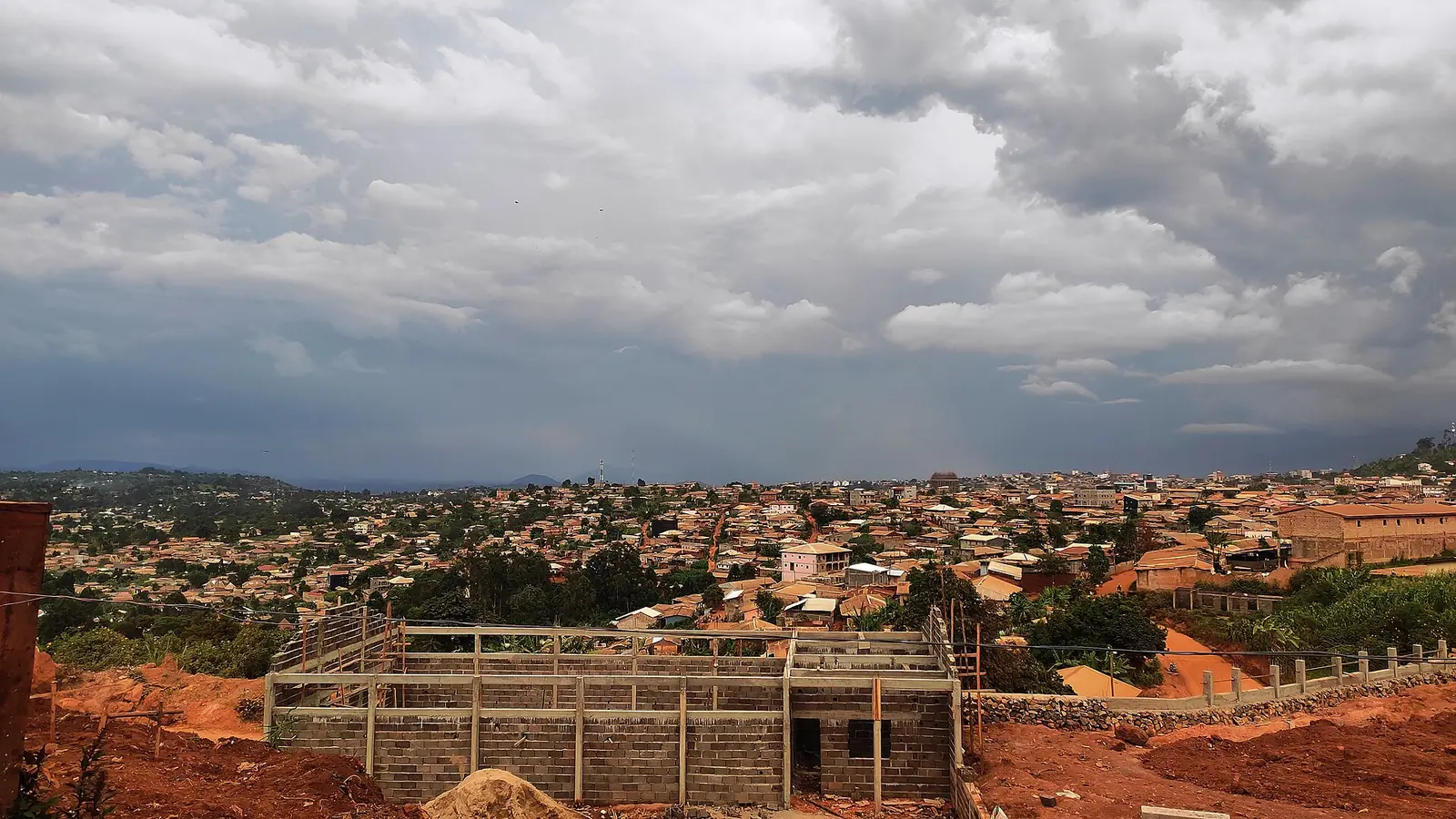
Mifi, the West division that is Bafoussam: the regional capital on the Bamiléké plateau, its three councils and the crater Lake Baleng.
Subdivisions of Mifi Division
Mifi Division has 3 subdivisions.
Bafoussam I
Chief town: Bafoussam
Bafoussam II
Chief town: Baleng
Bafoussam III
Chief town: Bamougoum
Places in Mifi Division
Where it is and what it's like
Mifi covers 402 km² in the centre of the region, on the Bamiléké plateau, and in practice it is the city of Bafoussam: its three subdivisions together form the Bafoussam urban community. Bafoussam stands at about 1,420 m, at the foot and on the slopes of Banengo hill and south of the Baleng-Bapi gneiss massif. The Mlem, a tributary of the Mifi-Sud, drains the town to the south. The statistics office notes very fertile volcanic soils around part of Bafoussam.1,5
People
The 2005 census counted 301,456 people, up from 202,193 in 1987, giving Mifi by far the highest density in the region, about 750 people per km². The statistics office's projection for 2010 was 312,889. By subdivision, Bafoussam II had 121,282 people in 2005, Bafoussam I 98,339 and Bafoussam III 81,835. Most of Mifi speaks Ghomala', a Bamiléké language also spoken in Koung-Khi and the Hauts-Plateaux.1,2,8
History
The French created the subdivision of Bafoussam in May 1931, within the Dschang circonscription. A law of 30 November 1960 made it a department, renamed Mifi by a decree of 3 February 1961. In October 1992 the old Mifi was split into three divisions: Mifi, Koung-Khi and the Hauts-Plateaux. Decree 2008/022 of 17 January 2008 then created the Bafoussam urban community, made up of Bafoussam I, with its seat in Bafoussam, Bafoussam II at Baleng and Bafoussam III at Bamougoum.6,1
What it's known for
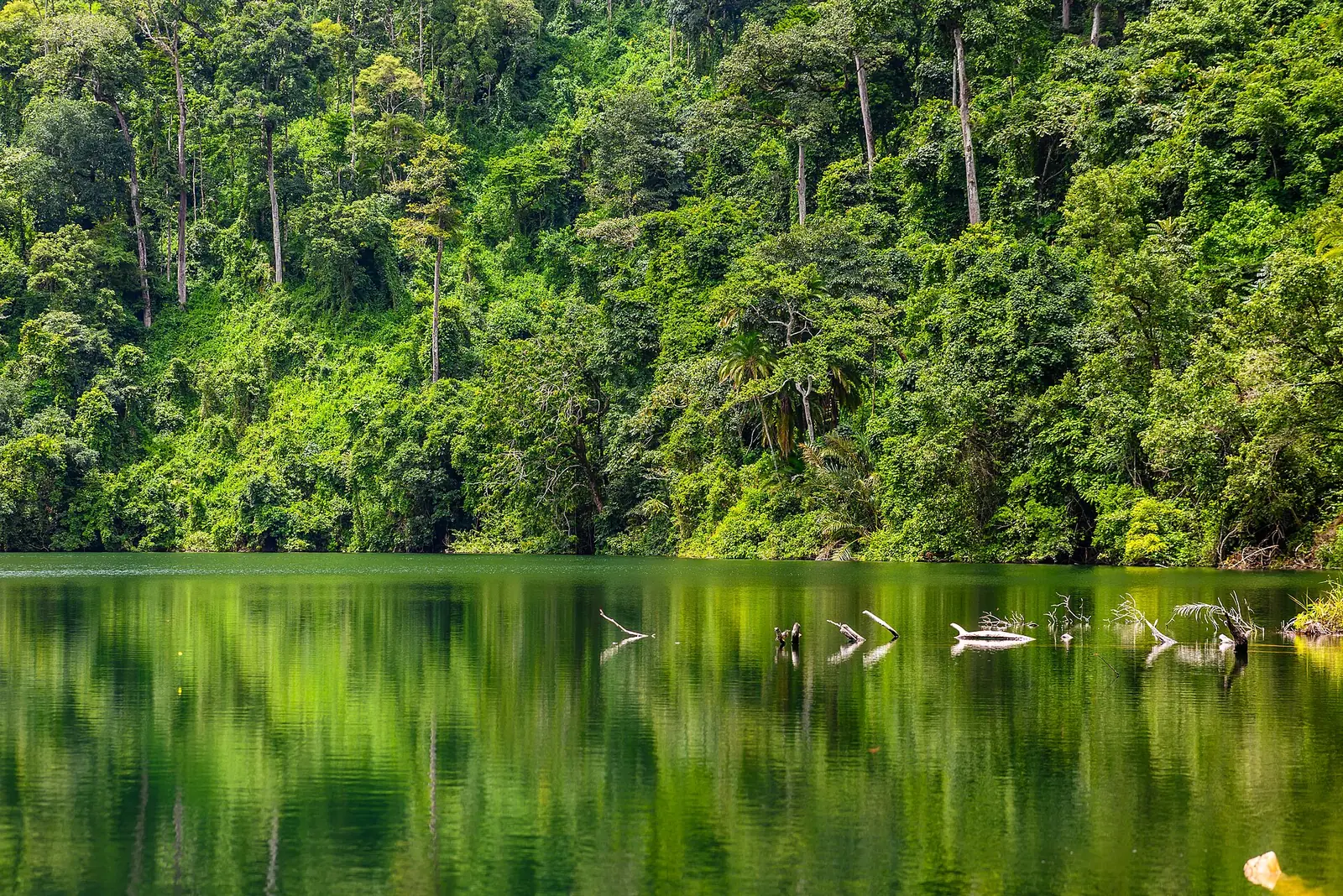
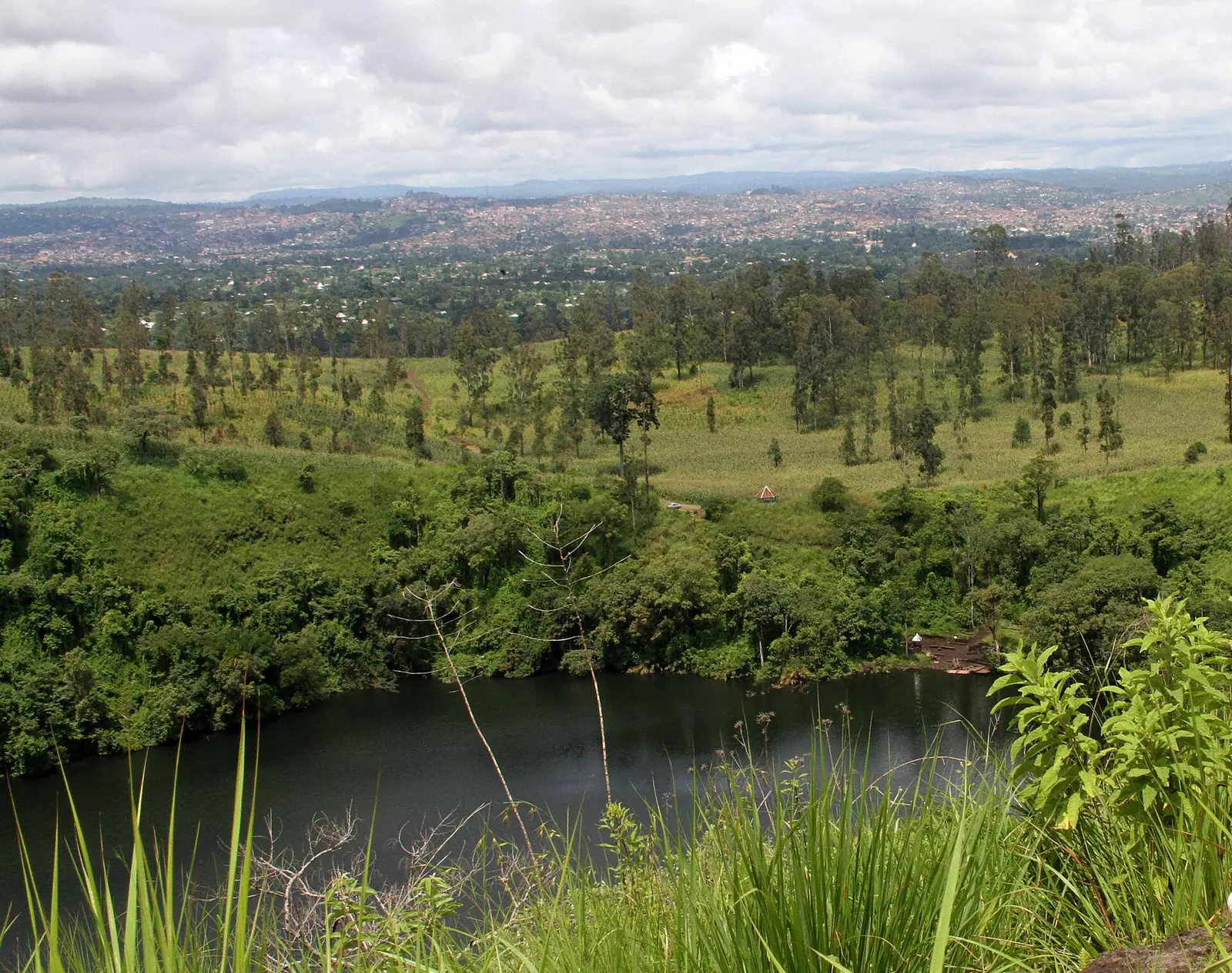
The site lists Lake Baleng, which OpenStreetMap and French Wikipedia place in Bafoussam II. It is a crater lake about 400 m long, some 11 km north of the town centre, regarded locally as a traditional sanctuary and entered on the national heritage list in 2020. The Bamougoum chiefdom, in Bafoussam III, is one of the region's eleven first-degree chiefdoms, and French Wikipedia mentions the royal museum and craft market of the Bafoussam chiefdom.4,7,1,6
Main towns and getting there
Bafoussam is both the division's chief town and the capital of the West. National Road 4 serves it, 294 km north of Yaoundé according to French Wikipedia. The statistics office gives road distances from central Bafoussam of 5.6 km to Baleng and 13.5 km to Bamougoum, the seats of the other two subdivisions.5,1
In pictures
Map
Still to confirm
Our sources can't yet confirm these points:
- A current official population for Mifi (the latest figure seen is the 2010 projection)
- The Bafoussam chiefdom's royal museum and craft market: opening hours and fees
Sources for this page
Information checked on 19 November 2026. It may have changed since.
- Annuaire statistique de la région de l'Ouest, édition 2024: chapter 1 (relief, soils, rivers), Tableaux 1.1, 1.4, 2.1, 2.2 and 4.2 (sources: Governor's office, DR-MINTP, DR-ELECAM, BUCREP), Institut national de la statistique, Agence régionale de l'Ouest (undated)
- Cameroon: administrative division, census counts of 1987 and 2005 by division and arrondissement, City Population (Thomas Brinkhoff), citing BUCREP (19 November 2026)
- OpenStreetMap Nominatim: boundary relations of Mifi and its subdivisions (lookup), OpenStreetMap contributors / Nominatim (19 November 2026)
- OpenStreetMap: boundary of Bafoussam II, which contains the site's place coordinates (Overpass is_in query), OpenStreetMap contributors (19 November 2026)
- Bafoussam, Wikipédia (19 November 2026)
- Mifi, Wikipédia (19 November 2026)
- Lac Baleng, Wikipédia (19 November 2026)
- Ghomala language, Wikipedia (19 November 2026)