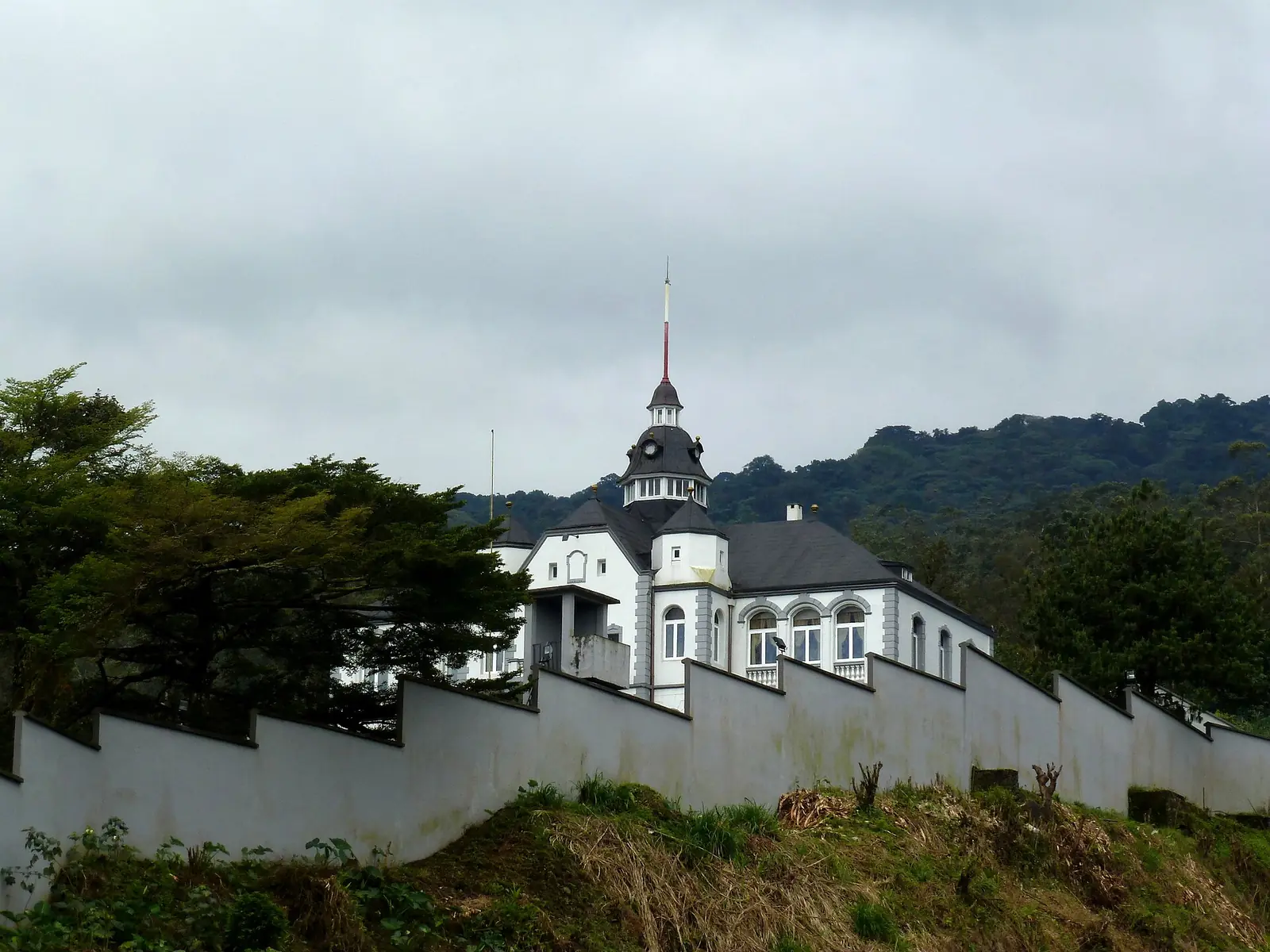
- Main building
- Governor Jesko von Puttkamer's residence, built around 19012
- Altitude
- About 1,000 m, on the slopes of Mount Cameroon3
A colonial capital on the mountain
Buea lies at about 1,000 m on the slopes of Mount Cameroon. The German Federal Archives note that it became the seat of the German colonial administration in 1901, largely because of its relatively mild climate. Sources disagree on how long that lasted. Wikipedia gives 1901 to 1919, while a 2018 essay by Albert Gouaffo and Richard Tsogang Fossi says the capital moved to Yaoundé in 1909. Wikipedia adds that during the eruption of April to June 1909 the administration was temporarily suspended in Buea; its article on the mountain says it moved to Douala for a time. Buea later served as capital of the Southern Cameroons from 1949 to 1961, and of West Cameroon until 1972.3,1,2,5
The governor's residence
The best-known building is the palatial residence that Jesko von Puttkamer, governor from 1895 to 1907, had built around 1901 at the foot of the mountain. Gouaffo and Tsogang Fossi report the view of some historians that he wanted a building grander than King Bell's Pagoda in Douala, to set himself apart from the Duala protests of the time. They write that the house shaped relations between Cameroon and Germany even after independence, and that the German federal government reportedly tried to keep it in its possession after colonial rule ended. A Buea news report calls it the Prime Minister's Lodge, or Schloss.2,4
Other traces of the German period
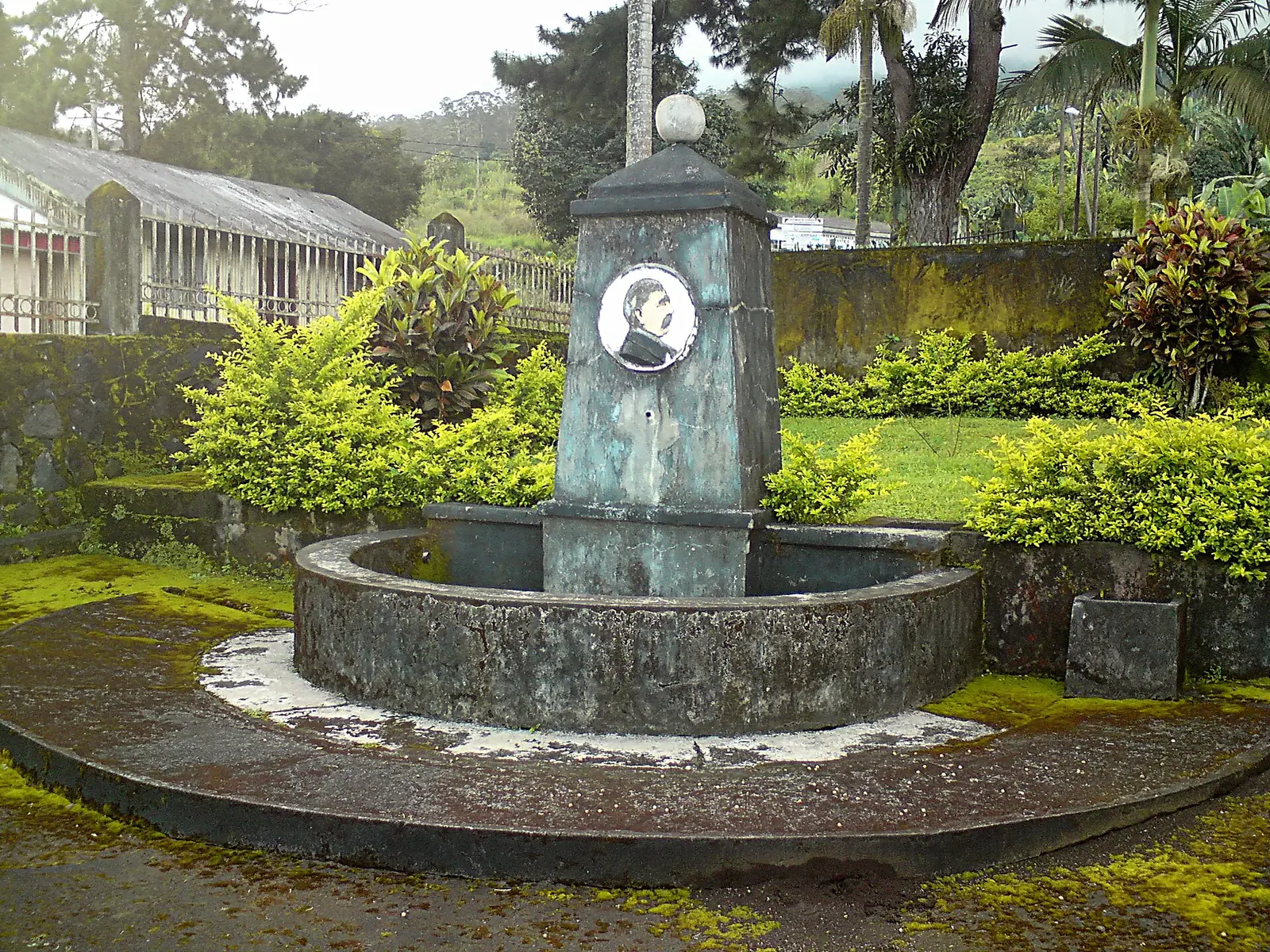
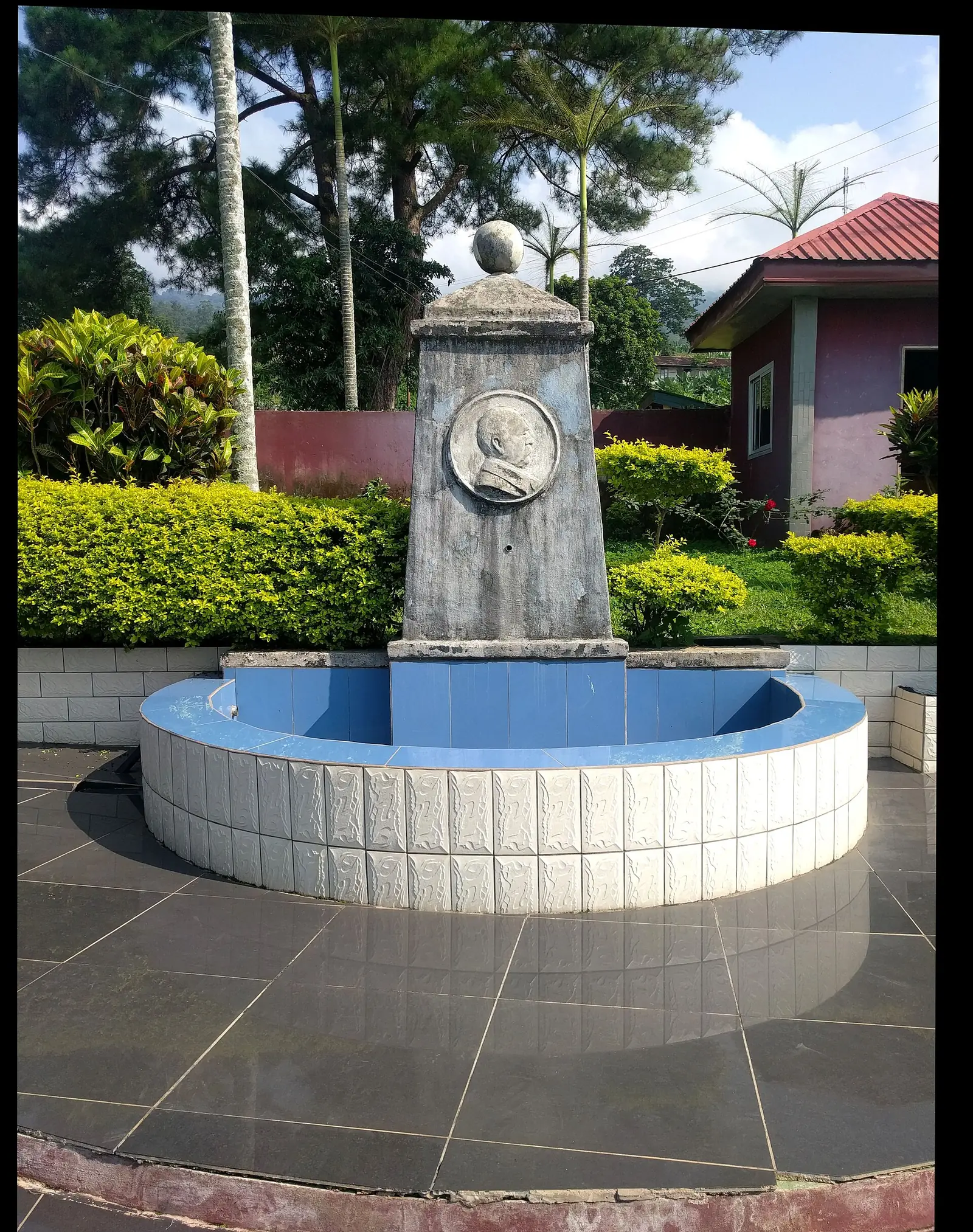
The German Federal Archives name the 'Puttkamer-Schlösschen', the Bismarck Fountain and the German cemetery at the foot of the mountain as the main reminders of the period. The same Buea news report adds the old Secretariat and a post office of 1902, along with houses and roads of the German era. Buea also holds a branch of the National Archives of Cameroon, which keeps the library of the imperial German government and the files of the part of Cameroon placed under British mandate after 1919. Wikipedia notes that only a handful of colonial buildings survive and that some of them suffer from age and lack of maintenance.3,4,1
In pictures
Still to confirm
Our sources can't yet confirm these points:
- When Buea stopped being the German capital: 1909 (Gouaffo and Tsogang Fossi) or 1919 (Wikipedia). Britannica, which may give other dates, could not be opened.
- The building dates of the Bismarck Fountain (1899 appears only in Commons captions) and the post office (1902, from one news report).
- The present use of the governor's residence; a search result said it serves as a presidential residence, but no page read confirms it.
- Whether 'Prime Minister's Lodge' and the Puttkamer residence are one building: only the Mimi Mefo Info report equates them.
- A date for the Mimi Mefo Info report, which shows only a relative date.
Sources for this page
Information checked on 9 November 2026. It may have changed since.
- Buea, Wikipedia (undated)
- Spuren und Erinnerungen hundert Jahre nach der deutschen Kolonialzeit in Kamerun (Albert Gouaffo and Richard Tsogang Fossi; first published 2018 in Deutschland postkolonial?), Bundeszentrale für politische Bildung (bpb) (27 September 2019)
- Zwischen Bestandserhaltung und Bühnennebel: Deutsche Kolonialakten in Kamerun, Bundesarchiv (German Federal Archives) (undated)
- Remembering 30-year German rule in Cameroon: NEW Foundation plans to build Deutsch Memorial site in Buea (Tata Mbunwe), Mimi Mefo Info (shown as '6 years ago')
- Mount Cameroon, Wikipedia (undated)
Southwest Region
Capital: Buea
A region running from the Gulf of Guinea coast up Mount Cameroon, an active volcano, with Buea, the former German colonial capital, as its capital.
More places in the Southwest Region
Mount Cameroon
An active volcano rising from the Atlantic shore to the highest point of western and central Africa, with forests, grasslands and wildlife found nowhere else.
Limbe Botanic Garden
Founded in 1892 as a colonial trial garden between the ocean and Mount Cameroon, it now keeps about 1,500 kinds of plants and a herbarium of some 30,000 specimens.
Limbe Wildlife Centre
Set up in 1993 in the old Victoria Zoo, this sanctuary cares for gorillas, chimpanzees and drills rescued from the bushmeat and pet trades.
Black Sand Beaches of Limbe
Beaches of dark sand on the Atlantic at Limbe, formed mainly from the basalts of the Cameroon Volcanic Line, with Mount Cameroon behind the town.