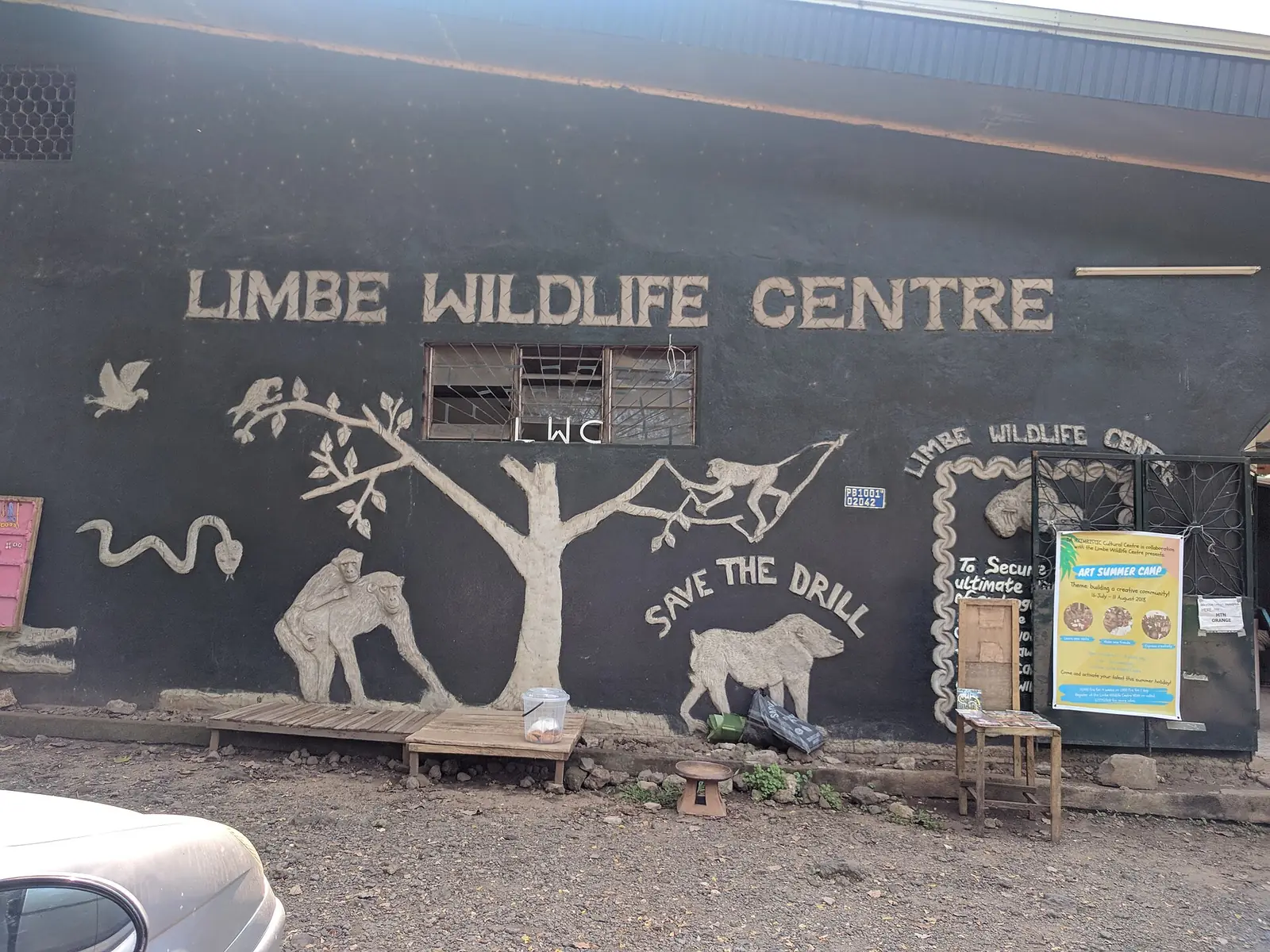
- Great apes and drills, January 2024
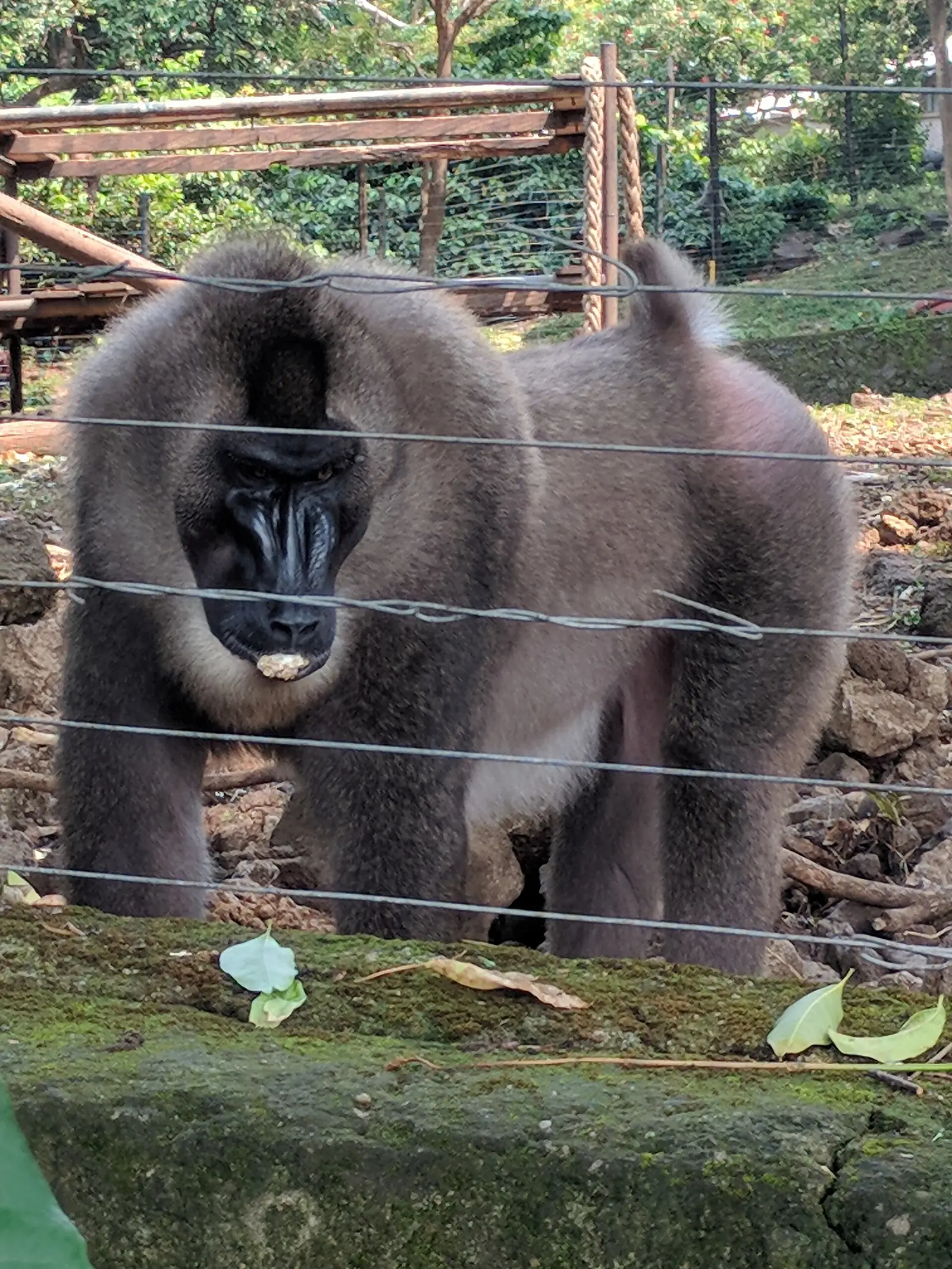
- 14 western lowland gorillas, 41 chimpanzees, 67 drills1
From zoo to sanctuary
The Limbe Wildlife Centre takes in animals caught up in the bushmeat and pet trades, and others that are injured, orphaned or displaced. It was set up in 1993 by the Government of Cameroon and Pandrillus, a foundation created in 1988 by Peter Jenkins and Liza Gadsby to protect drills in Nigeria and Cameroon. While surveying drills in western Cameroon in the early 1990s, the pair kept finding wild-born chimpanzees held as pets; Pandrillus says it listed nearly 50 in need of a new home within six months of fieldwork.1,2,3
The first aim was a chimpanzee sanctuary, and the old Victoria Zoo in Limbe was chosen for its grounds, water supply and visitors. According to Born Free, eleven primates were then kept in small wire cages, alongside some reptiles, duikers, birds and small carnivores, and many enclosures stood empty but could be repaired. Pandrillus lists among the zoo's animals a single chimpanzee, Suzanne, three drills, baboons, red-capped mangabeys, guenons and an adult male mandrill. The Ministry of Forestry and Wildlife is the management authority on behalf of the state.1,2
The animals
In January 2024 Born Free, which has supported the centre since 2004, reported 14 western lowland gorillas, 41 chimpanzees and 67 drills, besides other primates, mammals, reptiles and birds. These numbers change: an older Pandrillus page, carrying a 2008 copyright, gave 16 gorillas, including what it called the only known Cross River gorilla in captivity, and counted 15 native primate species, among them three mangabeys and seven guenons. Small carnivores, duikers, birds and reptiles are also rehabilitated, and most of them are later released.1,2
Drills matter here in particular. The Pan African Sanctuary Alliance, of which the centre is a founding member, notes that fewer than 4,000 mature drills were thought to remain in the wild in 2020, according to the IUCN, and that the centre keeps a large population of them. Its longest-running release work concerns African grey parrots: Born Free estimates that about 4,000 have been rescued and released.3,1
Education
In pictures
Map
Still to confirm
Our sources can't yet confirm these points:
- Current animal numbers; the latest figures read date from January 2024.
- The centre's own history page, cited in the earlier check, could not be reached on 2026-11-09 (connection refused).
- Whether the Cross River gorilla mentioned by Pandrillus about 2008 is still at the centre.
- The French name 'Centre animalier de Limbé' was not found in any source.
Sources for this page
Information checked on 9 November 2026. It may have changed since.
- Thirty years of rescue in Cameroon, Born Free Foundation (22 January 2024)
- Limbe Wildlife Center, Pandrillus Foundation (Copyright 2008)
- Limbe Wildlife Centre, Pan African Sanctuary Alliance (PASA) (undated)
Southwest Region
Capital: Buea
A region running from the Gulf of Guinea coast up Mount Cameroon, an active volcano, with Buea, the former German colonial capital, as its capital.
More places in the Southwest Region
Mount Cameroon
An active volcano rising from the Atlantic shore to the highest point of western and central Africa, with forests, grasslands and wildlife found nowhere else.
Limbe Botanic Garden
Founded in 1892 as a colonial trial garden between the ocean and Mount Cameroon, it now keeps about 1,500 kinds of plants and a herbarium of some 30,000 specimens.
Black Sand Beaches of Limbe
Beaches of dark sand on the Atlantic at Limbe, formed mainly from the basalts of the Cameroon Volcanic Line, with Mount Cameroon behind the town.
Mount Cameroon Race of Hope
An annual race from Buea to the summit of Mount Cameroon and back, run since the 1970s, whose record of 3 h 46 min has stood since 1987.