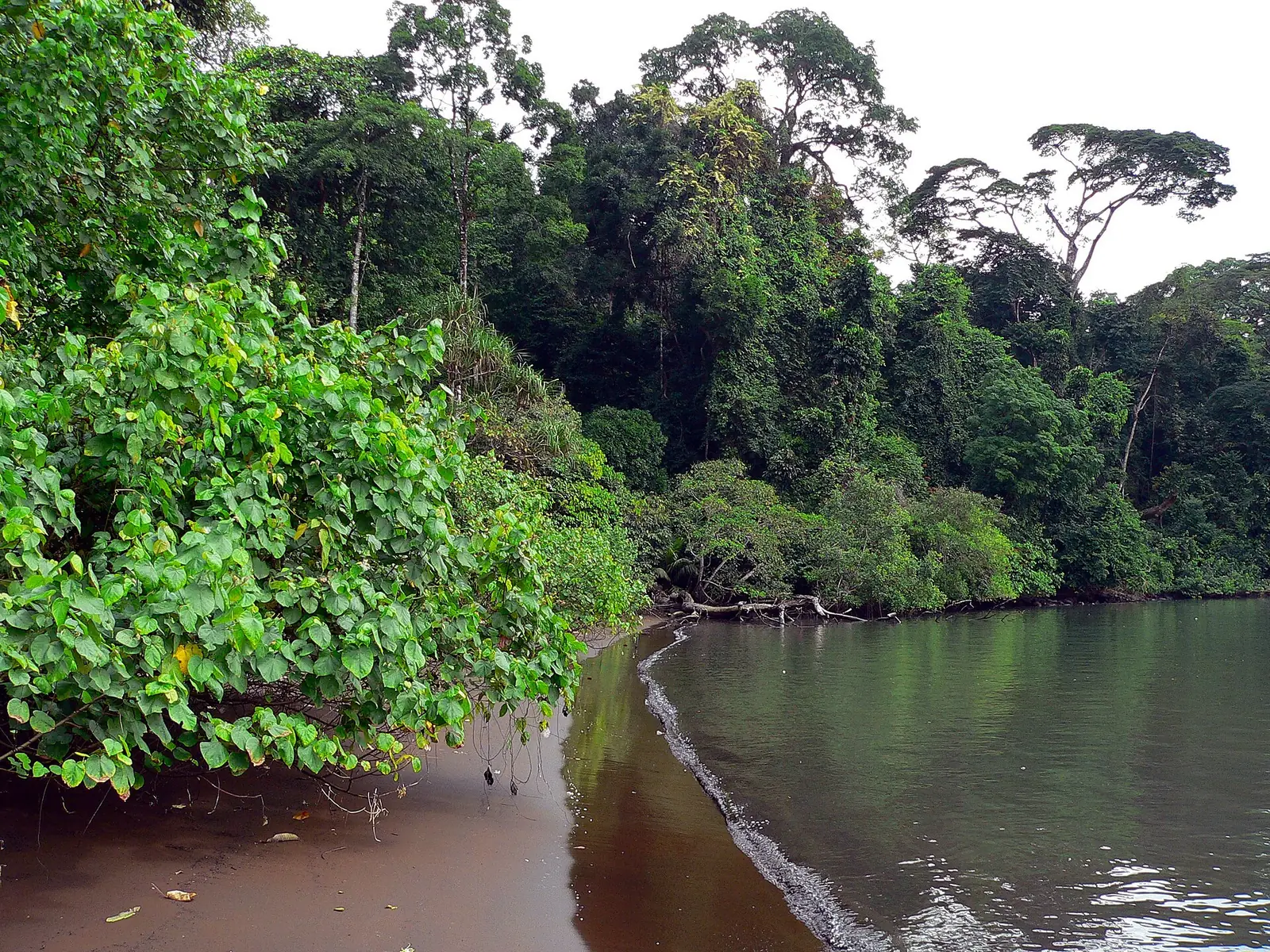
- Source of the sand
- Mainly mafic rocks, the basalts of the Cameroon Volcanic Line (2024 study)1
- Town founded
- 1858, as Victoria; called Limbe since 19822
What they are
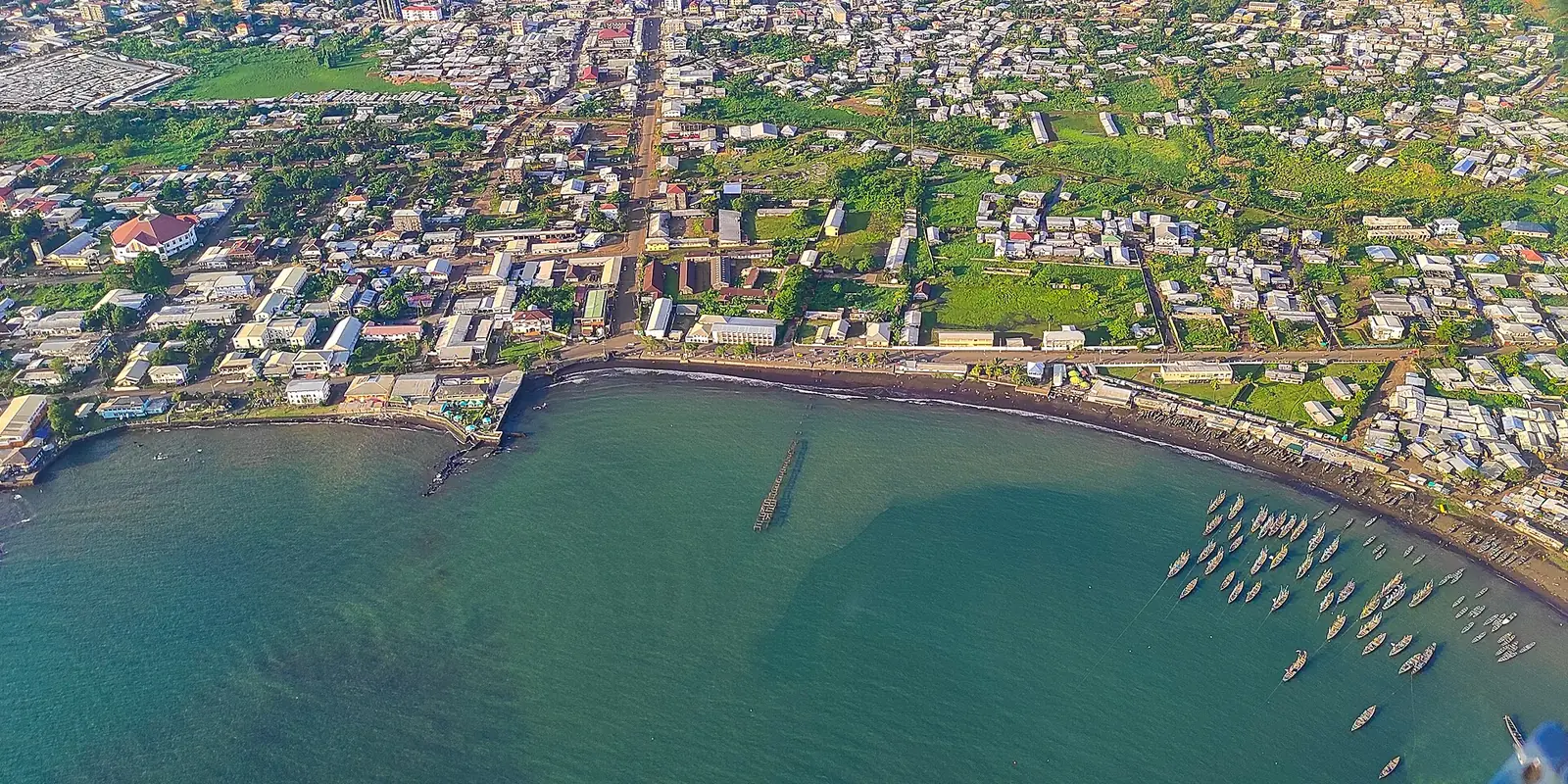
Limbe is a city on the Atlantic coast of Cameroon's Southwest Region, set on a bay with Mount Cameroon behind it. Its shoreline is known for beaches of dark sand. They are a group rather than one named place. A travel blog names Down Beach in the town, Mile 6 and Batoke nearby, and Bimbia about 6 km away, and describes the sand at Limbe as fine and dark grey.2,3,4,5
Why the sand is dark
A 2024 study in the Journal of the Geological Society of India examined the Limbe beach sands through petrography, mineralogy and geochemistry. It classes them as sandy litharenite derived from mafic and andesitic rocks. Minerals such as olivine, augite, amphibole and pyroxene point to the basalts of the Cameroon Volcanic Line, while granites played only a minor part. The angular grains suggest that the source rocks lie close to the shore. The authors link this setting, volcanic rock with high relief, to black or iron-oxide-rich sands. The abstract names the volcanic line, not Mount Cameroon alone; the travel blog attributes the sand to the mountain's lava.1,5
History of the shore
Portuguese traders reached the nearby estuary in 1472, and the Isubu of the neighbouring Bimbia coast became middlemen in ivory, kola nuts and peppers, with enslaved people a major commodity. In 1858 the Baptist missionary Alfred Saker founded Victoria on land sold by King William of Bimbia. Its first residents included formerly enslaved people and Isubu from Bimbia. The town came under German control from 1887 and British control from 1915, and took the name Limbe in 1982.2,6
Limbe had 84,223 residents at the 2005 census, and a 2020 projection gives 123,777. Fishing is among its activities, alongside trade, oil and some tourism.2,3
In pictures
Map
Still to confirm
Our sources can't yet confirm these points:
- Whether every named beach (Down Beach, Mile 6, Batoke, Bimbia) has the same sand; the study's abstract does not list its sampling points.
- A non-commercial source naming the individual beaches and their extent.
Sources for this page
Information checked on 6 November 2026. It may have changed since.
- Provenance of Beach Sands in the Northern Gulf of Guinea, SW Cameroon (Kwewouo Janpou et al., abstract read through OpenAlex; DOI 10.17491/jgsi/2024/172987), Journal of the Geological Society of India (2024)
- Limbe, Store norske leksikon (Morten Hagen) (12 July 2020)
- Limbé, Cameroon, Wikipedia (undated)
- Limbe, Wikivoyage (undated)
- Visit Limbe Beach (travel blog by Johan Kruseman; used only for beach names and the look of the sand), Take Your Backpack (Updated 2026-11-01)
- Bimbia, Wikipedia (undated)
Southwest Region
Capital: Buea
A region running from the Gulf of Guinea coast up Mount Cameroon, an active volcano, with Buea, the former German colonial capital, as its capital.
More places in the Southwest Region
Mount Cameroon
An active volcano rising from the Atlantic shore to the highest point of western and central Africa, with forests, grasslands and wildlife found nowhere else.
Limbe Botanic Garden
Founded in 1892 as a colonial trial garden between the ocean and Mount Cameroon, it now keeps about 1,500 kinds of plants and a herbarium of some 30,000 specimens.
Limbe Wildlife Centre
Set up in 1993 in the old Victoria Zoo, this sanctuary cares for gorillas, chimpanzees and drills rescued from the bushmeat and pet trades.
Mount Cameroon Race of Hope
An annual race from Buea to the summit of Mount Cameroon and back, run since the 1970s, whose record of 3 h 46 min has stood since 1987.