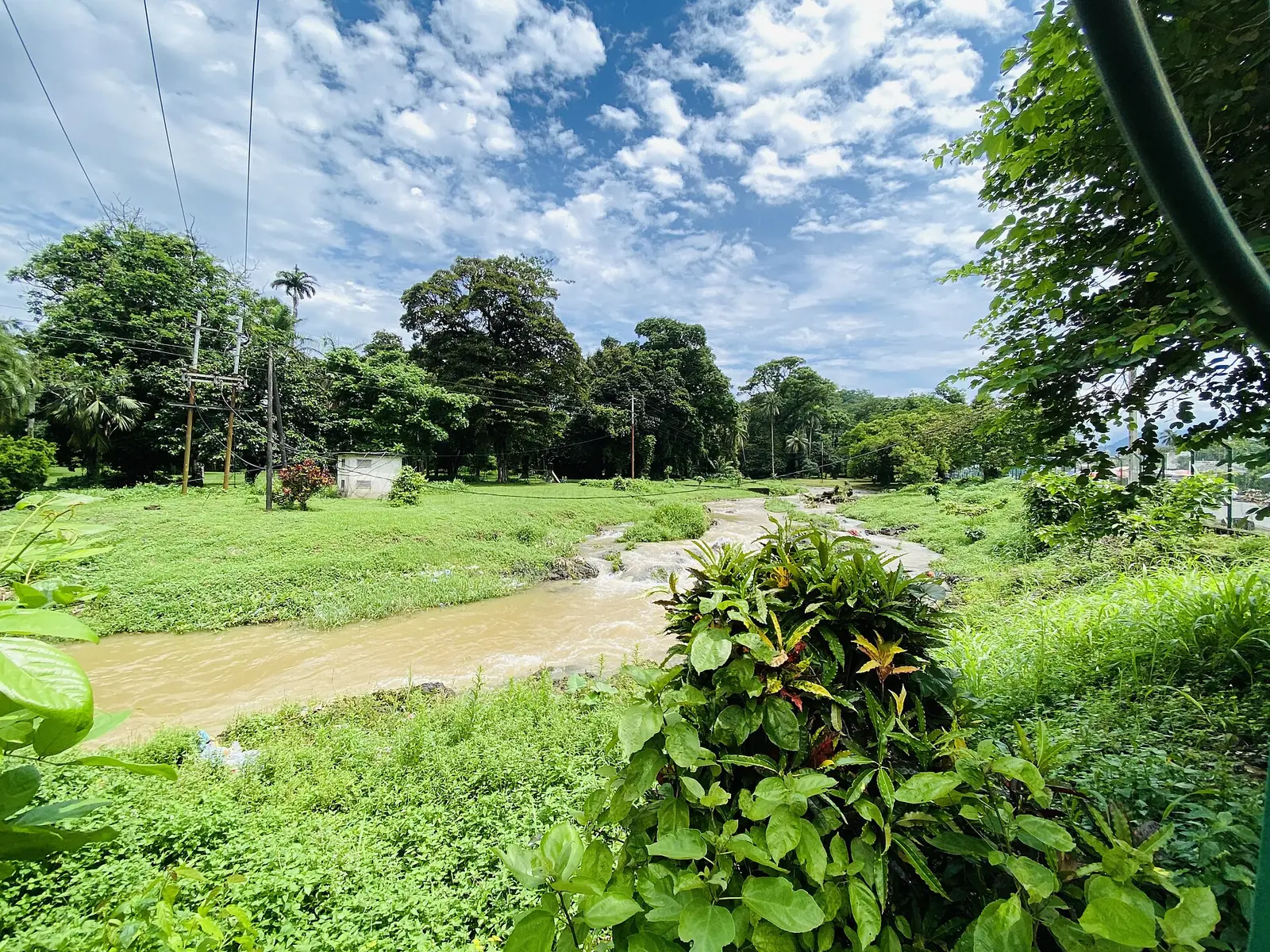
A colonial trial garden
The garden was founded in 1892 by a group of Germans led by Paul Rudolph Preuss, in what was then Victoria and is now Limbe, on the coast at the foot of Mount Cameroon. It served as a trial and acclimatisation centre for crops brought in for Kamerun and other German colonies, among them coffee, cocoa, rubber, oil palm, banana, teak and sugar cane. Plots for highland crops such as tea were laid out at Buea. A 1994 article published by Botanic Gardens Conservation International (BGCI) says that in its heyday it was reputed to be one of the most important tropical botanic gardens in the world, with a herbarium, laboratories, classrooms, a museum and a library.1,4
Decline and renewal
The British took charge in 1920, advised by the Royal Botanic Gardens, Kew, with a Kew-trained superintendent. After they left in 1932, Cameroonian staff ran the garden directly until 1958, and the government took it over in 1961; the garden declined in this period. A British-Cameroonian memorandum of understanding signed in 1988 led to its renovation, with the British Overseas Development Administration as partner, and its role moved from agriculture to conservation, education, science and recreation. Its boundaries were redrawn at about 48 ha. BGCI says the garden once covered about 200 ha before the town grew around it; Wikipedia gives 250 ha.1,2,4
Collections and research
A 2001 national report to the Convention on Biological Diversity listed it as a state garden under the environment and forestry ministry, holding about 1,500 taxa, 1,000 herbaceous and 500 woody, with 150 endemics among its rare and threatened plants, and special collections of African palms, Mount Cameroon endemics and bananas (Musa). Its 'conservation through cultivation' programme grows useful forest species such as Irvingia gabonensis, Garcinia kola, Prunus africana and Gnetum, work described in a 2003 chapter published by Kew. BGCI's current profile gives the herbarium, code SCA, about 30,000 specimens, against 21,000 in 2001, and describes an arboretum with teak and cedrela plots, and an area of wild forest on Bota Hill.3,6,2
The garden today
A 2016 Cameroon Tribune article describes the site, overlooking Ambas Bay, as the Limbe Botanic and Zoological Garden. Wikipedia reports that some of the old buildings, including the laboratory and library, were turned into a hospital, and that the grounds hold the graves of Commonwealth soldiers, four from the First World War and sixteen from the Second.5,4
In pictures
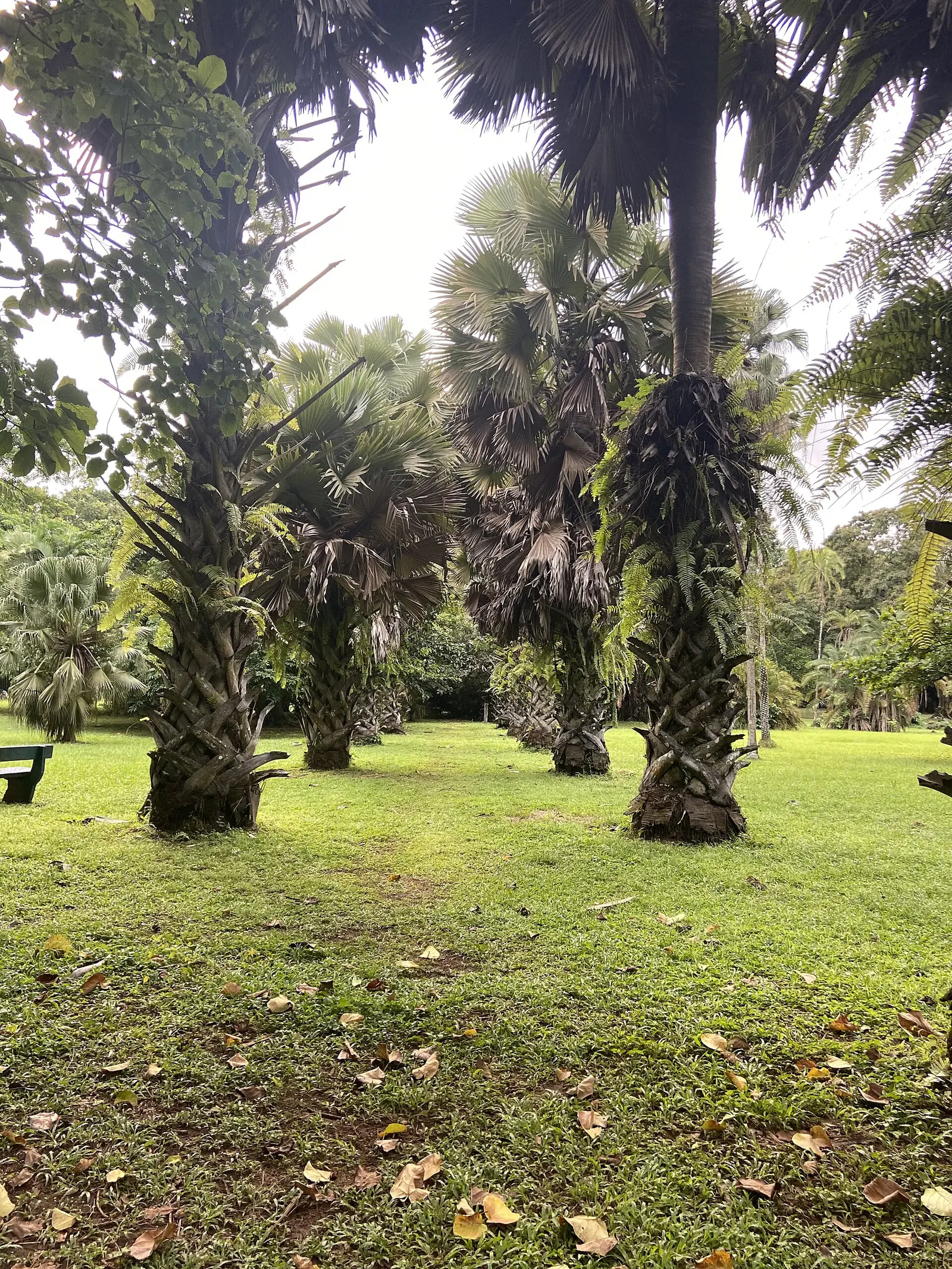
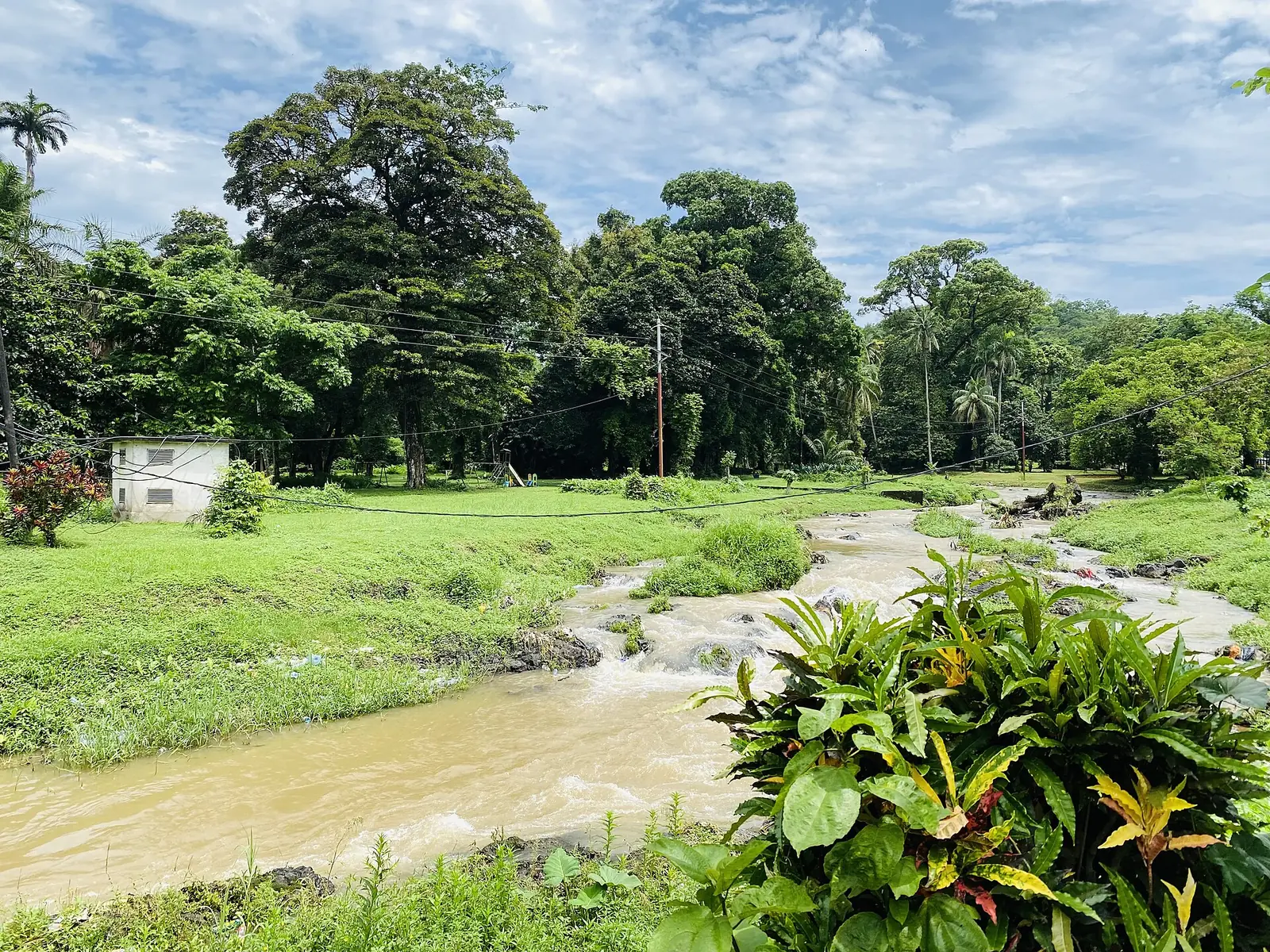
Map
Still to confirm
Our sources can't yet confirm these points:
- The garden's original area: about 200 ha (BGCI) or 250 ha (Wikipedia).
- The founding year: 1892 in every source read, but a search result gave 1901; not seen on any page opened.
- The number and dates of the Commonwealth war graves: the CWGC page could not be opened.
- Which ministry and body manage the garden today; the 2001 CBD report names the environment and forestry ministry, which has since been reorganised.
- Whether the herbarium total of about 30,000 specimens is current; BGCI's profile carries no date.
Sources for this page
Information checked on 9 November 2026. It may have changed since.
- Limbe Botanic Garden, Cameroon (BGCI News, vol. 2 no. 3; archived copy), Botanic Gardens Conservation International (1994-05)
- GardenSearch: Limbe Botanic Garden, Botanic Gardens Conservation International (undated)
- Cameroon: botanic gardens (ex situ collections profile), Convention on Biological Diversity (10 July 2001)
- Limbe Botanic Garden, Wikipedia (undated)
- Limbe Botanic Garden: Any Tourist's Dream Destination (Peter Essoka; opening section read, rest paywalled), Cameroon Tribune (24 November 2016)
- Conservation through cultivation: the work of the Limbe Botanic Garden, Cameroon (Sunderland, Ndam, Blackmore and Nkefor; record of a chapter in Plant Conservation in the Tropics, Kew), UK Government, Research for Development Outputs (2003)
Southwest Region
Capital: Buea
A region running from the Gulf of Guinea coast up Mount Cameroon, an active volcano, with Buea, the former German colonial capital, as its capital.
More places in the Southwest Region
Mount Cameroon
An active volcano rising from the Atlantic shore to the highest point of western and central Africa, with forests, grasslands and wildlife found nowhere else.
Limbe Wildlife Centre
Set up in 1993 in the old Victoria Zoo, this sanctuary cares for gorillas, chimpanzees and drills rescued from the bushmeat and pet trades.
Black Sand Beaches of Limbe
Beaches of dark sand on the Atlantic at Limbe, formed mainly from the basalts of the Cameroon Volcanic Line, with Mount Cameroon behind the town.
Mount Cameroon Race of Hope
An annual race from Buea to the summit of Mount Cameroon and back, run since the 1970s, whose record of 3 h 46 min has stood since 1987.