- UNESCO status
- Tentative List, submitted 2 February 20181
- From Bamenda
- 22 km, on the road to Wum1
- World Monuments Watch
- 20062
A royal compound and a sacred forest
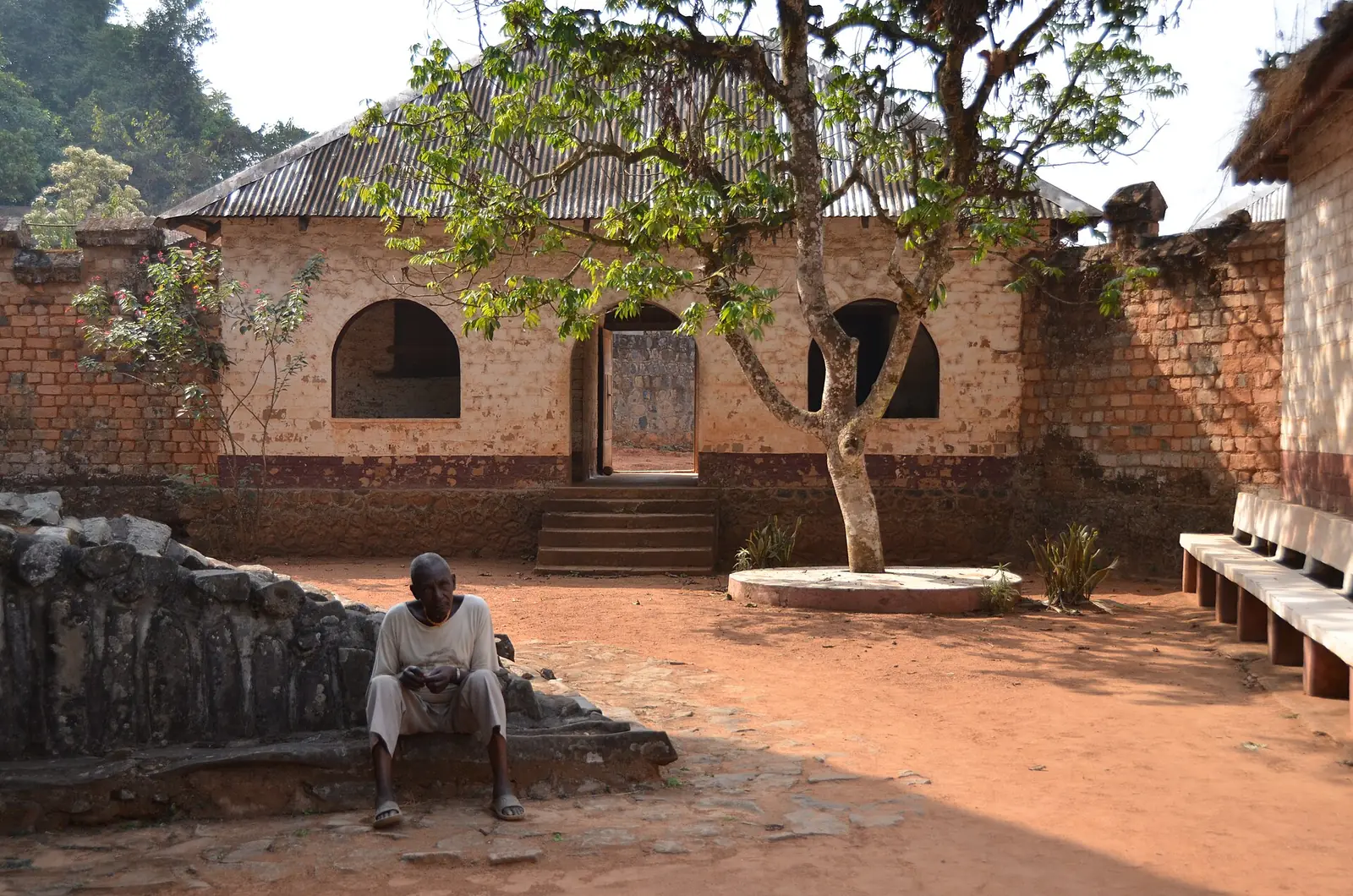
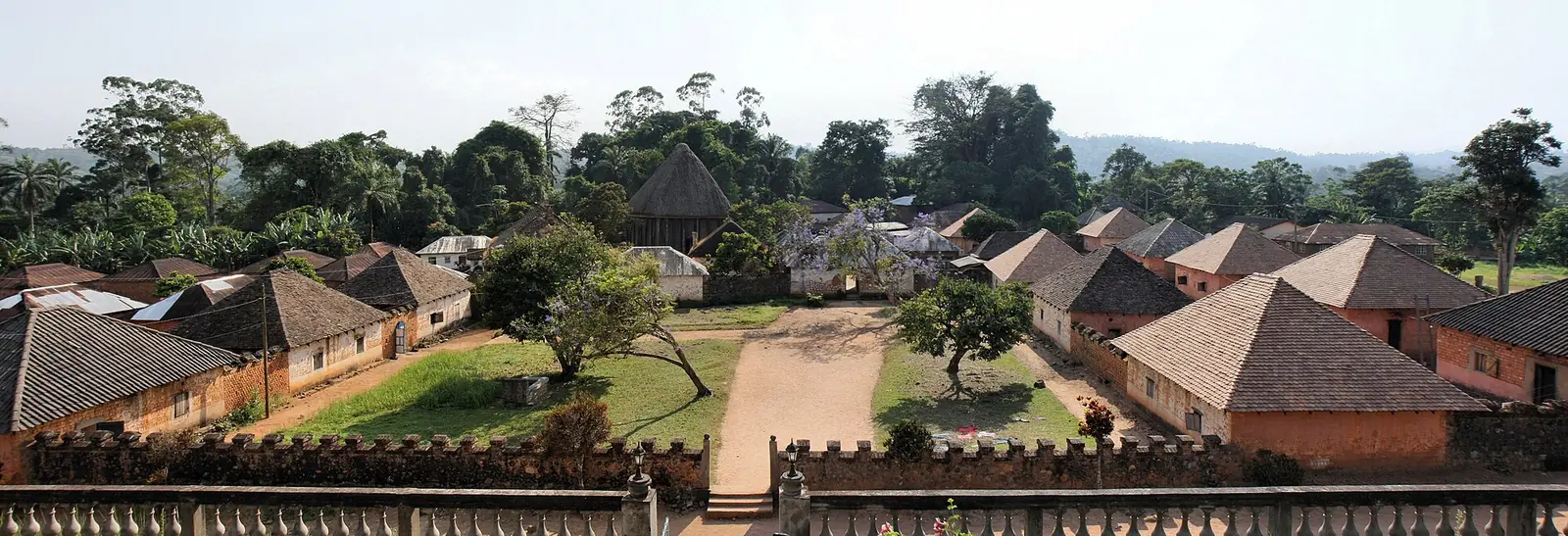
The palace is the seat of the Fon of Bafut, in Mezam Division. UNESCO's entry, written by Cameroon's arts and culture ministry, describes an ensemble of about 50 buildings: the palace itself, a sacred forest beside the Fon's residence, a guest house above the compound, places of worship, two women's quarters and lodges of secret societies. Most of the houses are fired brick under tile roofs. The forest holds medicinal plants and tree species that have disappeared from the land around it.1
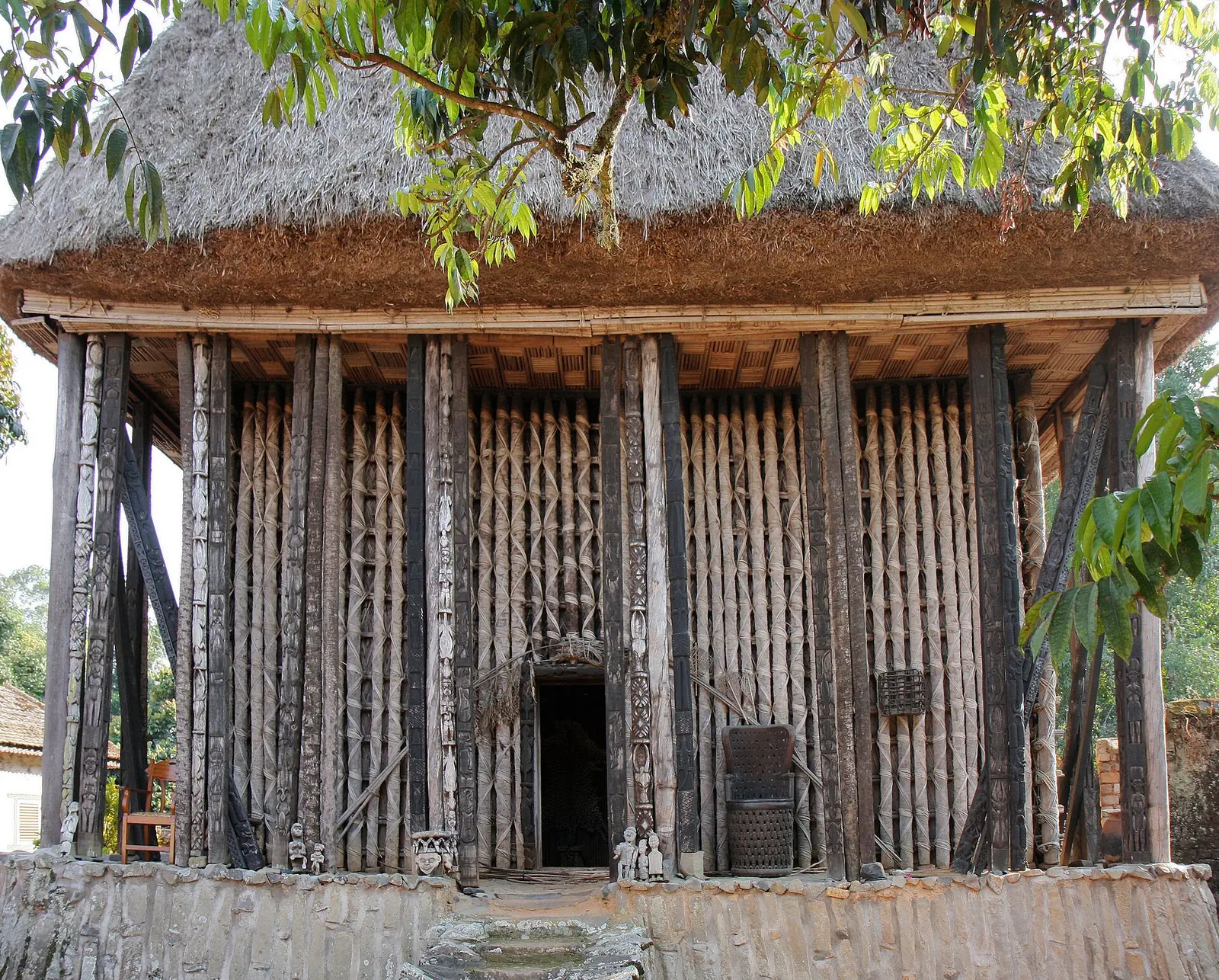
At the centre stands the Achum, a shrine for ancestor worship made of bamboo and wood, with carved pillars and a thatched roof. Only the Fon and a small circle of notables or advisers may enter. Beyond the shrine, the World Monuments Fund describes the palace as a place where religious rites and traditional ceremonies still take place.1,2,4,5
War with Germany and rebuilding
Relations with the Germans soured after the explorer Eugen Zintgraff's visit in 1889. The historian Mathias Niba records that Bafut suffered punitive raids in 1901, 1904-05 and 1907, after which the Fon, Abumbi, was arrested and exiled to Douala for a year. The palace was burned during these wars and rebuilt between 1907 and 1910, with German help, on the same site and to the same layout. The result mixes colonial and local styles.1,3,4
Sources disagree on the Achum. UNESCO's entry says the Germans destroyed it in 1907 and that it was rebuilt around 1910, while Wikipedia calls it the only building left from the original palace. We give the UNESCO account, since it comes from the state's own submission, but the question remains open.1,4
The age of the seat is also uncertain. The World Monuments Fund speaks of over 400 years of political power here, while a 2021 article refers to a 700-year-old dynasty. Oral tradition traces the dynasty to the Ndobo or Tikari areas.2,3,5
Museum, dances and a place in literature
The residence the Germans built for the Fon became a guest house and museum, holding carvings, costumes and weapons. Wikipedia adds that relics of the Battle of Mankon of 1891 were to be shown there. The palace plaza hosts the Abin-Mfor, the Fon's annual dance, which a 2021 study places at the end of each year, and grass gathered in a yearly ceremony is used to rethatch buildings such as the Achum. Gerald Durrell described Fon Achirimbi II, the grass-cutting and the dance in The Bafut Beagles and A Zoo in My Luggage.4,5
Conservation and heritage status
The World Monuments Fund placed the palace on its 2006 Watch. By 2007 many roofs were failing, with some sections collapsed. The most damaged were rebuilt with local partners, and because traditional tiles were no longer available, artisans learned to make replacements by traditional methods. Work on the Achum followed in the late 2000s, and the fund's photographs show it being rethatched in 2011.2
The 'Chefferie de Bafut' is on UNESCO's Tentative List, not the World Heritage List. UNESCO gives 2 February 2018 as the submission date, under criteria (i), (iii), (v) and (vi). A 2019 statement by the Arts Council of the African Studies Association says it had been listed since 2006, but UNESCO's own date is the one we use.1,6
In pictures
Map
Still to confirm
Our sources can't yet confirm these points:
- Whether the Achum survived the German attacks or was rebuilt around 1910.
- The age of the dynasty and of the seat at this site: 400 and 700 years are both quoted, neither with firm evidence.
- Whether an earlier Tentative List entry from 2006 existed before the 2018 submission.
- The present condition of the buildings and museum collection, which no recent source we read describes.
Sources for this page
Information checked on 6 November 2026. It may have changed since.
- La Chefferie de Bafut, UNESCO World Heritage Centre (submitted by Cameroon's Ministère des Arts et de la Culture) (2 February 2018)
- Bafut Palace, World Monuments Fund (Watch year 2006)
- Setting (section of Mathias Niba, 'Bafut under colonial administration', in Perspectives on the State: Essays for Sally Chilver), Paideuma, online edition at mambila.info (1995)
- Fon of Bafut, Wikipedia (undated)
- The Abin-fo'o and the Mandele dances in the Bafut Kingdom (Suh Hillary Sama), International Journal of Advanced Engineering Research and Science (2021-10)
- CAA endorses ACASA statement on Cameroon, College Art Association (16 December 2019)
Northwest Region
Capital: Bamenda
A highland region of grassland, volcanic peaks and crater lakes, with Bamenda as its capital and Fons at the head of its many chiefdoms.
More places in the Northwest Region
Lake Oku
A crater lake on Mount Oku, ringed by montane forest and sacred to the Oku people. It is the only known home of the Lake Oku clawed frog.
Big Babanki (Kejom Keku)
Big Babanki, or Kejom Keku, is a Kejom-speaking fondom in the Bamenda Highlands, near patches of montane forest rich in birds found only in the Cameroon mountains.
Lake Nyos
A deep crater lake in Cameroon's Grassfields, studied by scientists for its dissolved gas and the pipes built to draw it from the depths.
Mankon Museum
A palace museum at the gate of Mankon Palace in Bamenda, showing objects of kingship, belief and daily life, some of which still leave for ceremonies.