- City
- Maroua, capital of the Far North and of Diamaré department1
- Craft centre
- Built in 1955 at the market entrance1
- Crafts since the 19th century
- Leatherwork, smithing, weaving1
- Main market day in 1980
- Monday3
A market of craftspeople
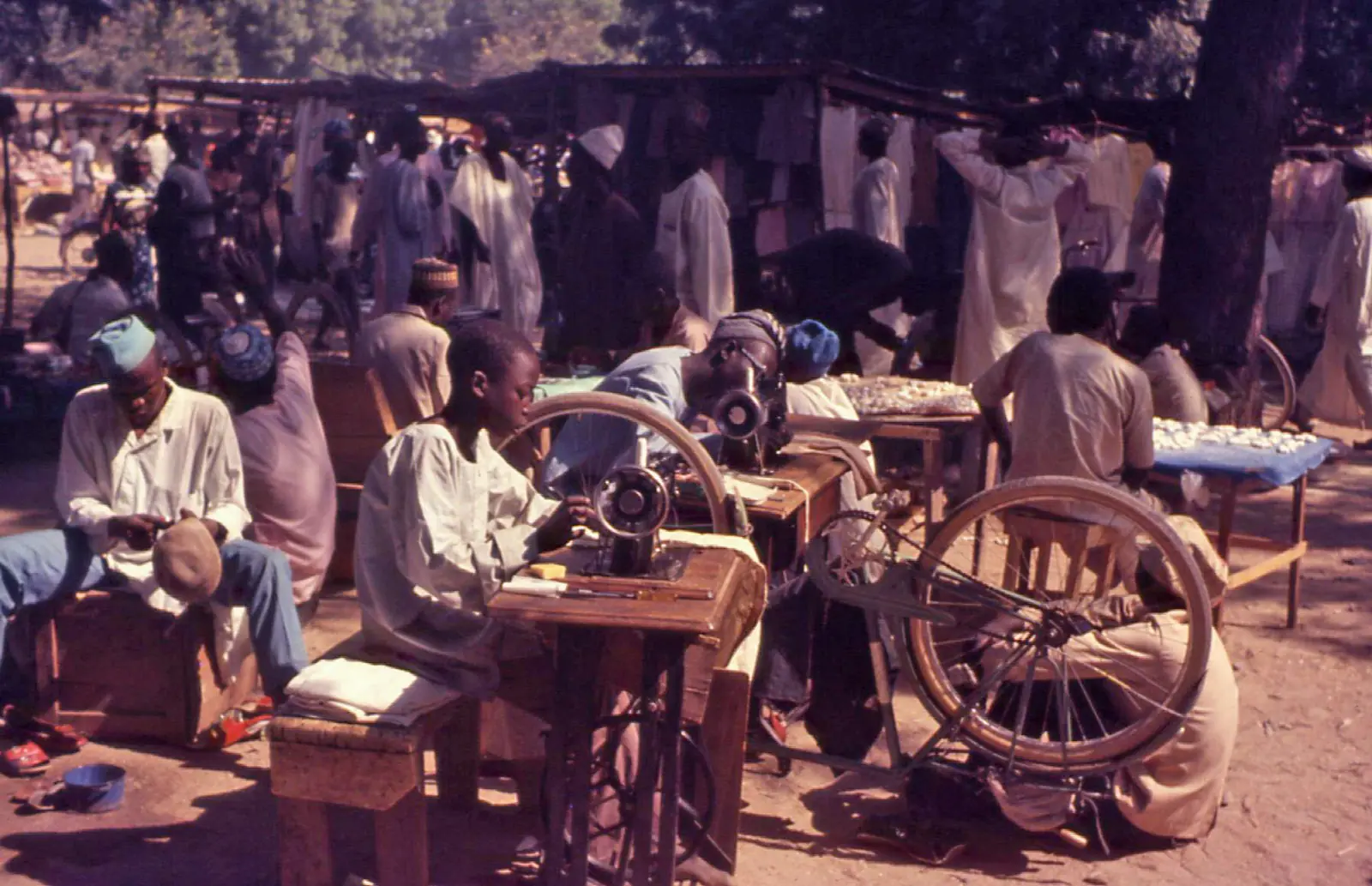
Maroua, capital of the Far North Region and of Diamaré department, is known for its crafts. Wikivoyage, an open travel wiki, describes its central market as a place where tanners, potters, tailors, weavers and blacksmiths gather every day. It says the craft centre at the market entrance brings together about fifty artisans, whose shops sell embroidered and hand-woven tablecloths, leather rugs and slippers, among other things.1,2
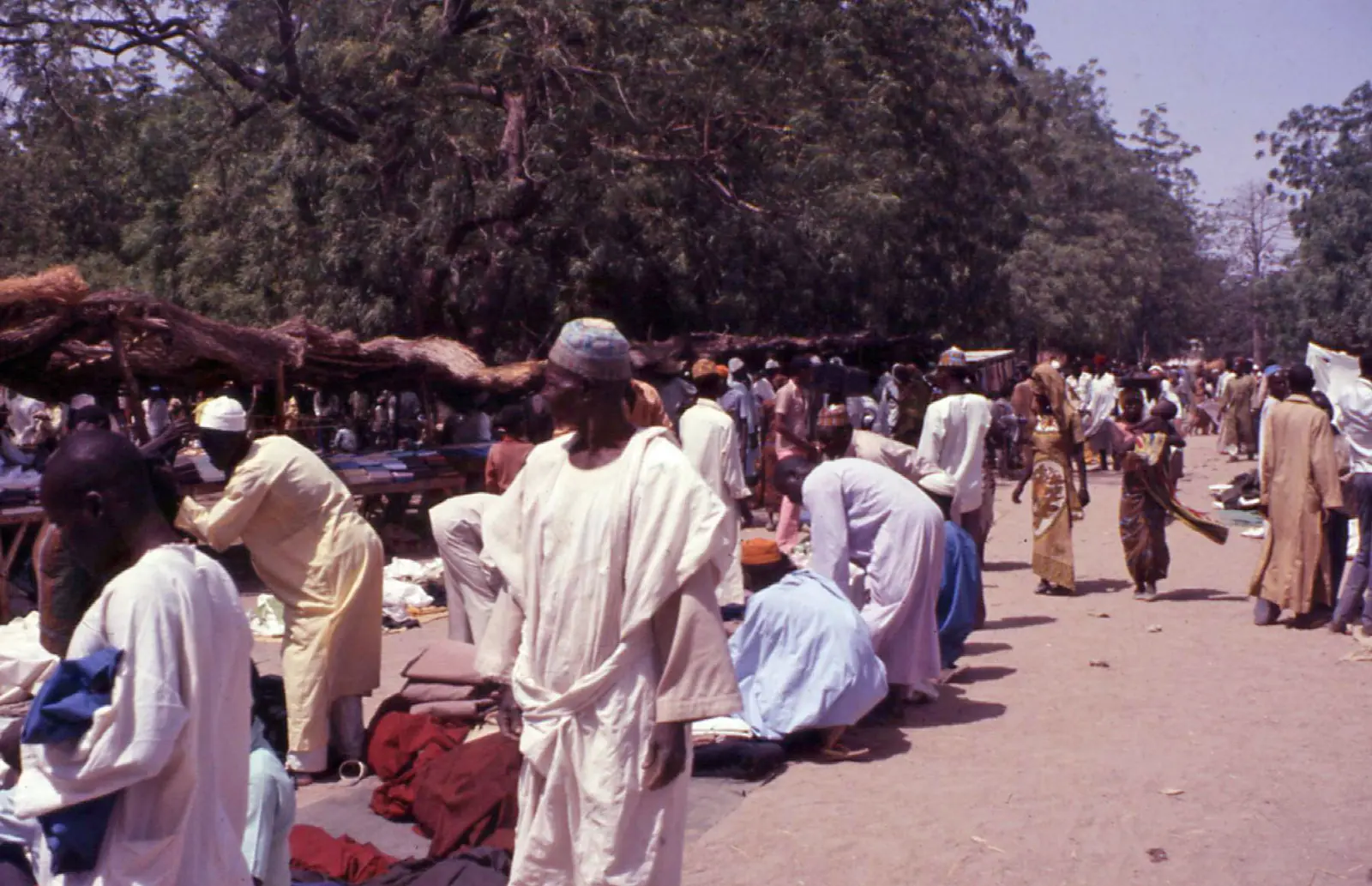
In 1980, a Michigan State University survey of markets in the Mandara Mountains listed Maroua among the major markets outside its study area that shaped trade in the mountains. Its main day was Monday, with cattle and all the major commodities on sale, especially manufactured goods.3
Crafts with 19th-century roots
Historian François Wassouni traces the city's history back to the 18th century, when Marva rose under the Guiziga. Fulani herders settled in growing numbers, and after a conflict in 1792-94 power passed to them. In the 19th century, caravans linked Maroua with Bornu, bringing in cloth, natron, perfume, glass beads and paper and taking out hides, ivory, enslaved people and, above all, horses.1
Kanuri merchants, and later Hausa ones, settled in Maroua with this trade, and under their influence three crafts grew up: leatherwork, smithing and weaving. Leatherworkers made grain sacks, saddles and harness, knife and sword sheaths, Koran covers, prayer mats, sandals and riders' boots. Smiths made hoes, weapons and jewellery, and weavers turned local cotton into cloth for ceremonial robes, with dyers colouring leather and cloth alongside them.1
The craft centre and later changes
From 1940, French colonial officials reorganised the crafts. Through the lamido, heads of guilds called lawans were appointed, some artisans were trained in France and Morocco, and new items such as poufs, babouches, briefcases and tablecloths replaced older ones. In 1947 a colonial cooperative society opened a craft sales section in Maroua, whose sales reached 700,021 francs in 1949, and the first census of the city's artisans was held in 1948.1
The craft centre was built in 1955 at the entrance to what is now the grand market, opposite the Founangué quarter. It was a building about 40 m long and 10 m wide, split into a sales room and a second room used as a museum of local art. Until about 1960 it was run by the wives of the colonial regional heads.1
From the 1970s, tourism turned much production towards souvenirs, and from the 1990s non-governmental organisations promoted new tanning methods and designs for export. Wassouni writes that many artisans resisted: some kept making sheaths, traditional Ngouroudjé shoes, prayer mats and robes for local buyers, and most stayed out of the cooperatives set up for them.1
The market buildings
In May 2015, the newspaper Mutations reported that hardly a year passed without a fire at Maroua's central market. Officials blamed improvised electrical connections, and traders said the shops had been built against one another without a town plan, leaving lanes too narrow for fire engines. The article described a February fire that destroyed a large building, after smaller ones in earlier years, including 2013.4
In pictures
Map
Still to confirm
Our sources can't yet confirm these points:
- When the central market itself was built or rebuilt; no date was found.
- Whether the 1955 craft centre building and its local art museum still stand.
- The number of artisans at the craft centre today (Wikivoyage's 'about fifty' is undated).
- The market's main day today; Monday is from a 1980 survey.
Sources for this page
Information checked on 9 November 2026. It may have changed since.
- L'artisanat africain entre domination et résistance de la période coloniale à nos jours : le cas de la ville de Maroua au Nord du Cameroun (François Wassouni), Afrika Zamani no. 17, CODESRIA and Association of African Historians (2009 (published 2012))
- Maroua, Wikivoyage (open travel wiki) (undated)
- An assessment of the supply and marketing situation for agricultural commodities in the Mandara Mountains Integrated Development Project region (J. Holtzman and M. Weber, Mandara Mountain Research Report no. 6), Michigan State University (August 1980)
- Maroua : le feu se donne un rendez-vous annuel, Mutations, republished by Camer.be (12 May 2015)
Far North Region
Capital: Maroua
Cameroon's northernmost region, where the Chad Plain meets the Mandara Mountains and more than 50 ethnic groups live. It holds the Diy-Gid-Biy World Heritage sites, Waza National Park and the craft traditions of Maroua, its capital.
More places in the Far North Region
Rhumsiki
A Kapsiki village of stone and thatch houses in the Mandara Mountains, set among volcanic peaks that include 1,224 m Kapsiki Peak.
Waza National Park
A national park and UNESCO biosphere reserve between Sahel and savanna, home to elephants, one of the last Kordofan giraffe populations and about 379 recorded bird species.
Mandara Mountains
A volcanic range of terraced slopes and eroded peaks on the Cameroon-Nigeria border, home to the Diy-Gid-Biy cultural landscape, a World Heritage site since 2025.
Lake Maga
A shallow reservoir created in 1979 on the Logone plain, home to hippopotamuses, large gatherings of waterbirds and Musgum and Massa fishing communities.