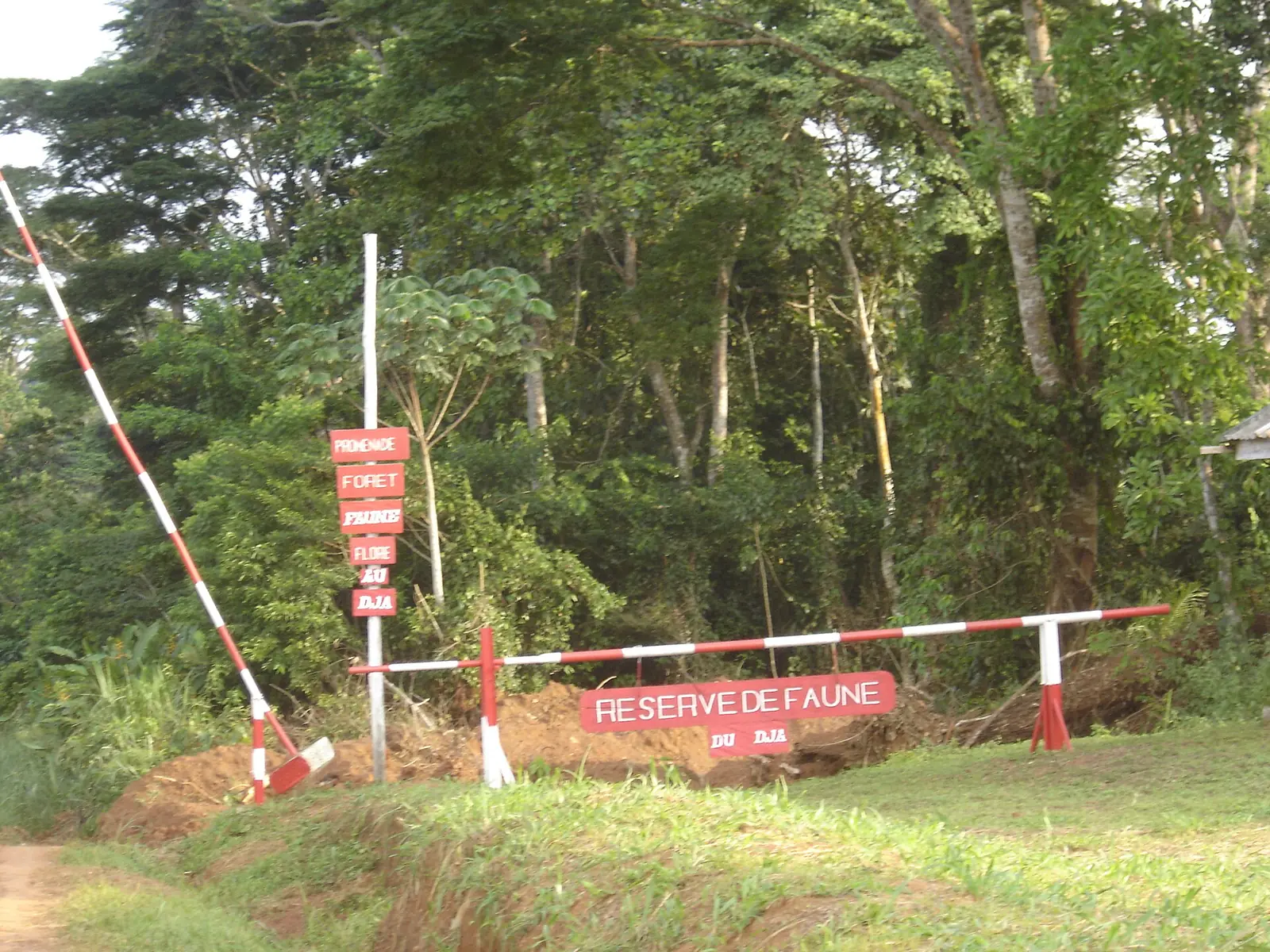
A rainforest almost ringed by a river
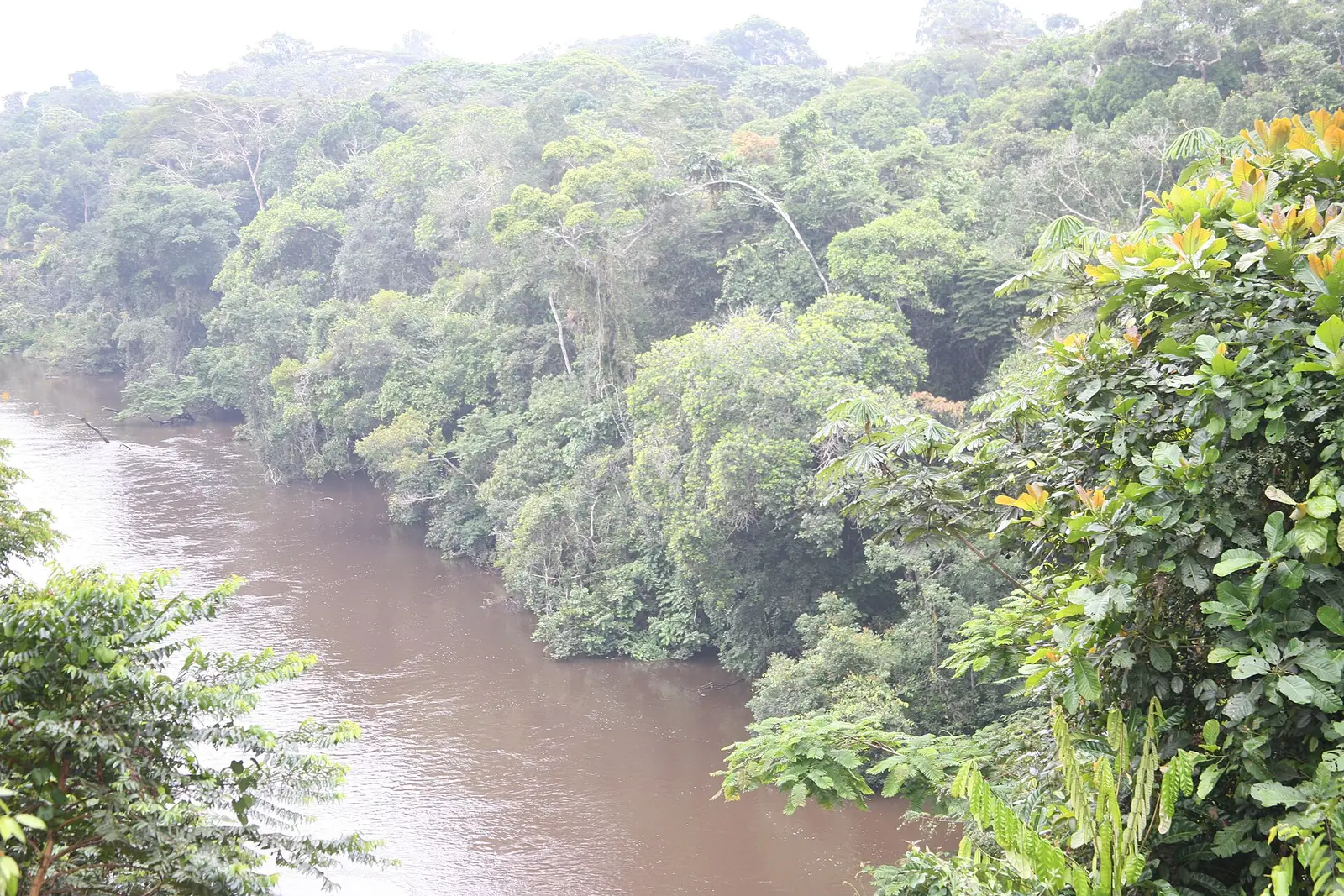
The Dja Faunal Reserve is a block of Congo Basin rainforest in southern and eastern Cameroon. The Dja River flows along its northern and southern edges and almost encircles it. In the south, cliffs follow the river for some 60 km, past rapids and waterfalls. The canopy stands at 30 to 40 m, with taller trees reaching 60 m.1,2
It was protected in 1950, accepted as a biosphere reserve in 1981 and inscribed as a World Heritage site in 1987. UNESCO calls it one of Africa's largest and best-protected rainforests. It adds that 90% of the area was considered intact at the time of listing, so that figure dates from 1987.1,2
Wildlife, and what the counts show
UNESCO lists western lowland gorilla, chimpanzee, white-collared mangabey, mandrill and drill among the primates, along with forest elephant, bongo and leopard. A 2018 survey of the whole site estimated about 1,258 gorillas (range 779 to 2,031) and 2,313 chimpanzees (range 1,568 to 3,411). Older, much higher figures were extrapolated from one sector, and the IUCN apes database warns that the difference in methods may exaggerate the decline.1,7
Official views have shifted. In 2019 the World Heritage Committee voiced its utmost concern at a decline in elephants and great apes and at widespread poaching. In 2025 it noted stable populations of these species and asked for regular inventories using the same methods to confirm the trend. It also expressed deep concern about the cumulative impact of development projects around the reserve and about delays in measures linked to the Mékin dam.4,5
Field reports show the pressure on the forest. A week-long expedition reported in 2015 found 16 hunting camps in the core of the reserve. The government's 2018 report listed 93 guards, and 40 camera traps had recorded 32 mammal species.6,9
The people of the Dja
Baka communities live in the reserve in a relatively traditional way. Agriculture and commercial hunting are banned, but traditional hunting is allowed. French Wikipedia gives about 4,000 people inside the perimeter in 2015 and 40,000 around it, including Badjoué, Boulou, Fang and Nzimé. Since 2023, UNESCO has funded small local projects around the reserve, and those chosen in the second round include dance and ritual groups for community tourism.1,8,10
What to do
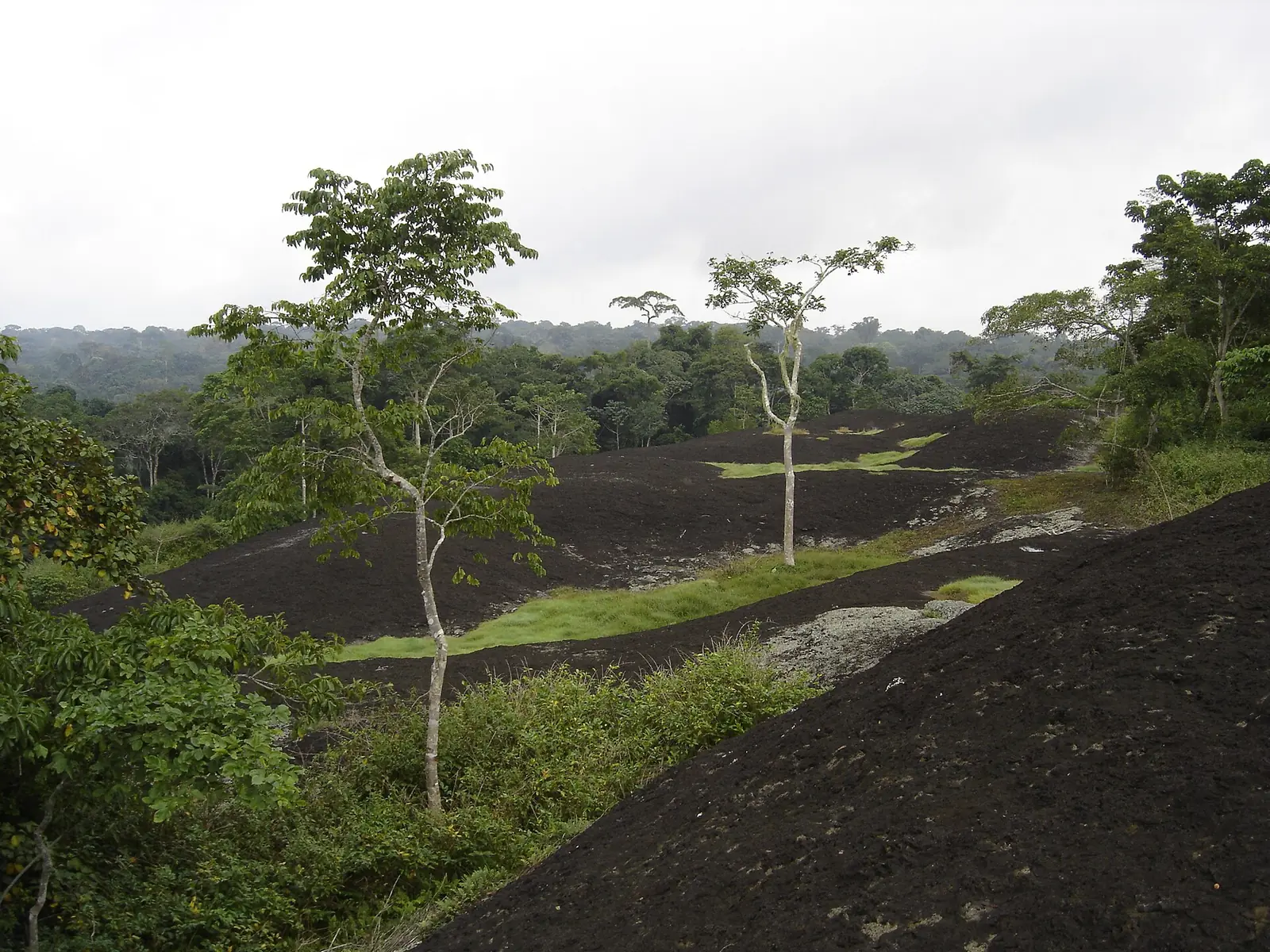
A visit here means walking, as transport inside the reserve is on foot only. One operator's programme walks 16 km from Somalomo to the rocky outcrop at Bouamir, site of a research station, then adds night walks and time at a Baka camp. It says that seeing animals depends on luck. Wikivoyage mentions paying to watch a traditional dance.7,11,12
How to get there
Yaoundé, with its international airport, is the usual starting point. Operators drive about 250 km to Somalomo, on the reserve's northern edge, where park formalities are handled. One expatriate guide puts the drive at about 7 hours. The Dja is then crossed by ferry or pirogue. Wikivoyage says buses reach the village just outside the reserve, but warns that the dirt road is slow and that you could be stuck for days in the rains. It suggests going with a guide or a tour company.3,11,12,13,14,15
Costs
We found no official price list. Wikivoyage (undated) says you pay a park fee and hire an armed nature guard and probably a guide, for about 10,000 to 15,000 FCFA in all. A guide published in March 2026 gives an entry fee of about 10 to 20 US dollars, with the guide and guard adding 10,000 to 15,000 FCFA. Treat both as rough. One operator listed an 11-day tour at €1,978 per person for a group of four, on a page marked 2022.11,12,14
When to go
Where to stay and eat
In pictures
Map
What visitors say
We summarise accounts published elsewhere and link to the original. These aren't reviews collected by this site, and we don't show a rating.
Very disappointed with a package bought from an ecotourism agency: a bare room in Somalomo, one night at a Baka camp, under a day in the reserve and no animals seen, which the writer says were days' walk away. Thought the price was far too high. This is one traveller's view, and the claims are unverified.
myboostee, Routard forum, February 2024
Check before you go
Our sources can't yet confirm these points:
- Current entry, guide and guard fees, and any camera fee
- An official contact for the Dja Conservation Service, and how to book or obtain a permit
- Road condition to Somalomo today, by season
- Public transport from Yaoundé or Lomié to Somalomo
- Which camps and guesthouses are operating
- The chance of seeing gorillas or elephants on a short visit
Also nearby
Sources for this page
Information checked on 6 November 2026. It may have changed since.
- Dja Faunal Reserve, UNESCO World Heritage Centre (undated)
- World Heritage nomination, IUCN summary: 407 Dja Faunal Reserve, IUCN (1987-04)
- Évaluation de la réserve de faune du Dja (407), IUCN, French-language evaluation (1987)
- Decision 47 COM 7B.44: Dja Faunal Reserve, UNESCO World Heritage Committee (2025)
- Decision 43 COM 7B.29: Dja Faunal Reserve, UNESCO World Heritage Committee (2019)
- State of conservation 2018: Dja Faunal Reserve, UNESCO World Heritage Centre (2018)
- Dja Biosphere (or Faunal) Reserve, IUCN SSC A.P.E.S. Wiki (25 October 2026)
- UNESCO promotes sustainable tourism and community conservation in Cameroon, UNESCO World Heritage Centre (14 February 2025)
- Article on poaching in the Dja, by Paul Steyn, National Geographic (17 June 2015)
- Réserve de faune du Dja, Wikipédia (4 August 2026)
- Dja Faunal Reserve, Wikivoyage (undated)
- From the wonders of the Dja reserve to meet the Ba'aka peoples, Discover Afrika, tour operator listing (2022)
- Dja Fauna Reserve multi-day tour from Yaoundé, ToursByLocals, tour listing (undated)
- Les sites touristiques incontournables au Cameroun, Cyril Jarnias, expatriate guide (personal site) (5 March 2026)
- Réserve de Dja Cameroun, Routard forum post (22 February 2024)
Enquire about Dja Faunal Reserve
Visit Dja Faunal Reserve
Plan your trip to Dja Faunal Reserve in the East Region. Send us an enquiry about guided tours, accommodation and transport, and we'll reply by email.
Send an enquiryEast Region
Capital: Bertoua
Cameroon's largest and most sparsely populated region, the East runs from wooded savanna around Bertoua to rainforest on the borders with the Central African Republic and Congo. It includes the Dja and Lobéké World Heritage areas.
More places in the East Region
Lobéké National Park
A rainforest park on the Sangha River and part of the Sangha Trinational World Heritage Site, where forest elephants, gorillas and bongo come out into open clearings called bais.
Nki National Park
A remote, hilly rainforest park on the Dja River, where the Nki Falls mark the limit of navigation and elephants, gorillas and sitatunga gather in forest clearings.
Boumba Bek National Park
A lowland rainforest park enclosed by the Boumba and Bek rivers, where forest buffalo graze in rocky clearings and gorillas and chimpanzees live in forest that has never been logged.
Bélabo Railway Station
A railway town on the Sanaga, where the Transcamerounais arrived in 1969 and which served as the line's end until it reached Ngaoundéré in 1974. Timber from the east has long been loaded here.