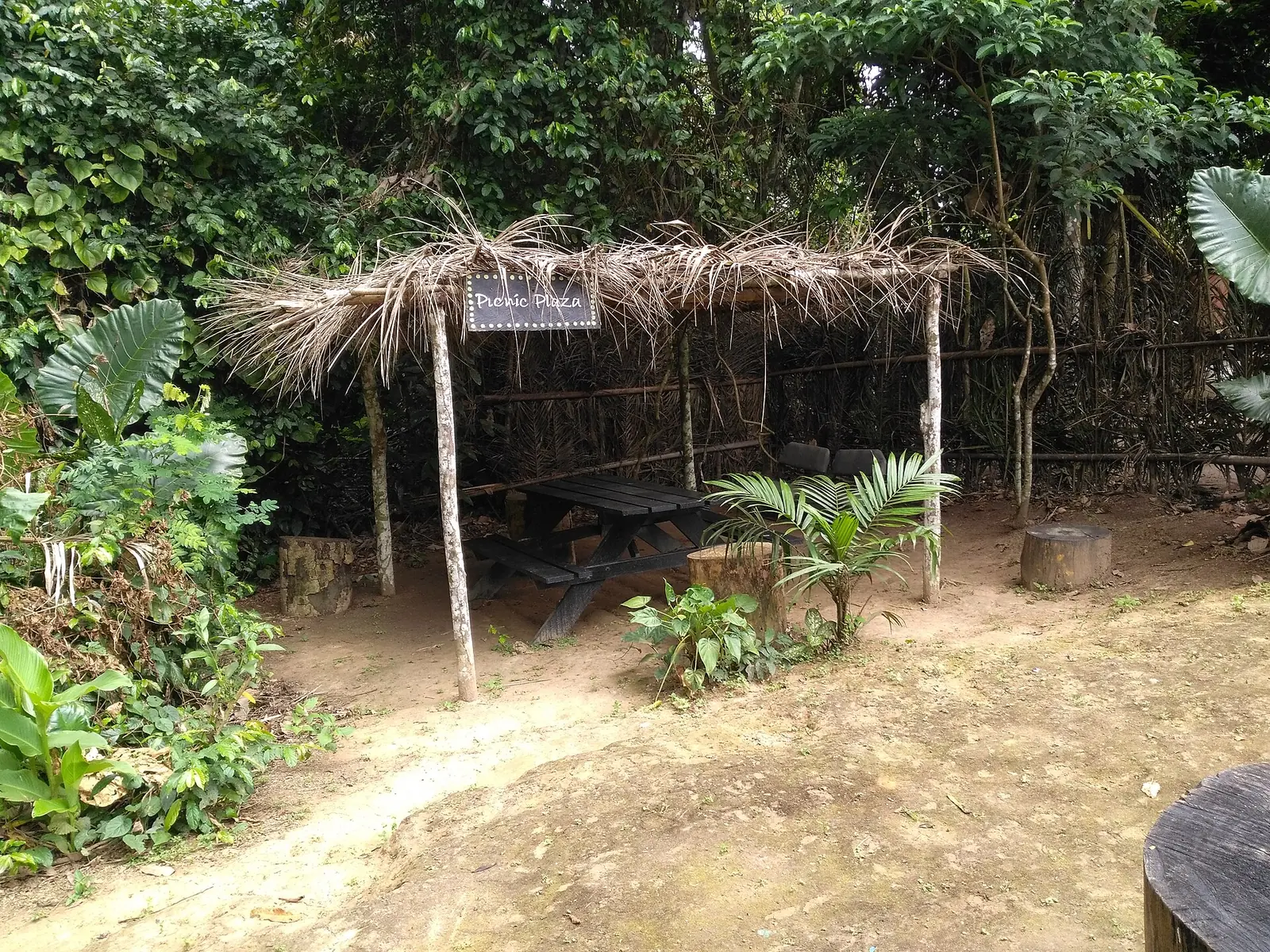
- Last stretch of road
- 5 to 6 km unpaved1
What it is
The Mefou sanctuary is a forest refuge south of Yaoundé for gorillas, chimpanzees and monkeys, many of them orphaned by the bushmeat and pet trades. It's run by the charity Ape Action Africa, and it also takes in primates confiscated by the Cameroon government. These animals live in fenced forest enclosures, so this isn't a place to see apes in the wild.2,4,5,7
The site is often called Mefou National Park. Wikipedia points to a 2010 Kew checklist that calls it a proposed national park, and we found no source confirming formal park status. Published figures vary. A 2017 report gave 857 hectares, and Born Free gives 1,000. For the primates, a 2017 report gave about 350, Ape Action Africa nearly 300 around 2021, a 2023 feature nearly 300 and Born Free more than 250.3,4,6,7,8
History
The organisation began in 1996 as the Cameroon Wildlife Aid Fund, first working to improve conditions for primates at the Mvog-Betsi Zoo in Yaoundé. It became Ape Action Africa in 2009. The sanctuary closed to visitors and volunteers in March 2020 during the COVID-19 pandemic, with staff living on site for months. A 2023 report describes tours running again.2,3,7
What to see
Visits are guided walks along forest trails past the enclosures. Past visitors have described lowland gorillas, including a silverback, young chimpanzees, mandrills, mangabeys and baboons. Animals may stay out of sight behind the trees, as a 2014 report notes. Born Free names a gorilla family led by the silverback Bobo, rescued in 1999.4,7,11,12,13
How to get there
From Yaoundé, take the N2 south towards Mbalmayo and follow the signed turn-off at the village of Ekali II. Ape Action Africa says the last 5 or 6 km are unpaved, and that heavy rain can on rare occasions make the road impassable. Wikivoyage (2020) puts the turn-off about 32 km south of the city, just past Bikok, and other accounts give 45 to 50 km in total, or about 45 minutes by car. A 2019 visitor found the final 1,500 m narrow and deeply rutted, even in dry weather. An undated blog quotes about 50,000 FCFA by taxi from Yaoundé.1,6,9,10,11,12
To reach Yaoundé, Nsimalen airport is 27 km south of the city, and intercity trains from Douala take about 3 hours 45 minutes.9
Costs and hours
The charity's visitor page gives no fee or hours, so treat these as a guide only. Foreign adults paid 7,500 FCFA in 2014 and 2019, and Wikivoyage listed the same in 2020, with 2,500 FCFA for a foreign child. An undated blog gives higher fees: 10,000 FCFA for international adults, 7,500 for Cameroon residents and 2,000 for Cameroonians. Wikivoyage gives hours of 09:00 to 16:30 daily (2020), while the blog gives tours at 09:30 and 14:30, booked in advance.1,9,10,11,13
The sanctuary may close at short notice for emergency procedures or bad weather. Ape Action Africa asks visitors to check access on the day by calling or sending a WhatsApp message to +237 6507 90747. Visitors in 2019 were also shown a donor sheet after the tour.1,11
Where to stay
Map
What visitors say
We summarise accounts published elsewhere and link to the original. These aren't reviews collected by this site, and we don't show a rating.
Toured with a guide for 1.5 to 2 hours and saw young chimpanzees, mandrills, mangabeys and a gorilla group with a newborn. They found the final track uncomfortable, and the donor sheet a little awkward.
Christine and Thierry Dupin, Gandalf On Tour, September 2019
Reached the site by scooter on a muddy, rocky track and camped overnight. The next morning, an English-speaking guide led him round for nearly two hours, and he came away impressed by the largely Cameroonian staff.
Brendan van Son, Brendan's Adventures, April 2013
Check before you go
Our sources can't yet confirm these points:
- Current entry fees, which differ between sources
- Current hours and tour times, and whether booking is required
- Whether the sanctuary has formal national park status
- The sanctuary's area and current number of primates
- Whether overnight stays are possible
- The condition of the last stretch of road today, by season
- Any visitor rules, such as distance from the animals or health requirements
Also nearby
Sources for this page
Information checked on 6 November 2026. It may have changed since.
- Visit our sanctuary, Ape Action Africa (undated)
- About us, Ape Action Africa (undated)
- Caring through a crisis, Ape Action Africa (14 July, year not shown; the text implies 2021)
- Ape Action Africa, Born Free Foundation (undated)
- Ape Action Africa rescues Cameroon's wildlife, British High Commission Yaoundé, GOV.UK (7 October 2013)
- Article on the Mefou sanctuary (opening section read; the rest is behind a paywall), Cameroon Tribune (6 April 2017)
- Ape Action Africa: Guardians of Cameroon's primate legacy, Beverly Ndifoin, Planet Forward (17 October 2023)
- Mefou National Park, Wikipedia (10 September 2026)
- Yaoundé, Wikivoyage (23 October 2026)
- Parc de la Méfou, Michaëla, Bouger-Voyager blog (undated)
- Mfou, Cameroon, Christine and Thierry Dupin, Gandalf On Tour (12 September 2019)
- Mefou National Park: Ape Action Africa, Brendan van Son, Brendan's Adventures (3 April 2013)
- Poznejte rezervaci Mefou, Novinky.cz (18 December 2014)
Enquire about Mefou Primate Sanctuary
Visit Mefou Primate Sanctuary
Plan your trip to Mefou Primate Sanctuary in the Centre Region. Send us an enquiry about guided tours, accommodation and transport, and we'll reply by email.
Send an enquiryCentre Region
Capital: Yaoundé
Home to Yaoundé, the national capital, the Centre Region lies on a forested plateau crossed by the Sanaga River. It is a heartland of the Beti peoples and the birthplace of bikutsi music.
More places in the Centre Region
Reunification Monument
A concrete spiral tower and statue in central Yaoundé, marking the 1961 reunification of French-speaking and English-speaking Cameroon and the 1972 United Republic. Most sources date it to 1973 to 1976.
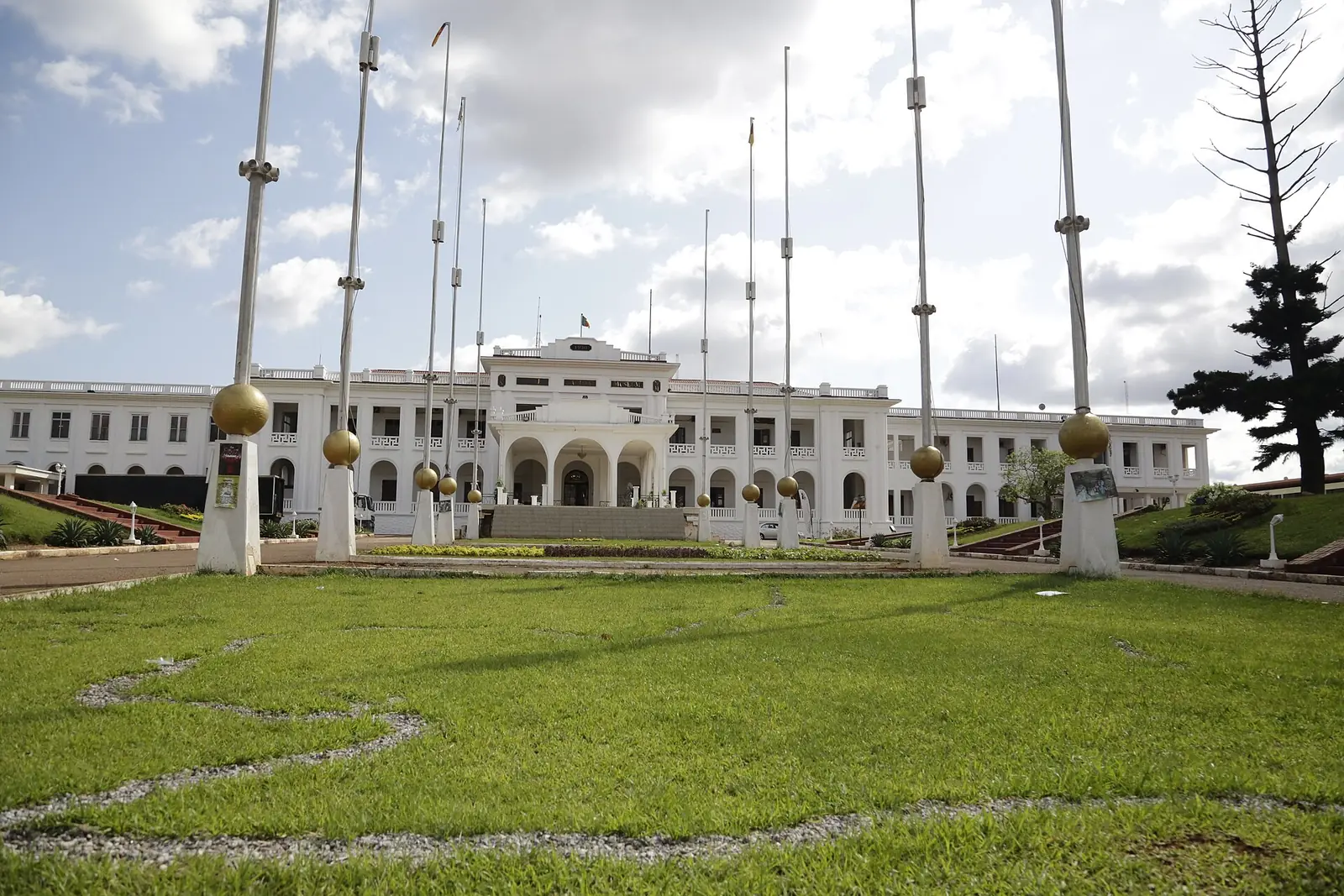
National Museum of Cameroon
Cameroon's largest museum, created in 1988 in Yaoundé's former presidential palace and once the French governors' residence. A new phase of modernisation began in 2026.
Mont Fébé
Rising to 1,077 m above Yaoundé, Mont Fébé has a Benedictine monastery with a small museum of Cameroonian art, and a walking route to a rock with a wide view over the city.
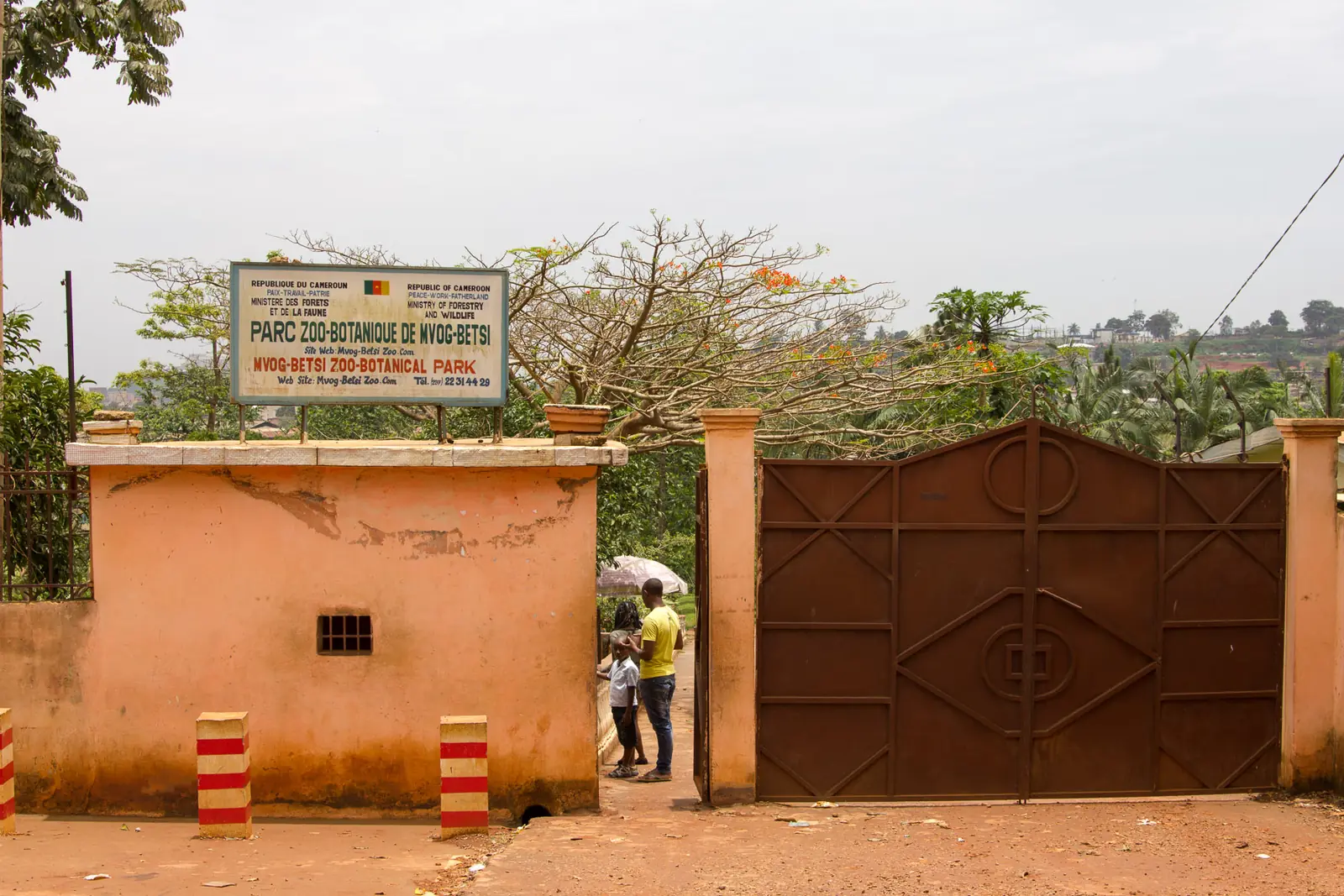
Mvog-Betsi Zoo-Botanical Garden
A zoo and botanical garden founded in 1951 in Yaoundé's Mvog-Betsi district, with a small collection of animals and shaded grounds in the middle of the city.