- Status
- Ramsar wetland no. 2068, listed in 20121
A wetland on the Nyong
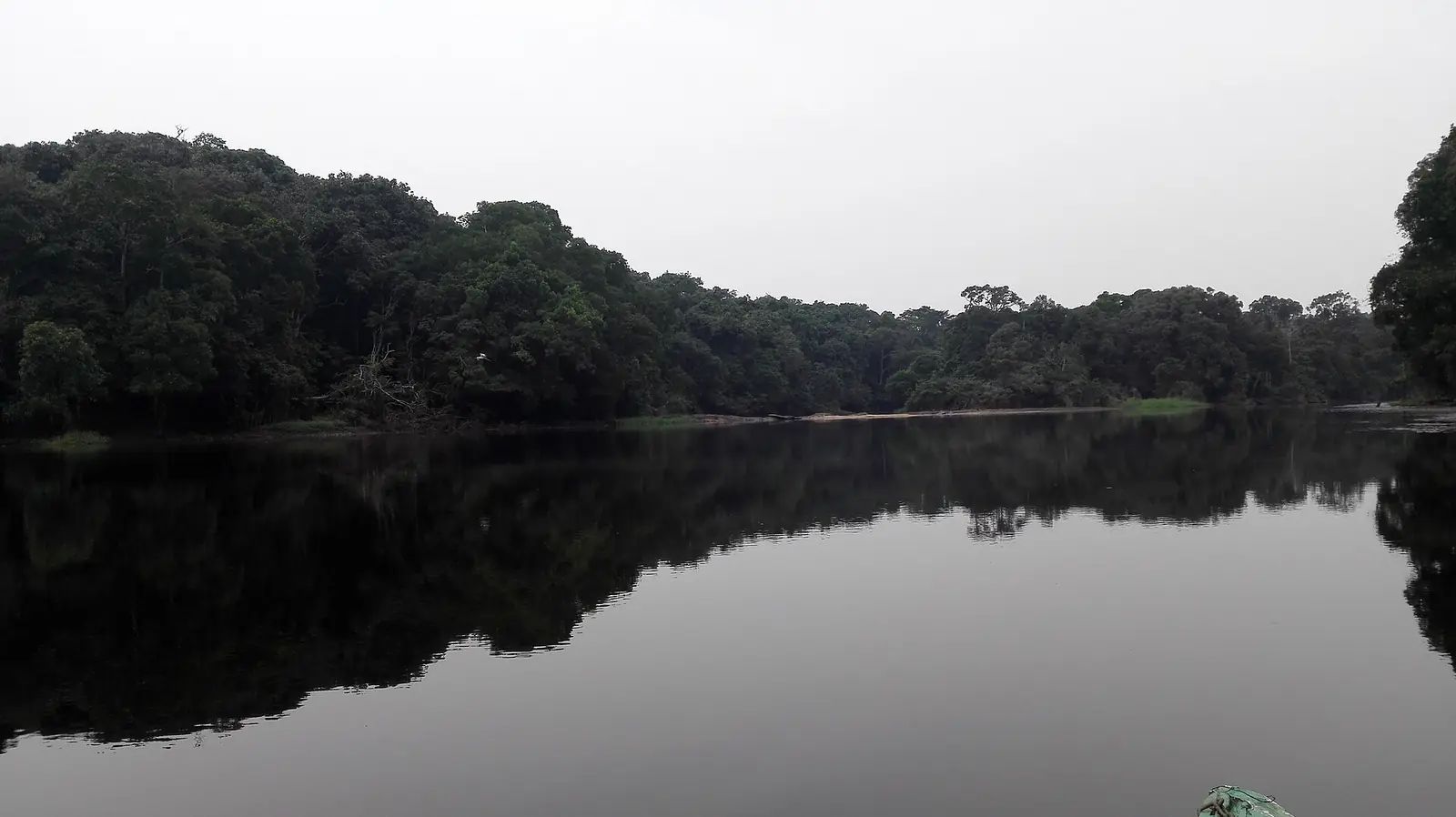
Ebogo is a village and tourist site on the Nyong River, in the forest south of Mbalmayo. The site lies within the Zone Humide d'Ebogo, a seasonally flooded freshwater swamp forest listed under the Ramsar Convention in 2012. The wetland covers 3,097 hectares at about 650 m above sea level, and partly overlaps the Mbalmayo forest reserve.1,2
Ramsar notes more than 100 waterbird species, and valuable trees such as moabi, sapele and ebony. The forest is under pressure: the 2012 Ramsar sheet recorded some of these trees becoming rare and no approved management plan, and later research cited by the Apes Atlas rates logging and farming as high threats. The same sheet estimated just 2 gorillas and 8 chimpanzees here, so don't come expecting to see apes.1,2,10
Tourism here
Tourism at Ebogo grew with the Sustainable Tourism for Eliminating Poverty programme, run by UN Tourism and the Cameroonian state across the villages of Ebogo, Akoumbeguesi and Soasi. UN Tourism's then head, Taleb Rifai, visited in November 2016 and took a canoe trip on the Nyong. Who runs the site today isn't clear: one Wetland Link listing names the NGO IPDECCS as manager, and another names Alternatives Durables pour le Développement as the listed organisation.3,4,5,6,7
Visitor numbers vary widely. Ramsar records 1,194 visits in 2004 and 1,133 in 2005. A 2016 report says more than 2,000 a year. One listing gives 1,000 in 2023, 2,000 in 2024 and 1,500 in 2025, and another says over 500 a year.2,3,4,6
What to do
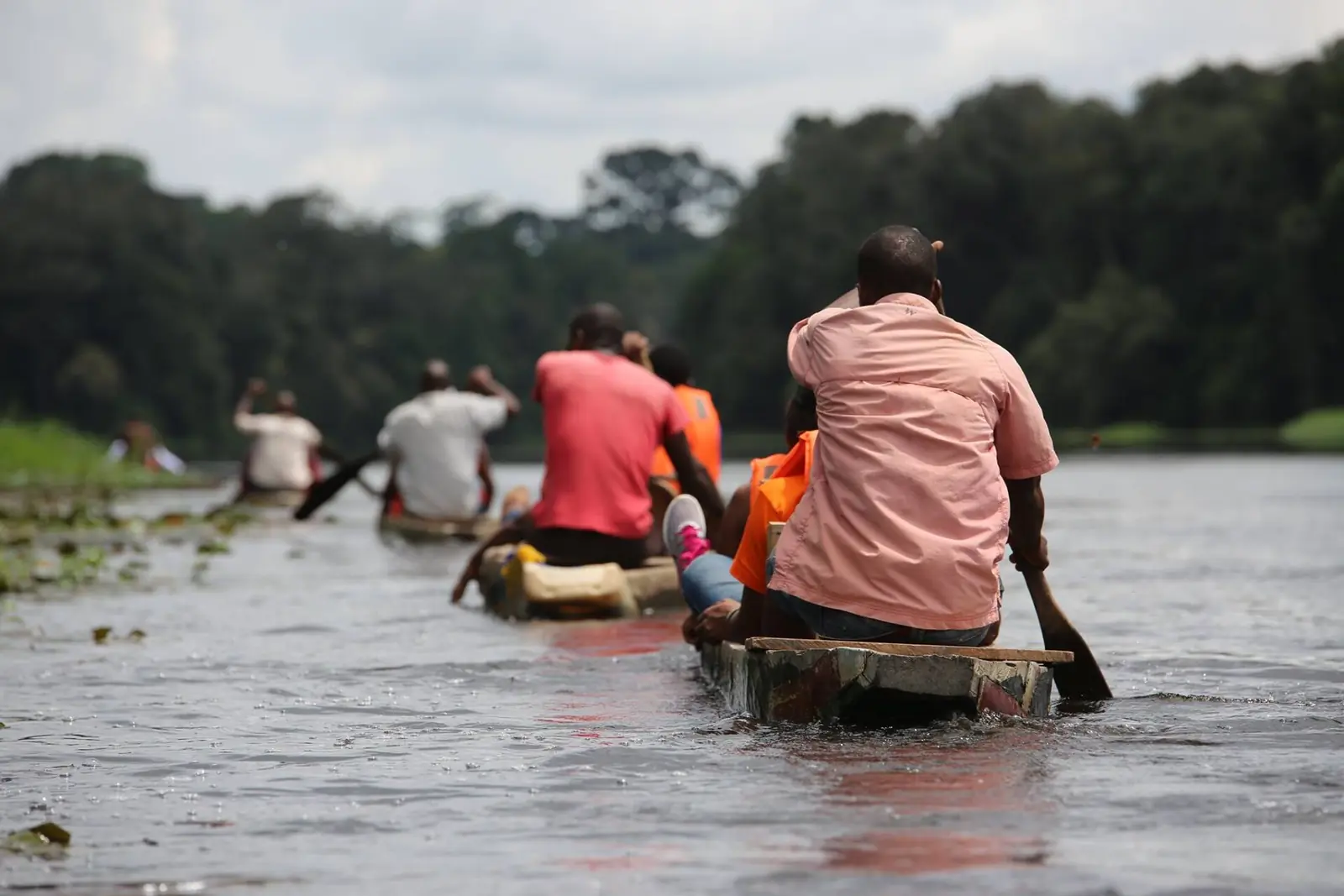
The main activity is a canoe trip on the Nyong, which visitors in 2019 found about 100 m wide, lined with forest and water lilies. Other activities listed include birdwatching, recreational fishing, walks on a botanical trail, and a visit to the parrot island. A 2025 conference excursion combined a canoe trip with a guided forest walk. The Ramsar sheet also mentions young people catching butterflies for artwork.2,3,6,8,9
The best-known stop is a giant tree, about 15 minutes' walk from the river, but sources disagree on nearly everything about it. Its species is given as kossipo, moabi or sapele. One visitor was told it's over 1,300 years old, and a 2016 report calls it a thousand years old, with a 12 m diameter, while the Ramsar sheet lists a big sapele, perhaps the same tree, at over 300 years. No measured age turned up in our research.2,3,6,8,9
How to get there
From Yaoundé, take the Ebolowa road south through Mbalmayo. Visitors in 2019 stopped at Ekombitie, then took a signed 8 km track to the site in 25 minutes, and found it narrow but manageable in a 4x4 motorhome. Published distances from Mbalmayo are 10, 12, 15 and 18 km. Three sources put the site about 70 km from Yaoundé, and a 2011 blog says about 60 km.2,3,5,6,7,9
To reach Yaoundé, Nsimalen airport is 27 km south of the city, and intercity trains from Douala take about 3 hours 45 minutes.11
Costs and facilities
The only prices we found come from one visitor account, from September 2019. A two-hour guided canoe trip cost 30,000 CFA per canoe for two people, camping 5,000 CFA a night, and a cocoa plantation visit 2,000 or 5,000 CFA per person. The same visitors ate at a restaurant on site. A 2011 blog described mud-brick buildings with lodging and a restaurant overlooking the river, and two bungalows under construction. We couldn't confirm what's open now.7,9
When to go
In pictures
Map
What visitors say
We summarise accounts published elsewhere and link to the original. These aren't reviews collected by this site, and we don't show a rating.
Spent two nights camping at the site. They canoed upriver, walked through forest to the giant tree, and crossed the Nyong to a cocoa plantation with a guide. They were caught by a downpour, and a meal order went wrong at the restaurant.
Christine and Thierry Dupin, Gandalf On Tour, September 2019
Check before you go
Our sources can't yet confirm these points:
- Current canoe, entry and camping prices
- Opening hours
- Who manages the site today, and a working contact
- Whether lodging and the restaurant are operating
- How to get there by public transport from Yaoundé or Mbalmayo
- The track's condition today, by season
- The giant tree's species, age and size
Also nearby
Sources for this page
Information checked on 6 November 2026. It may have changed since.
- Ramsar Sites annotated summary: Cameroon, Ramsar Sites Information Service (undated)
- Fiche descriptive Ramsar : Zone Humide d'Ebogo, Ramsar Convention (6 June 2012)
- Ebogo Wetland – Ecotouristic site, Wetland Link International, WWT (undated)
- Site Eco touristique Ebogo, Wetland Link International, WWT (undated)
- Ebogo Tourist Site: UN Tourism Official Marvels At Nature Gift, Cameroon Tribune (23 November 2016)
- Visite officielle de Monsieur Taleb Rifai au Cameroun, UN Tourism, reprinting Koaci.com (8 December 2016)
- Cameroon: Ebogo ecotourism site, Catherine Germier-Hamel, Millennium Destinations, reprinting 237online.com (29 June 2011)
- Excursion on the Nyong River, International Public Policy Association (2025)
- Ebogo, Cameroon, Christine and Thierry Dupin, Gandalf On Tour (12 September 2019)
- Zone Humide d'Ebogo, IUCN SSC A.P.E.S. Wiki, Apes Atlas (15 October 2026)
- Yaoundé, Wikivoyage (23 October 2026)
Enquire about Ebogo Ecotourism Site
Visit Ebogo Ecotourism Site
Plan your trip to Ebogo Ecotourism Site in the Centre Region. Send us an enquiry about guided tours, accommodation and transport, and we'll reply by email.
Send an enquiryCentre Region
Capital: Yaoundé
Home to Yaoundé, the national capital, the Centre Region lies on a forested plateau crossed by the Sanaga River. It is a heartland of the Beti peoples and the birthplace of bikutsi music.
More places in the Centre Region
Reunification Monument
A concrete spiral tower and statue in central Yaoundé, marking the 1961 reunification of French-speaking and English-speaking Cameroon and the 1972 United Republic. Most sources date it to 1973 to 1976.
Mefou Primate Sanctuary
A forest sanctuary south of Yaoundé, run by the charity Ape Action Africa, for gorillas, chimpanzees and monkeys rescued from the bushmeat and pet trades. Visits are by guided tour.
National Museum of Cameroon
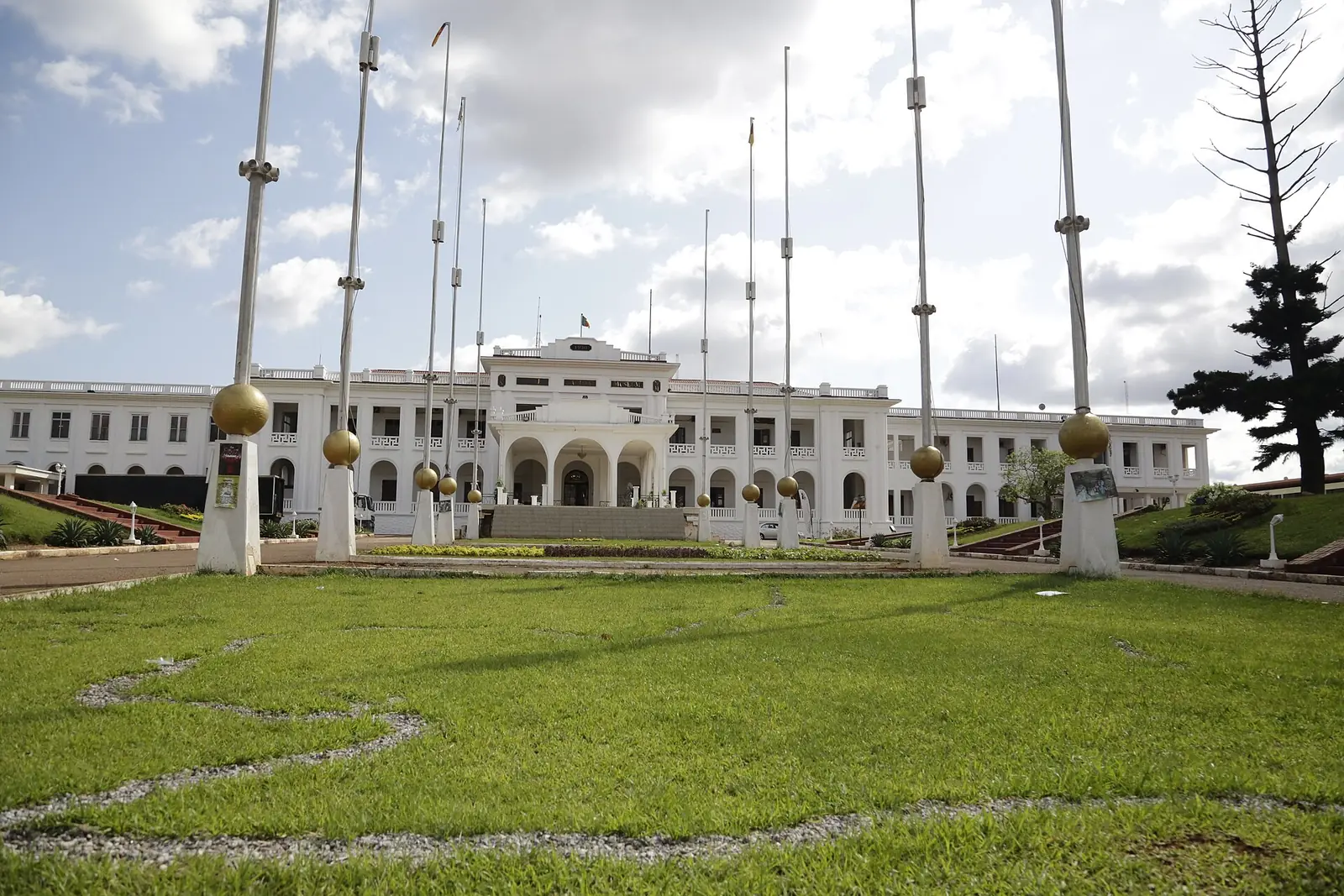
Cameroon's largest museum, created in 1988 in Yaoundé's former presidential palace and once the French governors' residence. A new phase of modernisation began in 2026.
Mont Fébé
Rising to 1,077 m above Yaoundé, Mont Fébé has a Benedictine monastery with a small museum of Cameroonian art, and a walking route to a rock with a wide view over the city.