Between two rivers
Boumba-Bek covers 238,255 ha of lowland rainforest in Cameroon's far south-east, between the towns of Yokadouma and Moloundou in Boumba-et-Ngoko. It takes its name from the Boumba and Bek rivers that enclose it, both fast-flowing and mostly without sandy beaches. It adjoins Nki, and the two were set aside as protection zones in 1995 before becoming national parks in October 2005.1,2,3,5,6
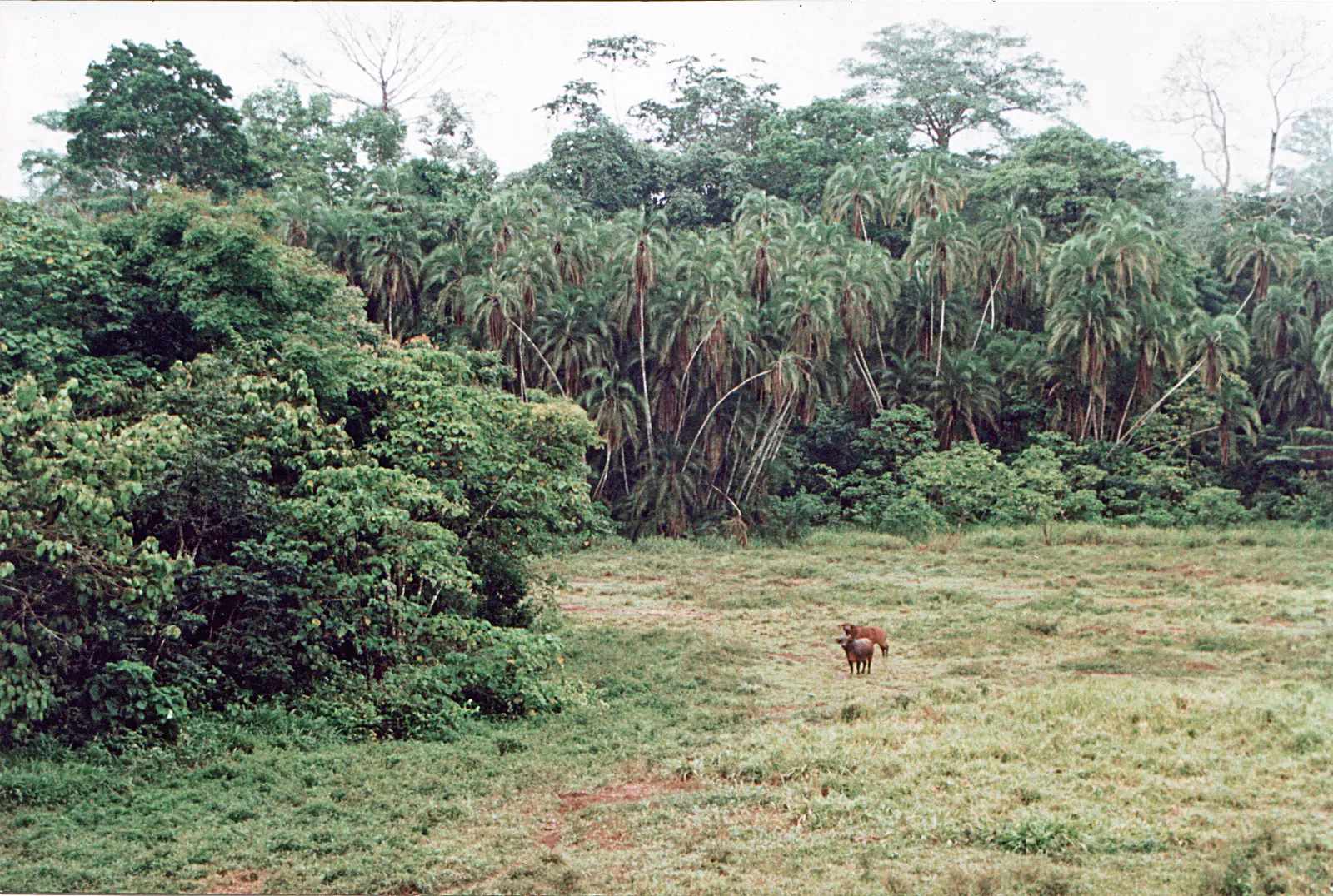
The forest has never been logged. It is mostly semi-evergreen, with a fairly open canopy and dense undergrowth, small patches of closed evergreen forest, seasonally flooded forest, raffia swamp and grassy clearings.3
Wildlife
WWF recorded 16 bais, four of them monitored, and notes forest buffalo grazing in the park's rocky clearings. Gorillas, chimpanzees and forest elephants live here, and Cameroon's 2018 submission mentions large colonies of grey parrots. The same submission reports a group of chimpanzees with unusually pale faces on the eastern edge of the two parks, which it says needs further study.1,2,3
The IUCN ape portal gives about 3,283 great apes in 2011 and 4,470 in 2015, but warns the apparent rise may come from survey methods. It lists poaching as the main threat, along with logging roads in the buffer zone, cocoa farming and small-scale gold mining on the Boumba.4
People
WWF counted about 33,000 people around the park in 2007: Baka and Bantu peoples such as the Kounabembe, Bangando and Bakwele, along with logging workers and traders. A 2001 study of Baka camps near Moloundou describes how families there cross the Boumba by pirogue to hunt and gather in the forest they know best, and how the parks' creation restricted that use.2,5
Access
Map
What visitors say
We summarise accounts published elsewhere and link to the original. These aren't reviews collected by this site, and we don't show a rating.
We haven't yet found a published visitor account for this place.
Check before you go
Our sources can't yet confirm these points:
- Whether the park accepts visitors, and how to arrange a trip
- Any entry fee or guide charges
- A contact for the park conservation service
- Which road or river route is used to enter the park today
Also nearby
Sources for this page
Information checked on 9 November 2026. It may have changed since.
- Le Complexe des Parcs Nationaux de Boumba Bek et de Nki (tentative list), UNESCO World Heritage Centre, submitted by Cameroon's Ministry of Arts and Culture (2 February 2018)
- Three National Parks of Southeast Cameroon, WWF Jengi Southeast Forests Programme (2007 (file date))
- Boumba - Bek (KBA 6133), Key Biodiversity Areas / BirdLife International (last assessed 2001)
- Boumba-Bek National Park, IUCN SSC A.P.E.S. Portal (3 November 2025)
- Case study 7, Cameroon - Boumba Bek: protected areas and indigenous peoples, Benoît Ndameu, Forest Peoples Programme (2001-07)
- Cameroon decrees two new national parks (WWF news release, republished), WWF International, via Agência Ecologia (11 October 2005)
Enquire about Boumba Bek National Park
Visit Boumba Bek National Park
Plan your trip to Boumba Bek National Park in the East Region. Send us an enquiry about guided tours, accommodation and transport, and we'll reply by email.
Send an enquiryEast Region
Capital: Bertoua
Cameroon's largest and most sparsely populated region, the East runs from wooded savanna around Bertoua to rainforest on the borders with the Central African Republic and Congo. It includes the Dja and Lobéké World Heritage areas.
More places in the East Region
Lobéké National Park
A rainforest park on the Sangha River and part of the Sangha Trinational World Heritage Site, where forest elephants, gorillas and bongo come out into open clearings called bais.
Dja Faunal Reserve
A World Heritage rainforest of about 5,260 km² in southern and eastern Cameroon, almost encircled by the Dja River. It is home to western lowland gorillas, chimpanzees and forest elephants, and is explored on foot from Somalomo.
Nki National Park
A remote, hilly rainforest park on the Dja River, where the Nki Falls mark the limit of navigation and elephants, gorillas and sitatunga gather in forest clearings.
Bélabo Railway Station
A railway town on the Sanaga, where the Transcamerounais arrived in 1969 and which served as the line's end until it reached Ngaoundéré in 1974. Timber from the east has long been loaded here.