- Plant capacity
- 264 MW4
Falls that powered a city
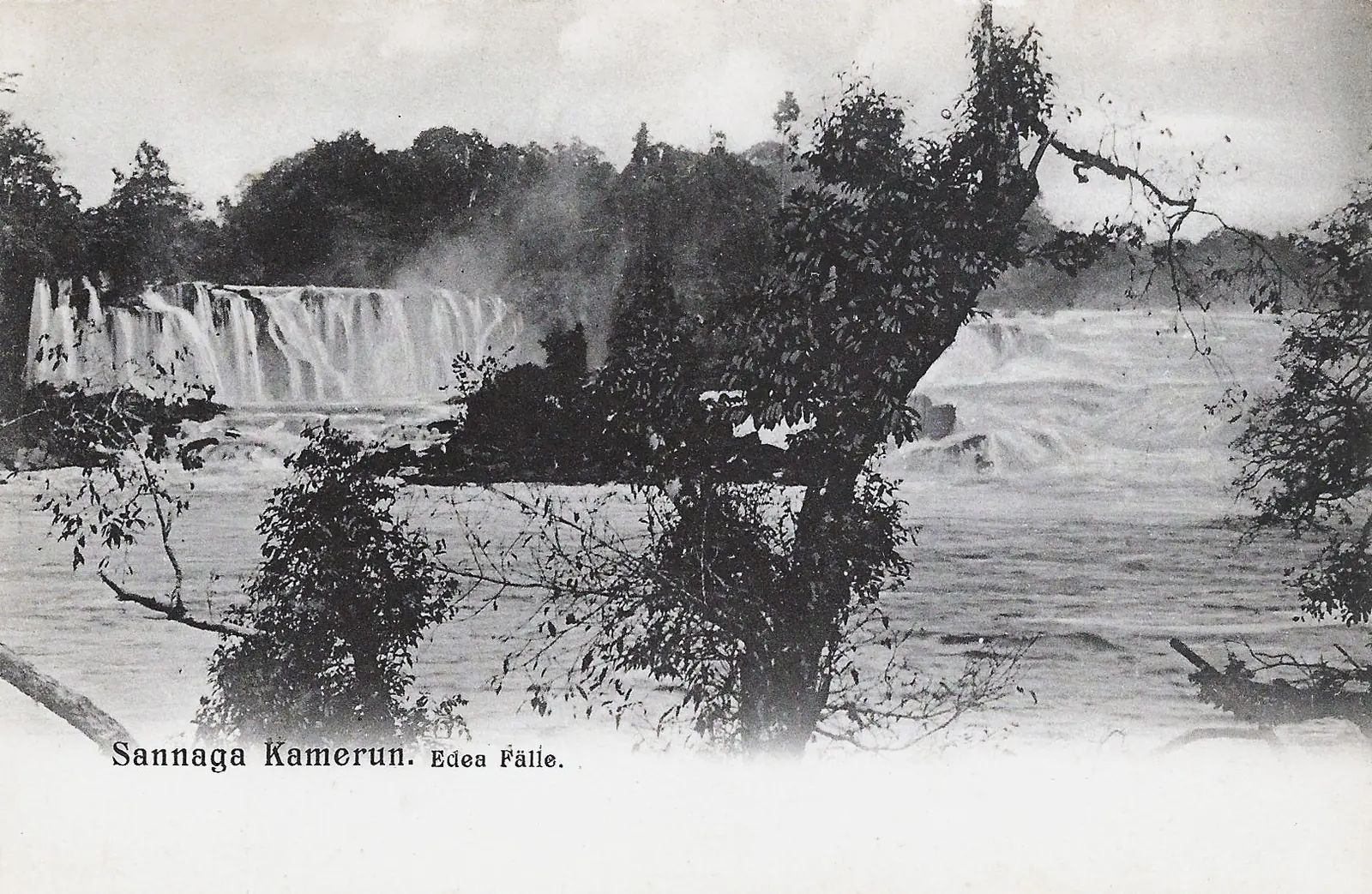
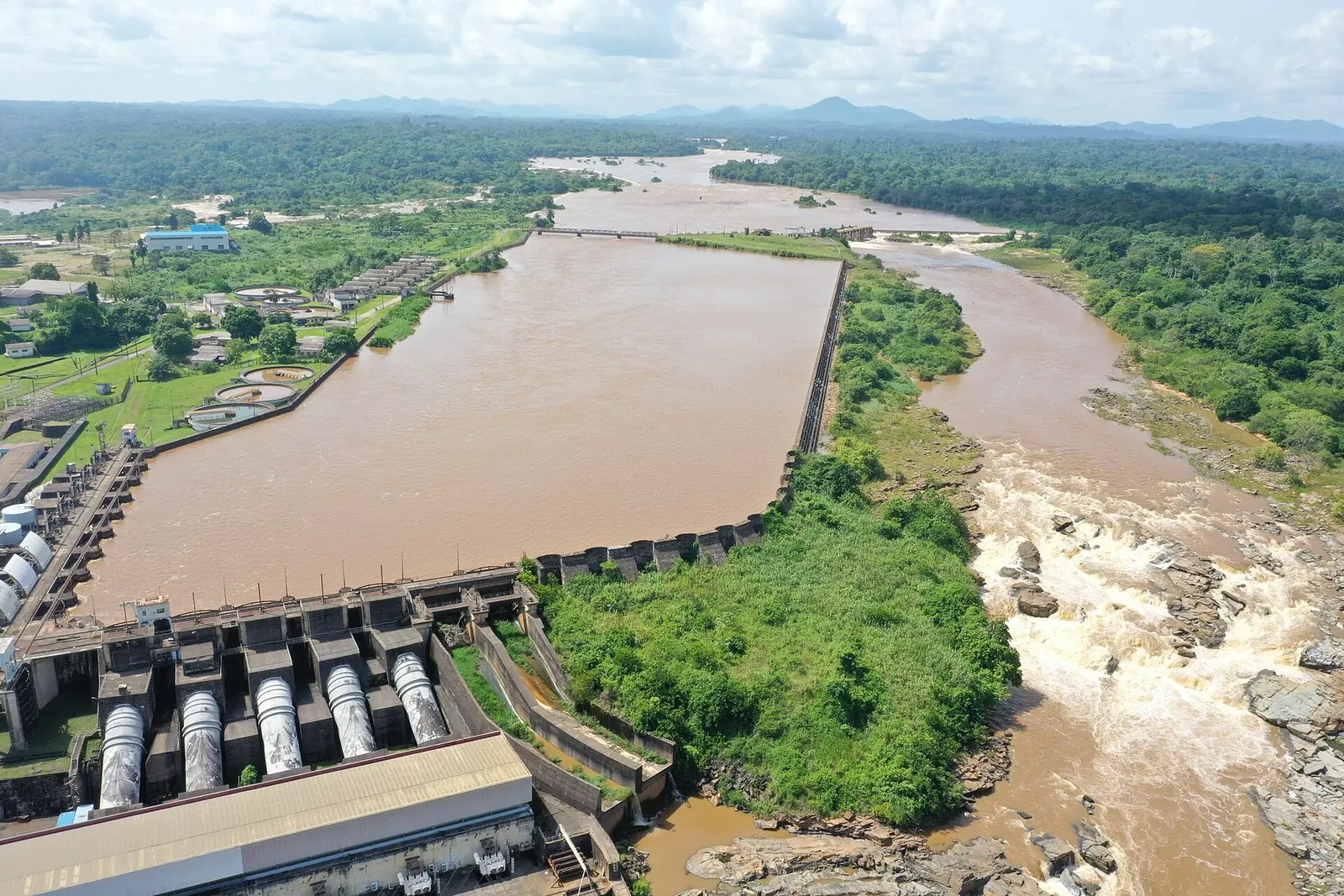
The Sanaga drops over falls and rapids at Édéa, about 60 km from Douala. In 1948 the new company Énergie électrique du Cameroun (ENELCAM) was given the task of harnessing them, and a dam and power station followed. It was built from 1949 to 1953 and was Cameroon's first hydroelectric dam, which earned Édéa the nickname 'Cité Lumière'.2,3,4
The power was meant above all for aluminium. The Alucam smelter has operated in Édéa since 1955, and nearly 60% of the plant's output, now 264 MW of capacity, goes to it.2,3,4
Plants found nowhere else
The rocks of the falls are the only known home of several Podostemaceae, small flowering plants that grow on rocks in fast water. A botanist from Cameroon's National Herbarium, funded in 2009, listed three species then known only from here and assessed as Critically Endangered: Dicraeanthus zehnderi, Winklerella dichotoma and Zehnderia microgyna. He rediscovered Winklerella dichotoma in small patches at the dam site and found Zehnderia microgyna at a second site, on the Ngwei river about 10 km east of Édéa.1,5
The same study warned that extension work on the dam aimed to send all of the river's water through the turbines, which would leave the falls without flow. We found no more recent source on how much water still runs over them.1
Getting to Édéa
In pictures
Map
What visitors say
We summarise accounts published elsewhere and link to the original. These aren't reviews collected by this site, and we don't show a rating.
We haven't yet found a published visitor account for this place.
Check before you go
Our sources can't yet confirm these points:
- How much water now flows over the falls, by season
- Whether the falls can be seen or reached by visitors, and from where
- Whether the plant or its operator allows visits
- The current IUCN status of the three endemic plants
Also nearby
Sources for this page
Information checked on 9 November 2026. It may have changed since.
- Podostemaceae family (Dicraeanthus zehnderi), grant 0925264, case study written by the grantee, Mohamed bin Zayed Species Conservation Fund (21 December 2009)
- L'énergie et le processus de mise en valeur du Cameroun français (1946-1959), Moïse Williams Pokam Kamdem, master's thesis, Université de Dschang (2007)
- La ville d'Edéa, Osidimbea (undated)
- Edea Hydroelectric Power Station, Wikipedia (undated)
- Winklerella, Wikipedia (undated)
- Edéa, Wikipedia (undated)
Enquire about Edéa Falls (Sanaga falls at Edéa)
Visit Edéa Falls (Sanaga falls at Edéa)
Plan your trip to Edéa Falls (Sanaga falls at Edéa) in the Littoral Region. Send us an enquiry about guided tours, accommodation and transport, and we'll reply by email.
Send an enquiryLittoral Region
Capital: Douala
Cameroon's economic centre, around the port city of Douala and the Wouri Estuary, with Sawa and Bassa heritage, the Ngondo festival and the Sanaga River at Edéa.
More places in the Littoral Region
Douala Maritime Museum
A ship-shaped museum in Douala's Bonanjo district on Cameroon's coast, ports and ships, with a recreated ship's bridge and a navigation simulator.
La Pagode (Palace of King Bell)
The former palace of the Bell kings in Bonanjo, Douala, built in 1905 and still owned by the Bell family. It was home to Rudolf Duala Manga Bell, hanged by the German authorities in 1914.
Ekom-Nkam Waterfalls
A waterfall of about 80 m on the Nkam river near Melong, set in forest and used as a filming location for Greystoke (1984). A second fall runs beside it in the rainy season.
Wouri Estuary
The tidal estuary where the Wouri, Mungo and Dibamba meet the Atlantic at Douala, lined with mangroves and fishing villages, and the source of Cameroon's name.