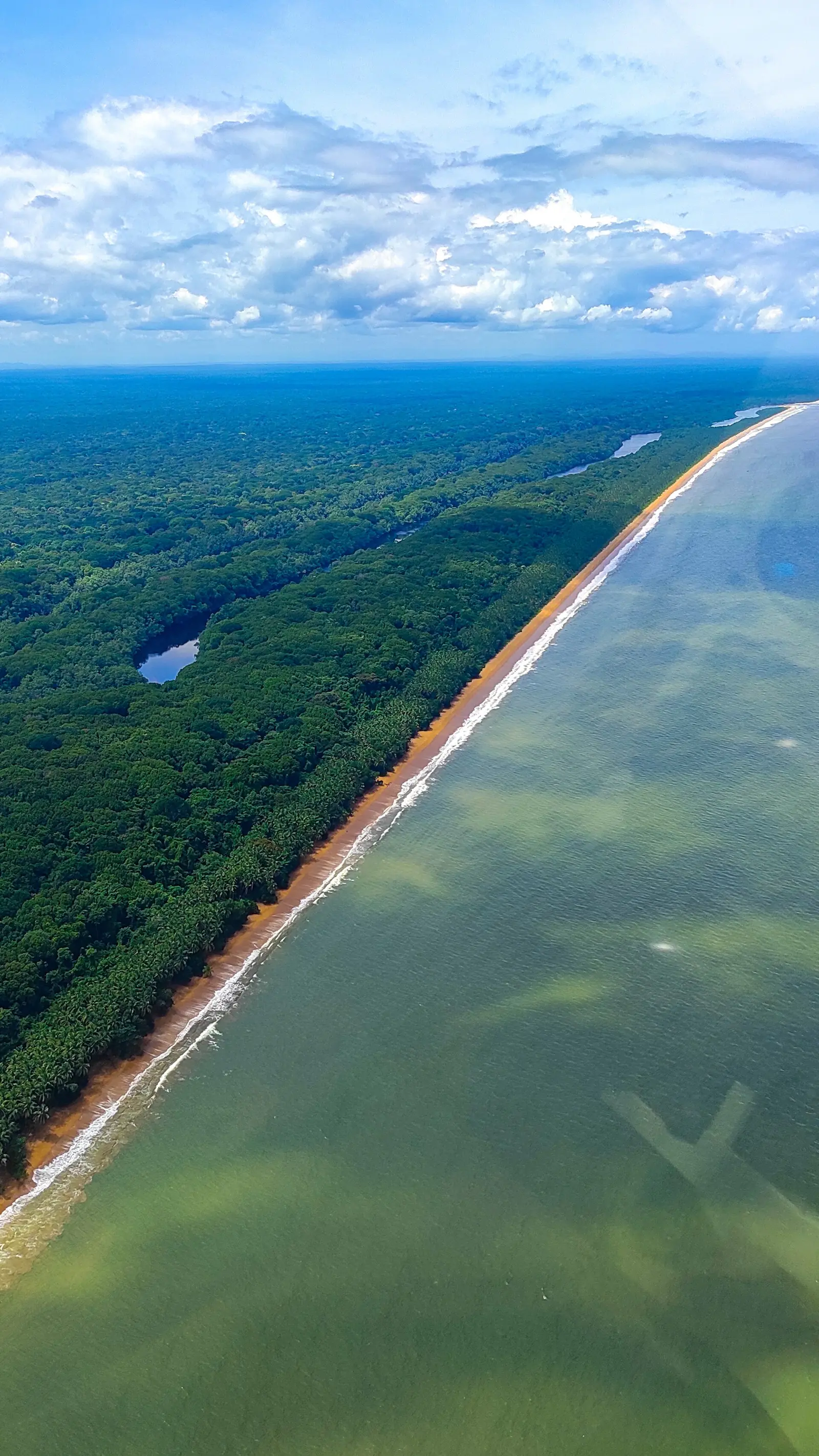
Forest, mangrove and coast
Douala-Edéa National Park stretches along the coast on both sides of the mouth of the Sanaga, between the Wouri estuary and Édéa. It was set aside as a reserve in 1932 and became a national park by a decree of October 2018. The decree gives it 262,935 hectares across the Wouri and Sanaga-Maritime divisions, in the districts of Édéa I, Dizangué, Mouanko and Manoka, with its headquarters at Mouanko. Wikipedia gives a larger 2,715 km².1,2
About 80% of the park is lowland forest and about 15% mangrove. It includes Lake Tissongo, a lagoon linked to the Sanaga by a 5 km tidal channel. The decree lists ecotourism among the park's aims, alongside protecting species and supporting nearby communities.1,2
Wildlife
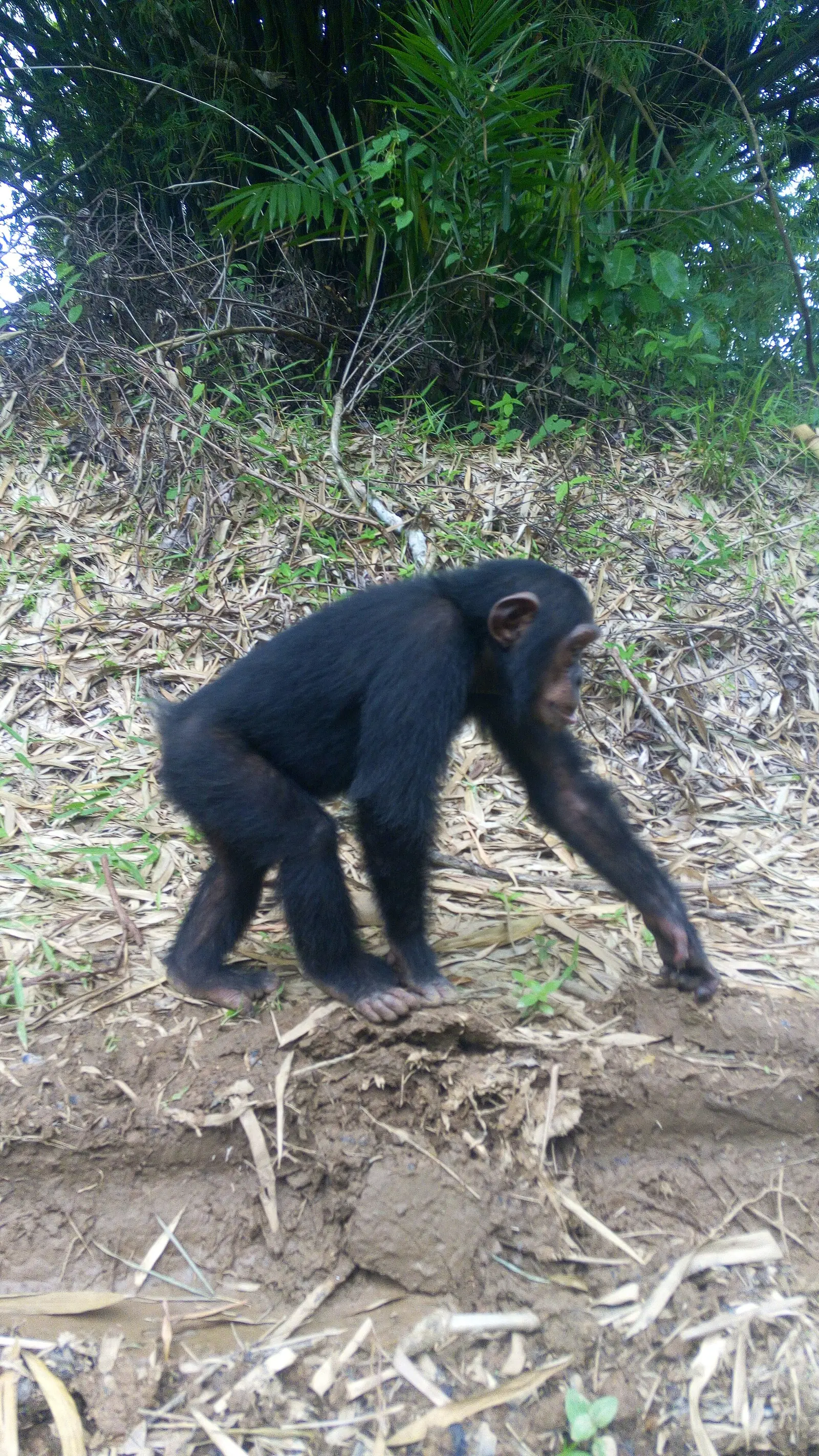
Species recorded in the area include West African manatees, sea turtles, central chimpanzees, forest elephants, black colobus and other monkeys, Atlantic humpback dolphins and many water birds. Four sea turtle species occur on Cameroon's coast, and turtle studies have reached as far north as Yoyo, in the park. Wikipedia notes that animals are poorly protected and poaching is widespread, and Rainforest Trust reported in 2019 that elephants have declined since 1998, so sightings are far from certain.2,3,4
History on Manoka
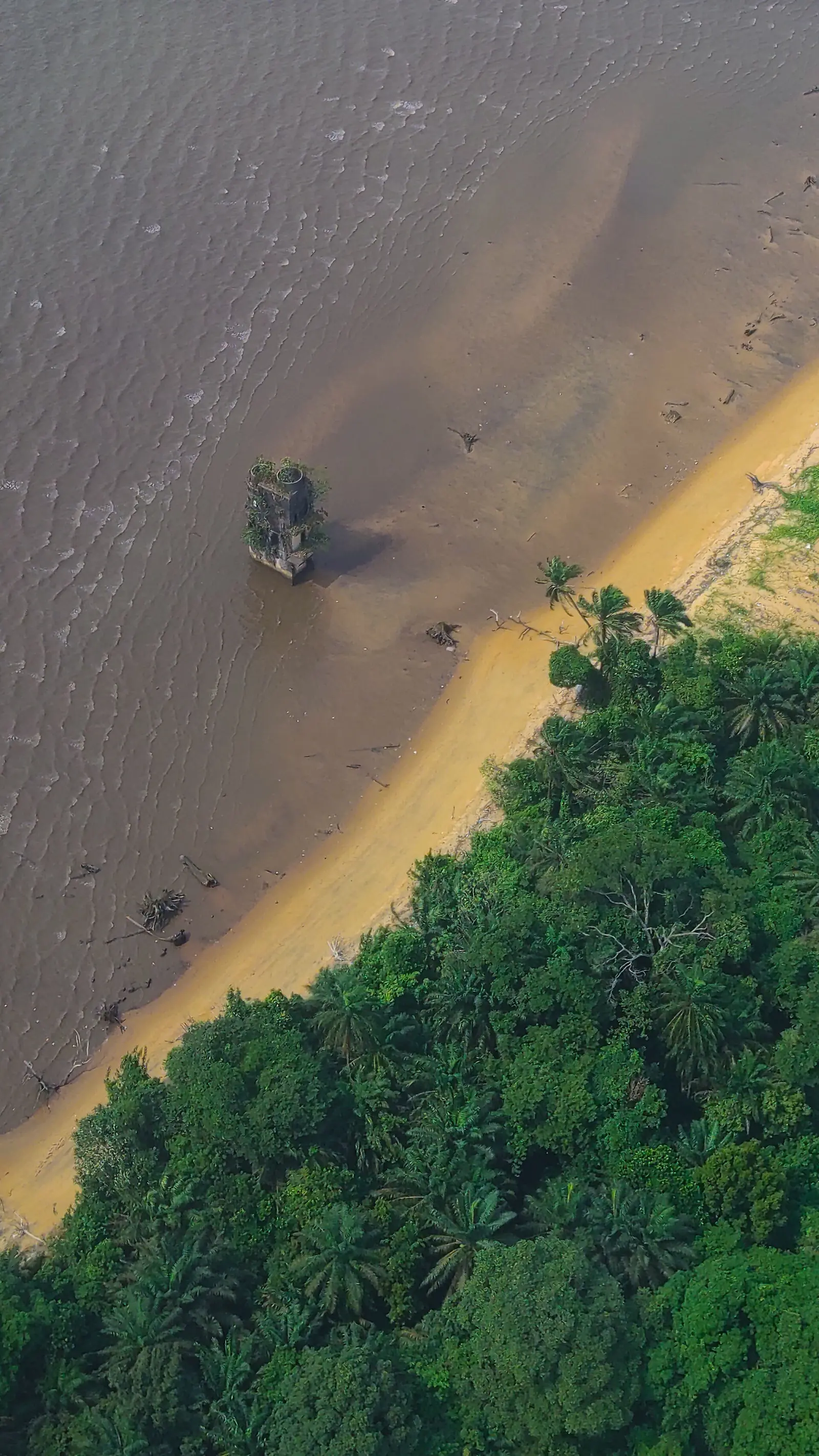
Manoka island, more than half of which lies in the park, holds the remains of a German colonial prison. The Duala leader Duala Manga Bell was arrested there on 10 May 1914, before being hanged on 8 August that year.5
Getting there
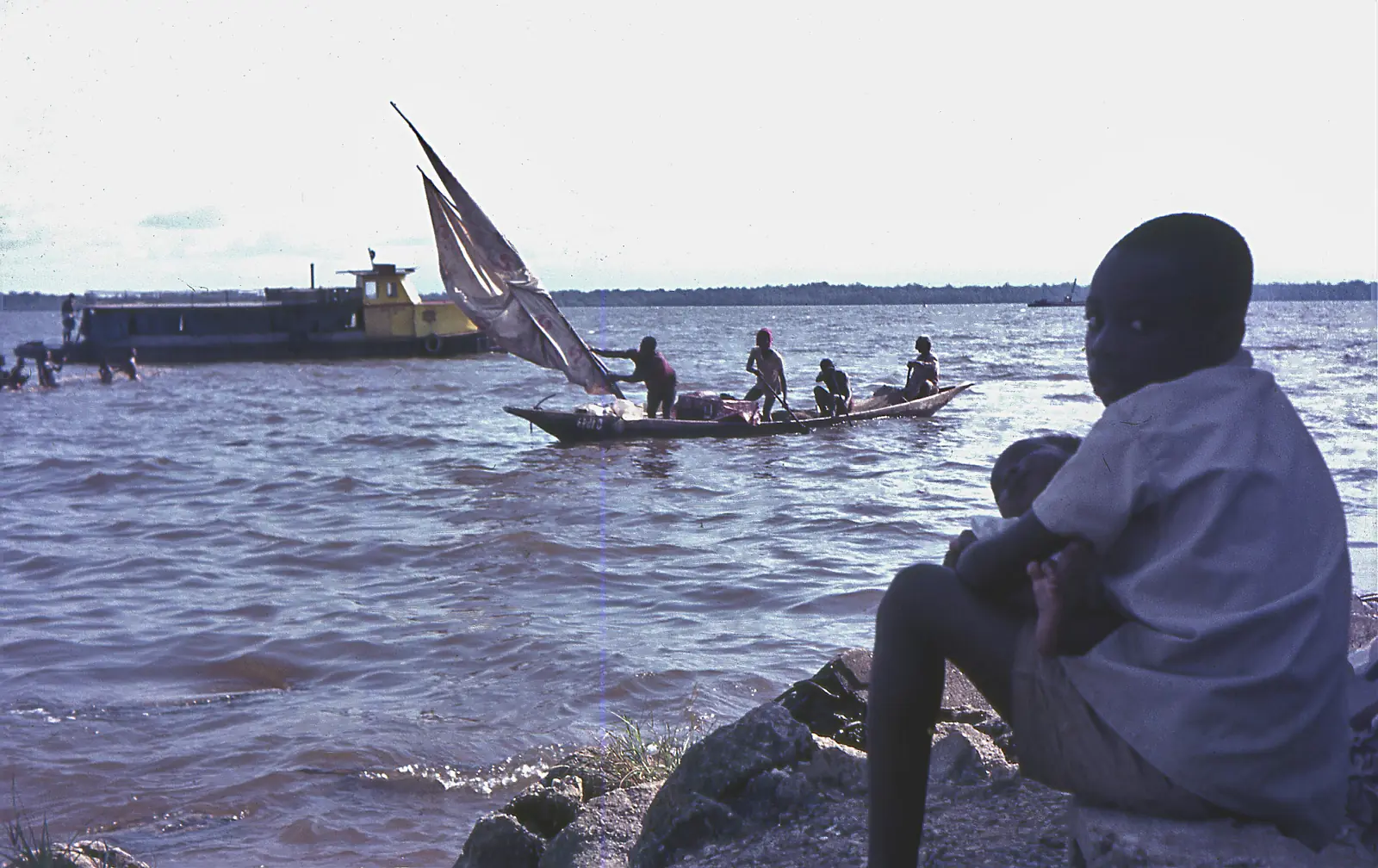
In a 2023 account, one visitor took a moto-taxi to Youpwe fishing port in Douala, then a shared wooden motorboat for about two hours through the mangroves, past Mouanko, towards Lake Tissongo.6
In pictures
Map
What visitors say
We summarise accounts published elsewhere and link to the original. These aren't reviews collected by this site, and we don't show a rating.
Enjoyed the boat trip through mangroves and fishing villages, with many water birds and small monkeys, though heavy rain and a stalling engine made it hard going. Larger animals such as manatees and elephants were not seen.
Annie Elle, GoNOMAD, February 2023
Check before you go
Our sources can't yet confirm these points:
- Park entry fees and how permits are issued
- Whether there is a visitor office at Mouanko, and a contact
- Who runs boat trips from Douala, and their prices
- The condition of the road from Édéa to Mouanko
- The park's official area (262,935 ha in the decree, 2,715 km² on Wikipedia)
Also nearby
Sources for this page
Information checked on 9 November 2026. It may have changed since.
- Décret n° 2018/8399/PM portant mutation de la Réserve de faune de Douala-Edéa en Parc national de Douala-Edéa, Services du Premier ministre, République du Cameroun (11 October 2018)
- Douala Edéa National Park, Wikipedia (undated)
- Greater protection for Cameroon's Atlantic rainforest, Rainforest Trust (2019)
- Baseline study and conservation of sea turtles in the northern coastline of Cameroon, Rufford Foundation (project by Aristide Takoukam Kamla) (22 November 2016)
- Manoka, Wikipedia (undated)
- Cameroon's Douala-Edéa National Park, GoNOMAD (travel writer's account) (11 February 2023)
Enquire about Douala-Edéa National Park
Visit Douala-Edéa National Park
Plan your trip to Douala-Edéa National Park in the Littoral Region. Send us an enquiry about guided tours, accommodation and transport, and we'll reply by email.
Send an enquiryLittoral Region
Capital: Douala
Cameroon's economic centre, around the port city of Douala and the Wouri Estuary, with Sawa and Bassa heritage, the Ngondo festival and the Sanaga River at Edéa.
More places in the Littoral Region
Douala Maritime Museum
A ship-shaped museum in Douala's Bonanjo district on Cameroon's coast, ports and ships, with a recreated ship's bridge and a navigation simulator.
La Pagode (Palace of King Bell)
The former palace of the Bell kings in Bonanjo, Douala, built in 1905 and still owned by the Bell family. It was home to Rudolf Duala Manga Bell, hanged by the German authorities in 1914.
Ekom-Nkam Waterfalls
A waterfall of about 80 m on the Nkam river near Melong, set in forest and used as a filming location for Greystoke (1984). A second fall runs beside it in the rainy season.
Wouri Estuary
The tidal estuary where the Wouri, Mungo and Dibamba meet the Atlantic at Douala, lined with mangroves and fishing villages, and the source of Cameroon's name.