- Endemic plant
- Ledermanniella sanagaensis1
Rapids now harnessed for power
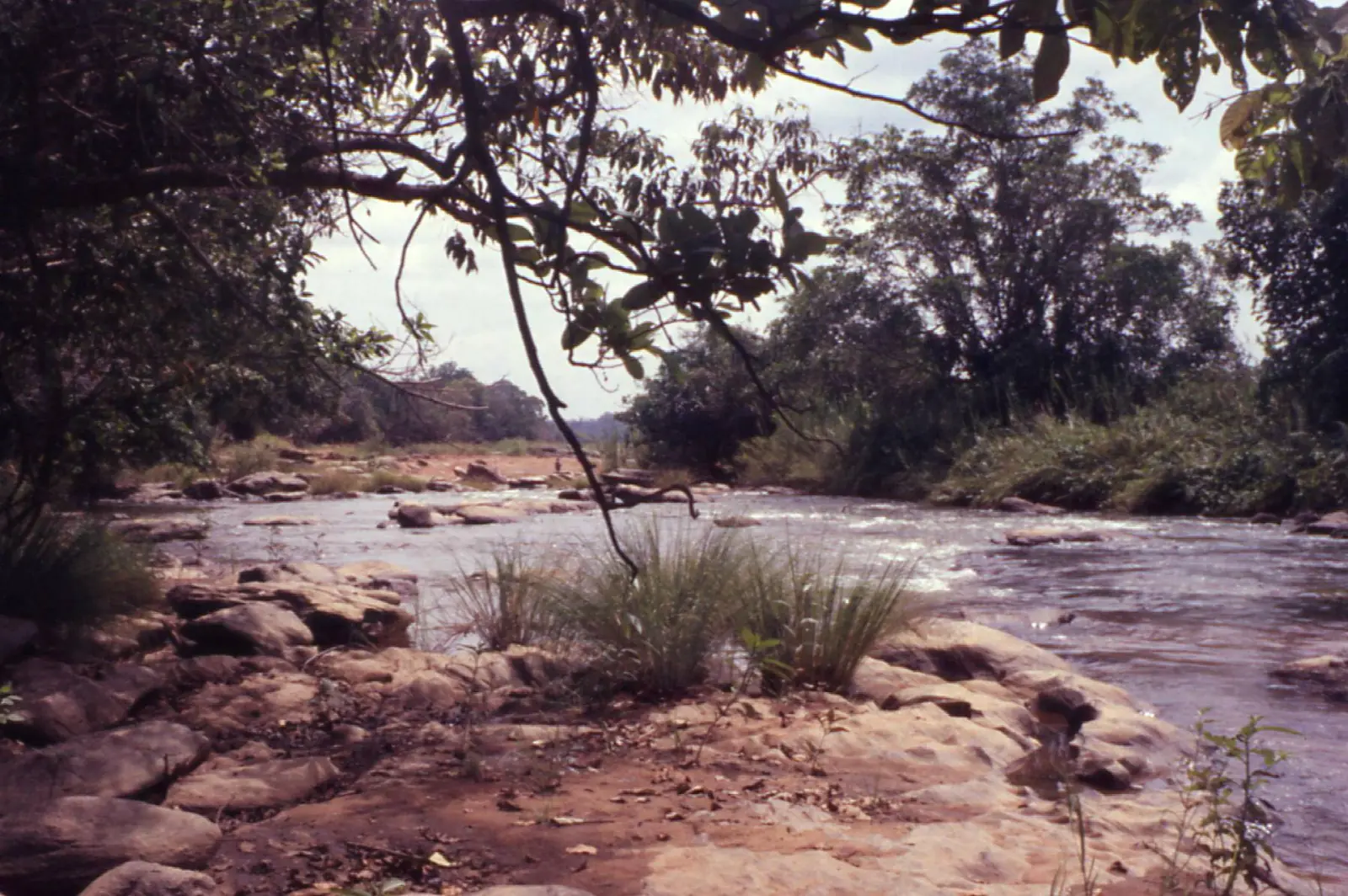
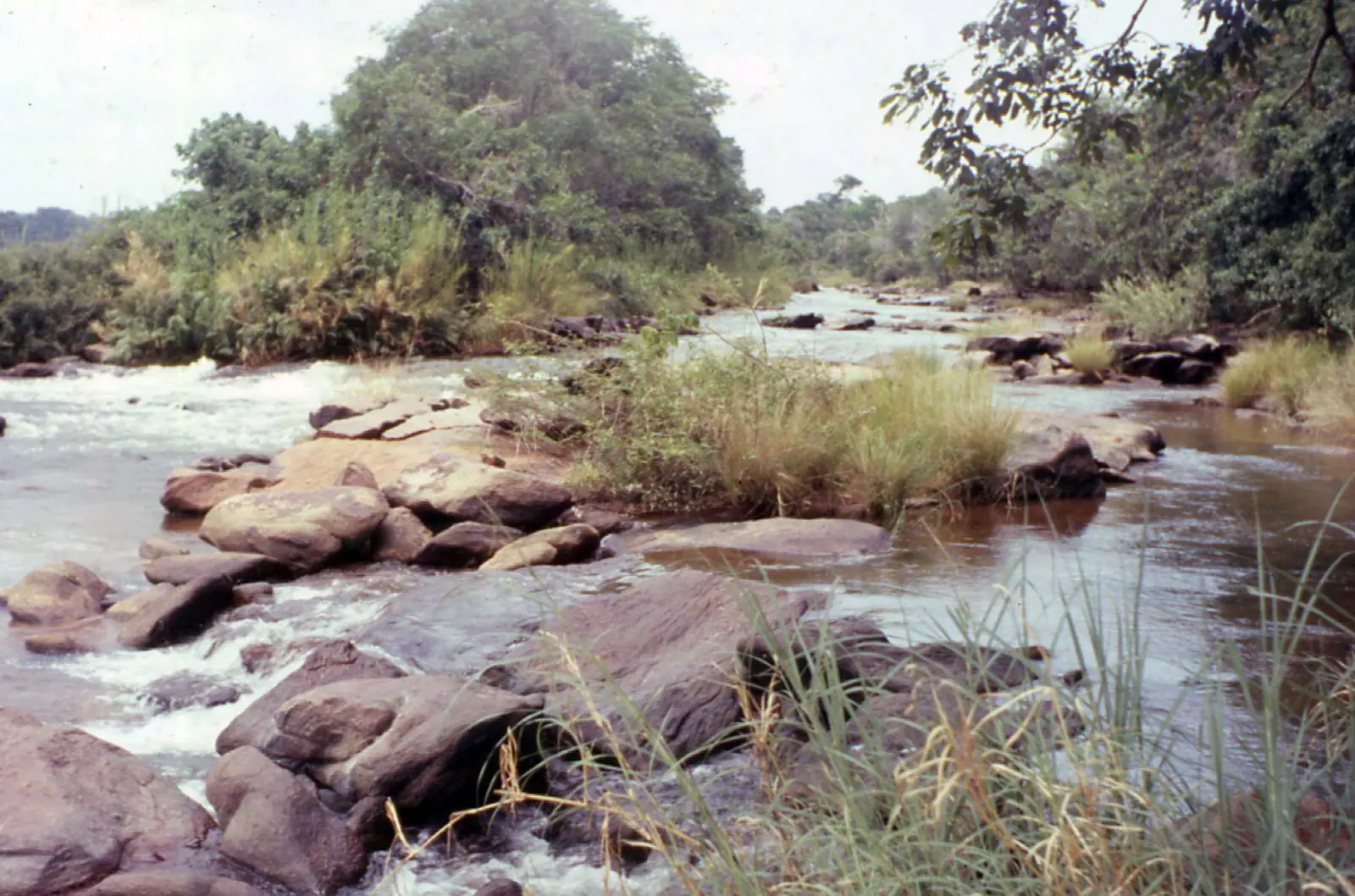
The Nachtigal falls are a series of rapids on the Sanaga, Cameroon's main river, about 65 km north-east of Yaoundé. The falls sit between Batchenga, on one bank, and the village of Nachtigal in the commune of Ntui, on the other. The rapids are why the power plant was built here. It has a 50 m head and runs on the river's flow, with only a small reservoir.1,2,5
First proposed in the 1970s, the dam was built from 2019. The main dam is about 1.5 km long and 14 m high, and a 3.3 km canal carries water to seven turbines. Most sources give 60 MW each, but a 2026 Cameroon Tribune report says 70 MW. Sources also differ on when the last unit came online: Wikipedia, citing the business press, gives 18 March 2025, while a 2026 report quoting the operator says May 2025.1,2,3,4,6
What remains of the falls
The European Investment Bank's 2018 assessment said that in the dry season the river below the dam would no longer have water, except for a large branch on the left bank. The project guarantees a minimum flow of 25 m³/s into that branch, with the option of raising it to 47 m³/s, partly to protect Ledermanniella sanagaensis, a rare aquatic plant found only at the Nachtigal falls. The plant's design flow is 980 m³/s. In March 2026, during the low-water season, about 680 m³/s was reaching it.1,2,6
We found no recent account or photo showing how the rapids look today, or whether visitors can reach them. The only free photos we found date from 1973.1,2
People and the river
Fishing and sand mining were long part of life here. Mongabay reported in 2025 that fishers and sand miners at Batchenga have lost income since the dam was built, and that a mediated settlement over their complaint was signed in May 2024, with confidential terms.3
In pictures
Map
What visitors say
We summarise accounts published elsewhere and link to the original. These aren't reviews collected by this site, and we don't show a rating.
We haven't yet found a published visitor account for this place.
Check before you go
Our sources can't yet confirm these points:
- How much water flows over the rapids today, by season
- Whether visitors can reach or see the falls, and from where
- Whether the plant offers visits
- Whether the units are rated 60 or 70 MW, and the exact date of full operation
Also nearby
Sources for this page
Information checked on 9 November 2026. It may have changed since.
- Nachtigal Hydropower Plant: Environmental and Social Data Sheet, European Investment Bank (9 October 2018)
- Barrage de Nachtigal, Wikipédia (undated)
- Cameroon inaugurates controversial dam despite local dissent, Mongabay (10 October 2025)
- Cameroon's Nachtigal plant tops 3.6 TWh output but outages persist, Business in Cameroon (7 June 2026)
- Chutes de Nachtigal and Nachtigal village, located by us on 9 November 2026, OpenStreetMap (undated)
- Aménagement hydroélectrique de Nachtigal: En attendant la crue…, Cameroon Tribune (24 March 2026)
Enquire about Nachtigal Falls
Visit Nachtigal Falls
Plan your trip to Nachtigal Falls in the Centre Region. Send us an enquiry about guided tours, accommodation and transport, and we'll reply by email.
Send an enquiryCentre Region
Capital: Yaoundé
Home to Yaoundé, the national capital, the Centre Region lies on a forested plateau crossed by the Sanaga River. It is a heartland of the Beti peoples and the birthplace of bikutsi music.
More places in the Centre Region
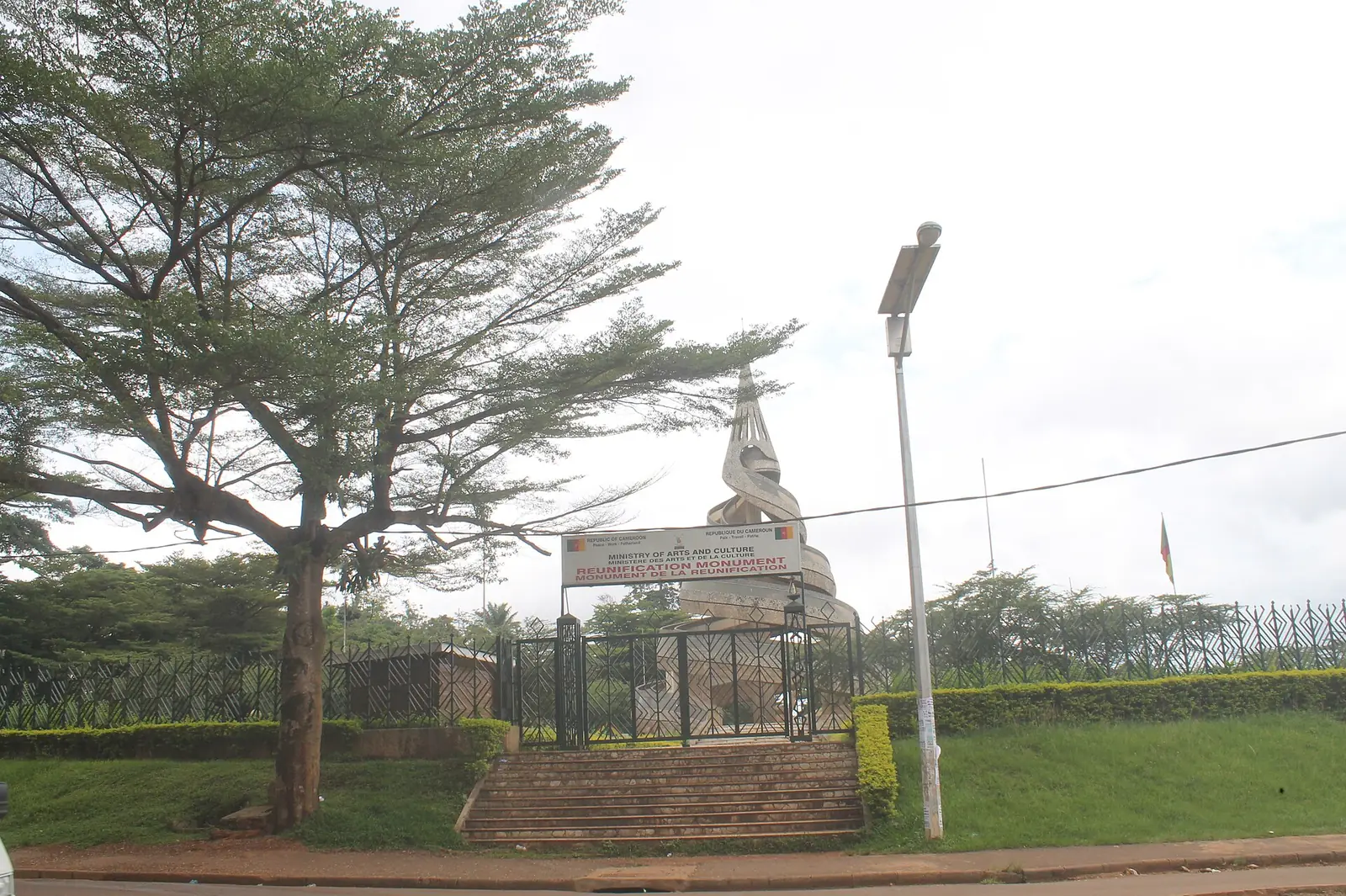
Reunification Monument
A concrete spiral tower and statue in central Yaoundé, marking the 1961 reunification of French-speaking and English-speaking Cameroon and the 1972 United Republic. Most sources date it to 1973 to 1976.
Mefou Primate Sanctuary
A forest sanctuary south of Yaoundé, run by the charity Ape Action Africa, for gorillas, chimpanzees and monkeys rescued from the bushmeat and pet trades. Visits are by guided tour.
National Museum of Cameroon
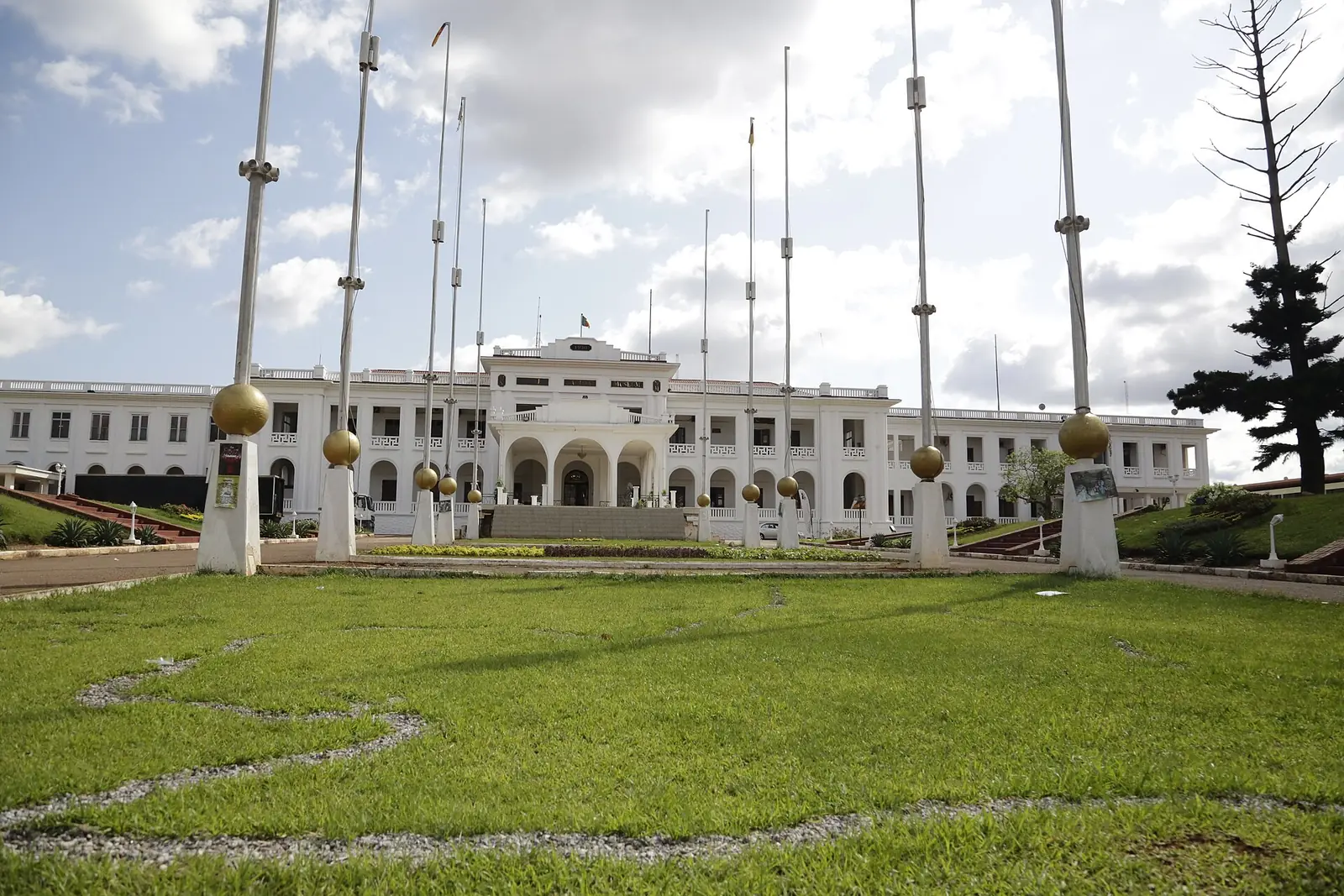
Cameroon's largest museum, created in 1988 in Yaoundé's former presidential palace and once the French governors' residence. A new phase of modernisation began in 2026.
Mont Fébé
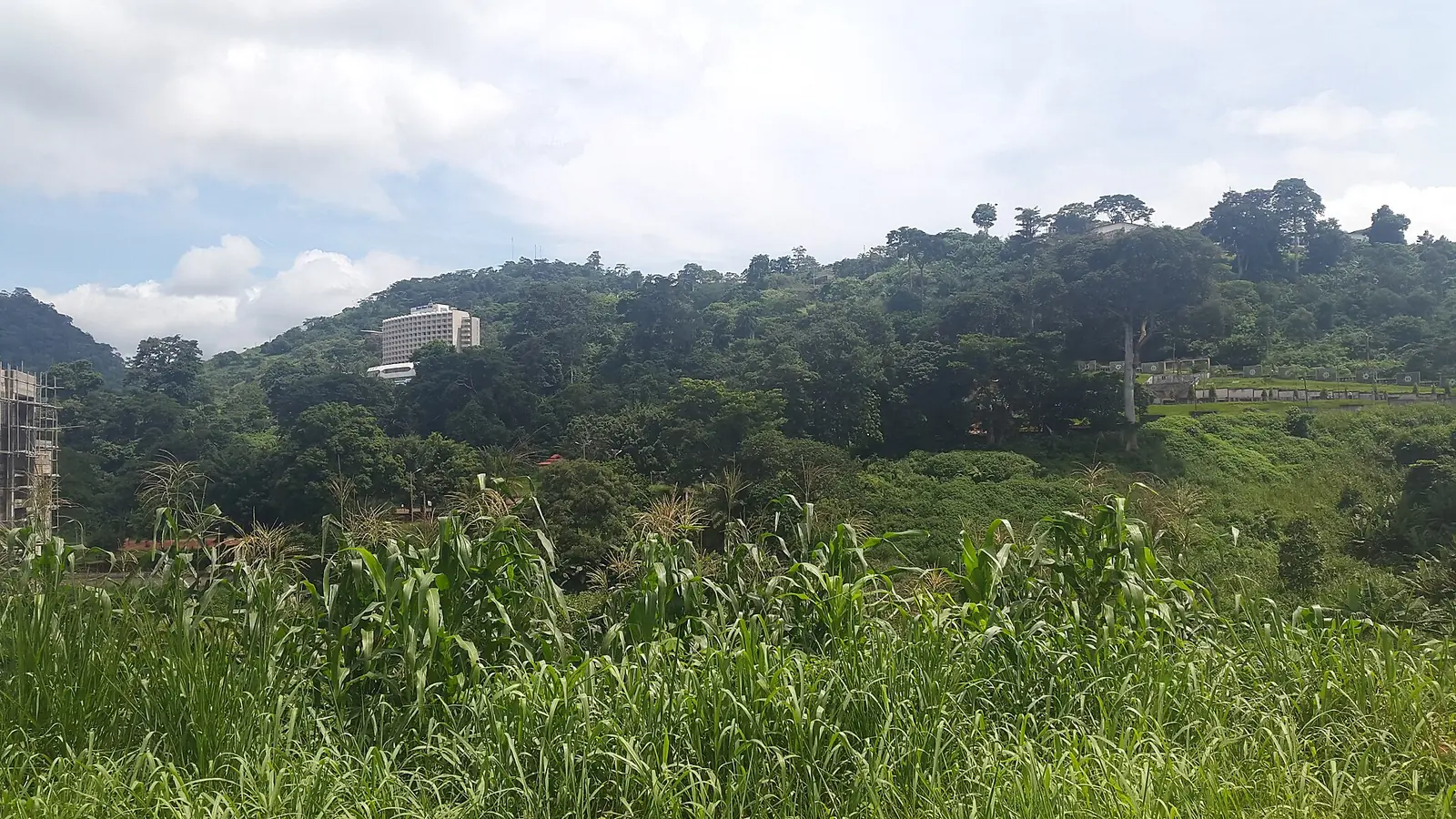
Rising to 1,077 m above Yaoundé, Mont Fébé has a Benedictine monastery with a small museum of Cameroonian art, and a walking route to a rock with a wide view over the city.